
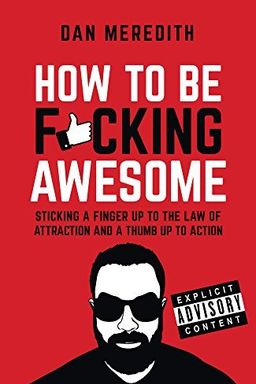
How to be Fcking Awesome cover

How to be Fcking Awesome

by Dan Meredith

How to be F*cking Awesome guides you through actionable steps to achieve your goals without excuses. Learn how self-prioritization, authenticity, and consistency can help you overcome obstacles and live a successful, fulfilling life. Discover straightforward principles to sidestep common pitfalls and transform your dreams into reality.

Becoming Unapologetically Awesome

When was the last time you felt truly alive—where you stopped caring about other people’s opinions and went all in on what mattered to you? In How to Be F*cking Awesome, Dan Meredith argues that life becomes exceptional only when you toss out conventional advice, stop apologizing for who you are, and commit wholeheartedly to doing the work that others won’t. Meredith contends that being awesome isn’t about having more stuff, talent, or luck—it’s about mindset, discipline, authenticity, and deliberate action.

This book sits somewhere between a kick in the ass and a friendly chat over coffee with a brutally honest friend. Meredith writes like he talks—filled with stories of his own messy journey from burned-out employee to successful entrepreneur—and he structures his lessons around eleven themes, each prefaced with the word “Be.” These include Be Selfish, Be Shameless, Be Weird, Be Brutally Honest, Be Valuable, Be Spiteful, Be Productive, Be Relentless, and more. His philosophy is both raw and real: Stop waiting for permission, stop overthinking, and start doing.

The Core Idea: Action Over Excuses

At its heart, Meredith’s book argues that mindset trumps motivation. Success isn’t about being inspired—it’s about being prepared to take uncomfortable action, even when you don’t feel ready. Through stories of debt, rejection, health crises, and unlikely wins, he shows how imperfect action builds the confidence and momentum that waiting never will. Each chapter combines motivation with clear, no-nonsense “to-do” actions that bridge philosophy into execution.

He reframes traditional advice with a practical, irreverent twist. Instead of “manifest your dreams,” he insists, “work your arse off.” Instead of “find your passion,” he says, “serve a need people will pay for—and passion will follow.” This relentless focus on ownership is his antidote to a culture of excuses. Meredith admits that he once spent years spinning his wheels—successful on paper but miserable in practice—until he stopped waiting for clarity and started creating it.

Why This Matters

The appeal of Meredith’s approach is that it bridges the gap between self-help theory and street-level reality. Many readers feel trapped between ambition and action—wanting more but not taking steps toward it. By combining unfiltered humor with proven business and personal development principles, Meredith gives permission to screw up, try again, and find strength through failure. His tone mirrors Gary Vaynerchuk’s hustle culture and Dale Carnegie’s relationship wisdom but wrapped in a punk-rock ethos.

Meredith is transparent about his own contradictions: he’s been broke and successful, disciplined and chaotic, focused and lost. But his key lesson is consistent: you don’t become awesome by waiting for perfect conditions—you become awesome by acting like an awesome person would act, today.

What You’ll Learn

Across its chapters, How to Be F*cking Awesome explores eleven brutal but empowering traits that define extraordinary people. It begins with Be Selfish—a defense of prioritizing your energy, time, and health so you can later serve others without resentment. Then, Be Shameless demolishes fear of judgment, leaning into authenticity even when it’s embarrassing. In Be Weird, Meredith celebrates uniqueness as competitive advantage, reminding you that your quirks make you irreplaceable.

Next comes Be Brutally Honest—a self-audit that shows how denial kills success—and Be Valuable, which focuses on mastering useful skills and producing more than you consume. Later chapters build momentum: Be Productive offers concrete time-management frameworks (like his “3–5” daily list system and “dentist appointment” method for sales), Be Relentless encourages consistency through discipline, and the final chapter, Be Nice, reminds you that genuine kindness outlasts short-term hustle.

By the end, the book forms a practical manifesto: success doesn’t require genius or privilege—it requires owning your habits, your time, your attitude, and your fears. Meredith challenges you to stop consuming endless self-help content and start producing real-world results, even messy ones.

Key takeaway

You don’t need to change who you are to be awesome—you need to stop apologizing, start acting, and develop habits that align with the life you claim to want.

Whether you’re an entrepreneur, creator, or simply someone tired of mediocrity, How to Be F*cking Awesome offers both a mindset and a manual for mastering yourself. Through humor, grit, and a refusal to sugarcoat, Dan Meredith delivers what many self-help books miss: brutal honesty wrapped in genuine care. The result? A field guide for turning raw potential into unapologetic success.


Be Selfish: The Power of Prioritizing Yourself

Meredith begins with a counterintuitive command: Be Selfish. To most of us, selfishness sounds negative—something to avoid. But Dan flips the script. He argues that being selfish isn’t about greed; it’s about energy management. You can’t help others, build businesses, or create value if you’re running on empty. Like the airplane oxygen mask analogy he cites, you must take care of your own air first before assisting others.

Why Selfishness is Essential

For years, Dan sacrificed his physical and mental health working 100-hour weeks to provide for his family and his sister, who needed special care. Yet despite his income, he was burned out and miserable. The turning point came when he realized that constantly giving without refueling was not noble—it was self-sabotage. Once he prioritized sleep, exercise, nutrition, and mental clarity, his work and relationships improved dramatically.

He calls this the “fit your own mask” principle. If you’re chronically exhausted or resentful, the people who rely on you suffer more. Being selfish in the right ways creates stability—allowing you to give sustainably instead of sporadically burning out.

Practical Selfishness: Health, Boundaries, and Rewards

Meredith identifies three key dimensions where healthy selfishness matters. First: Health. Exercise and proper nutrition are non-negotiable, not optional. Second: Boundaries. Remove toxic people and environments that drain your focus. “Unfollow, block, and walk away,” he advises. Finally: Rewards. Celebrate wins. When you hit milestones—buy the watch, take the trip, eat the pizza. Celebration reinforces effort and keeps motivation strong.

This lesson echoes Stephen Covey’s idea of “sharpening the saw” in The 7 Habits of Highly Effective People: renewal is not indulgence—it’s your duty.

When you put yourself first, you don’t diminish others—you strengthen the foundation that supports them.

Being selfish the right way isn’t arrogance; it’s self-respect. Manage your energy, defend your boundaries, and take time to refuel. Only then can you give your best to others.


Be Shameless: Freedom from Fear and Pride

Fear of judgment is one of the biggest dream-killers—and Meredith attacks it with his second rule: Be Shameless. Being shameless, he argues, means freeing yourself from embarrassment and ego so you can take bold action. He illustrates this through vivid stories, including the time he worked at a strip club and ended up knee-deep in sewage to fix a blocked toilet. That disgusting moment became a personal metaphor: you’ll do the gross, unglamorous work others avoid if you’re serious about success.

Pride Will Keep You Poor

Meredith says his biggest breakthroughs came when he stopped worrying about looking cool. Asking for help, admitting mistakes, volunteering for grunt work—all of these opened doors he would’ve missed if pride ran the show. “Pride will f*** you up,” he says bluntly. When he started reaching out shamelessly to experts like Ryan Levesque, even offering to work for free, he gained priceless skills and mentorship that later made him rich.

The Cost of Caring What People Think

When you let fear of judgment decide for you, you live smaller. People don’t remember your little embarrassments—they’re too busy worrying about their own. The worst that usually happens when you try and fail is that someone says no. That’s it. By practicing shamelessness—knocking on doors, pitching ideas, sharing imperfect work—you desensitize yourself to rejection. (This echoes Jia Jiang’s Rejection Proof, which teaches similar resilience through deliberate exposure to ‘no’s.)

Shame fuels stagnation; shamelessness fuels opportunity. Every great success story starts with someone saying, “to hell with what they think.”

To be shameless is not to be rude or tone-deaf—it’s to detach self-worth from public opinion. Ask for the gig. Publish the post. Admit when you don’t know something. The more shameless you become, the freer—and more effective—you get.


Be Weird: Authenticity as Advantage

“Be Weird—but not too f*cking weird.” That’s Meredith’s third rule, and it’s a lesson in embracing your uniqueness without turning it into a gimmick. He believes your quirks, oddities, and imperfect edges are what make you memorable—and profitable—in a marketplace obsessed with sameness.

The Courage to Be Yourself

Early in his career, Meredith played it straight: clean-cut copywriter, formal businessman, inoffensive to all. But he wasn’t connecting. Once he started showing up online as his real self—sarcastic, blunt, tattooed, coffee-obsessed—his audience exploded. People aren’t drawn to perfection, he realized; they’re drawn to honesty. His social media group, “Coffee with Dan,” grew to thousands because he gave permission for others to be their messy, glorious selves too.

He cites a friend’s mantra: “Your mess is your message.” The parts you hide often hold your greatest magnetism. By telling stories of his mental health struggles and epic business flops, Meredith turned vulnerability into connection.

Balance Authenticity with Relevance

Still, “don’t be too f*cking weird,” he cautions. Authenticity doesn’t mean oversharing or self-indulgence. It means aligning how you act publicly with who you actually are privately. The goal isn’t shock value—it’s sincerity. Knowing your strengths and weaknesses helps channel your weirdness productively. He recommends self-assessment tools like Myers-Briggs or DISC to understand how you operate best, then filling your team or partnerships with complementary types.

Authenticity isn’t branding; it’s belonging. The more you act like yourself, the more your people can find you.

Meredith’s takeaway is simple but profound: stop being who you think people want and start being who you actually are. When you own your quirks, you stop competing—you lead.


Be Brutally Honest: Truth as the Ultimate Strategy

Before you can change your life, you need to stop lying to yourself. In Be Brutally Honest, Meredith forces you to face what’s really true about your finances, health, relationships, and mindset. Most people, he says, live in comfortable self-deception—pretending everything’s fine while quietly dying inside. His cure is radical honesty: a mix of personal audit and existential wake-up call.

Audit Your Reality

Meredith’s method is simple and ruthless. Look at your bank account: that’s your financial truth. Look in the mirror in your underwear: that’s your body truth. Look at your inbox and social life: that’s your relationship truth. Each reflects your habits and priorities, not your excuses. This raw inventory becomes your starting line. Without knowing where you really stand, improvement is impossible.

Face the Clock

He also introduces a sobering exercise: color in a grid representing your lifespan—82 years for the average Brit. Shade the years you’ve already lived; what’s uncolored is what’s left. For Dan, that visualization turned abstract time into urgent motivation. Life’s short, and most of us act like we have unlimited squares left. This existential practice parallels Seneca’s stoic idea that “we are dying every day.” Accepting mortality, Meredith argues, isn’t depressing—it’s liberating.

No Permission Required

The final part of brutal honesty is realizing that no one is coming to save you. You don’t need the universe’s permission, your parents’ approval, or your boss’s blessing. He dismantles the “follow your passion” cliché as dangerous procrastination; passion follows mastery, not the other way around. Find problems worth solving, test your ideas, and serve the people who need it. That’s how honesty turns into profit.

Clarity hurts before it helps. But honesty beats every motivational quote you’ve ever read because truth moves you forward.

By stripping away illusions, Meredith gives readers a mirror that’s sometimes harsh but always helpful. Brutal honesty may bruise your ego—but it rebuilds your life.


Be Valuable: Invest in Your Skills

Meredith’s fifth rule—Be Valuable—shifts focus from mindset to mastery. Stop chasing quick wins and start developing rare, useful skills. As he puts it, “You can’t sell glitter-covered crap forever.” In an era obsessed with instant success, real power comes from being so good they can’t ignore you (to borrow Cal Newport’s phrase).

From Amateur to Expert

Dan spent years moving across industries—fitness, copywriting, business coaching—and in each one he put in “two years minimum” of relentless learning. That’s his benchmark for mastery: two years of consistent focus, failure, and feedback. He worked for free under experts like Ryan Levesque to accelerate his growth, investing time before expecting returns. As his competence grew, so did his confidence, income, and influence.

He cautions against “faking it” without substance. Mindset must match skillset. Pretending expertise without ability is fraud, not confidence. You earn authority by producing results repeatedly, even if early efforts are rough.

Speed Beats Perfection

Another hallmark of value is speed of execution. Meredith’s mantra: “Ready, Fire, Aim.” Launch ideas quickly, then refine based on data. Many aspiring entrepreneurs get trapped chasing perfection; he insists progress matters more. Get your product or service to market, get feedback, then iterate. Some of his most successful programs began as rough drafts sold before they even existed—proof that market validation matters more than polish.

Your greatest asset isn’t time—it’s talent in motion. Learn fast, act faster, iterate forever.

Being valuable means mastering your craft, shipping your work, and surrounding yourself with people who complement your weaknesses. The world rewards those who make themselves indispensable.


Be Productive: Getting Sh*t Done

Productivity, for Meredith, isn’t about being busy—it’s about results. His chapter Be Productive distills years of discipline into simple, actionable systems. “Doing work for work’s sake,” he says, “is f***ing stupid.” The goal is freedom, not motion. Through colorful methods and hilarious acronyms, he turns organization into a rebellious art form.

The 3–5 System

Instead of overwhelming to-do lists, Meredith uses a daily ritual he calls the 3–5 Method. Every Sunday, he brain-dumps all tasks, ranks them 1–3 (1 = critical, 3 = optional), and schedules three to five key tasks per day. Completing those gives momentum; anything else is bonus. Over time, this habit compounds into focused consistency. “No more busy-fool days,” he quips.

The Dentist Appointment Rule

He also prescribes daily “dentist appointments”—non-negotiable one-hour blocks for new business. Just as you’d never skip a dental cleaning, you never skip outreach, proposals, or closing opportunities. This keeps income steady instead of cyclical. Combined with accountability partners or groups (like his “Coffee with Dan” tribe), this system turns intention into execution.

Work Less, Achieve More

Drawing from The 12 Week Year by Brian Moran, Meredith advocates working in short, intense sprints followed by rest—what he calls “Blast and Cruise.” Ninety days of focused hustle, followed by ninety days of maintenance and reflection. This rhythm prevents burnout while maintaining drive. His other quirky tactics—like taking literal train rides to nowhere to write undisturbed—illustrate that productivity requires creativity, not rigidity.

You don’t need another app—you need a backbone. Productivity means honoring your word to yourself.

Meredith proves structure isn’t boring—it’s freedom. Master your schedule, and you master your potential.


Be Relentless: Discipline Over Motivation

If there’s one theme that threads through the whole book, it’s relentlessness—the refusal to quit. Meredith insists success isn’t a lightning strike; it’s erosion. Day after day, showing up, grinding, learning, improving. This isn’t about hustle porn—it’s about consistency. He admits that motivation fades; what endures is discipline aligned with purpose.

The “AMEX Gamble” Mindset

One of Meredith’s key stories is his “AMEX Gamble.” Desperate and broke, he invested $1,000 he didn’t have into a mentorship with Ryan Levesque—a risk that terrified him. It turned out to be the best decision of his career, earning back multiples of that investment. The lesson: sometimes you must bet on yourself before proof exists. Courage creates evidence.

Being relentless means refusing to rely on comfort or luck. It means working through humiliation, boredom, and fatigue. He compares it to the tortoise from the classic fable: steady, consistent, and quietly unstoppable.

Detach from Outcome

Meredith ends with an almost stoic insight: don’t obsess over results. Make your effort the goal itself. When you’re too emotionally attached to outcomes—sales, recognition, love—you freeze. But when you treat outcomes as feedback, not identity, you move faster and suffer less. In his words, “show up every day, whether you feel like it or not.”

Relentlessness is discipline with a sense of humor. It’s being too stubborn to quit and too self-aware to take setbacks personally.

By teaching you to weather discomfort without drama, Meredith gives perhaps the most timeless entrepreneurial advice of all: Don’t give up five minutes before the miracle happens.


Be Nice: Kindness as Long-Term Strategy

Meredith concludes with an unexpected twist: after all the hustle, selfishness, and boldness, the final rule is Be Nice. Success without kindness, he warns, is fragile. The relationships you build on your way up are the same ones that can save you when you stumble. Or as he quotes Alexandre Dumas, “Be nice to people on your way up, because you might meet them on your way down.”

Emotional Control and Empathy

Dan admits he once let emotions rule his reactions—firing off angry emails, burning bridges, and regretting it later. Now, when triggered, he writes his rawest response, saves it, and re-reads it 24 hours later. By then, emotion has cooled and perspective returns. This “rage draft” exercise keeps him authentic but professional. He reminds us: kindness doesn’t mean weakness—it’s emotional intelligence in action.

Never Forget Where You Came From

Meredith also stresses gratitude—toward mentors, family, and even critics. He frequently acknowledges those who took chances on him when he was broke and clueless. Forgetting your roots, he warns, breeds arrogance and isolation. Whether you're paying mentors, thanking clients, or simply helping a friend at 2 AM, staying generous keeps your success human.

This ethos mirrors Adam Grant’s research in Give and Take: givers may lose in the short term but dominate long-term because of trust compounding.

Being nice is the ultimate power move in a world full of egos. Politeness costs little; loyalty pays forever.

After all the blunt talk in his book, Meredith’s final message is tender but firm: help yourself first, then help others rise. That, he claims, is what being truly f*cking awesome means.

Dig Deeper

Get personalized prompts to apply these lessons to your life and deepen your understanding.

Go Deeper

Get the Full Experience

Download Insight Books for AI-powered reflections, quizzes, and more.