
Idea 1
The Five A’s and the Anatomy of Real Love
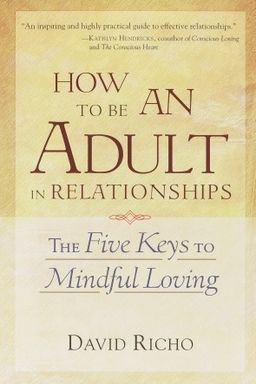
What makes love reliable rather than fleeting? David Richo argues that love’s lasting form is not built on passion or need but on five teachable practices he calls the Five A’s: Attention, Acceptance, Appreciation, Affection, and Allowing. These are not sentimental ideals but concrete ways of being that fulfill both childhood emotional needs and adult relational requirements. When they are present, love feels safe and alive; when they are absent, insecurity and defensiveness replace intimacy.
The Map of Emotional Nutrition
Richo describes intimacy as a form of emotional nutrition. Once you internalize the Five A’s, you no longer hunger for external validation or repeat old emotional deficits in adult relationships. Attention is the practice of being fully present to another—the antidote to invisibility. Acceptance invites you to welcome others as they are rather than as you wish them to be. Appreciation recognizes contribution and effort, planting self-worth in both giver and receiver. Affection links physical tenderness with emotional care. Finally, Allowing grants freedom: love becomes participation, not possession. Together, these build a foundation for trust and emotional growth.
Childhood Mirroring and Repair
Much adult heartbreak, Richo notes, begins with deficits in early mirroring—those first moments when a caregiver responds to your emotions accurately. When childhood attention or acceptance was missing, the adult self tends to test, cling, or reenact earlier losses. Healing requires two tasks: receiving mirroring from safe others and internalizing it so you can become your own nurturant parent. Through self-observation, journaling, and compassionate grief work, you can say to your inner child, “I’m here for you now,” replacing despair with self-trust.
Mindfulness as the Container of Love
For Richo, mindfulness is the skill that makes all Five A’s possible. Mindfully attending to feelings—your own and others’—exposes reactivity before it becomes control, fear, or illusion. Richo contrasts the witness mind (present, curious) with the ego mind, which operates through five distortions: Fear, Desire, Judgment, Control, and Illusion. By naming these as they surface (“This is fear, not fact”), you create space for genuine intimacy. Mindfulness turns automatic reactions into choices; it transforms love from compulsion into conscious participation.
From Romance to Commitment
Richo’s model of love follows a three-phase arc: romance (the high of projection and connection), conflict (the descent where shadow material surfaces), and commitment (the integration of differences). Early romance mimics parental mirroring—each partner idealizes the other. Conflict surfaces as projection dissolves, revealing unmet needs. But if you address, process, and resolve conflicts mindfully, the relationship becomes a crucible for maturity. Commitment then evolves into what Richo calls an existential choice: the decision to keep offering the Five A’s even when comfort fades.
Fear, Ego, and Letting Go
Two fears govern intimate life: abandonment and engulfment. The first fears losing love; the second fears losing self. Using the “Three-A practice”—Admit, Allow, Act as if—you can retrain your nervous system to stay open amid fear. Similarly, ego habits summarized as F.A.C.E. (Fear, Attachment, Control, Entitlement) sabotage love by turning relationships into ego projects. Releasing them through humility, confession, and mindful awareness restores true connection.
Grief and Renewal
Richo views grief as the twin of love—a disciplined self-nurturance that integrates loss instead of repressing it. His step-wise program includes remembering, feeling, re-authoring, gratitude, and forgiveness. With practice, you transform pain into compassion, allowing new beginnings. Whether you are recovering from breakup, betrayal, or childhood trauma, mindful grieving converts the weight of loss into the wisdom to love again.
Across all these themes, Richo proposes a mature, mindful definition of love: it is not possession or sacrifice, but the daily gift of attention, acceptance, appreciation, affection, and allowing—offered to others and to yourself. This process heals the past, steadies the present, and opens the heart toward a universal compassion that extends beyond romantic partnership.