
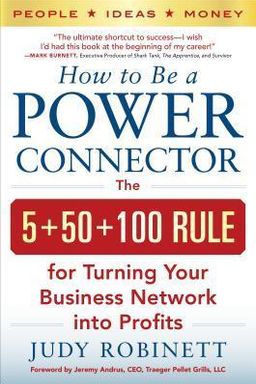
How to Be a Power Connector cover

How to Be a Power Connector

by Judy Robinett

How to Be a Power Connector guides you through the art of strategic networking, using the 5+50+100 Rule to transform your professional connections into lucrative opportunities. Discover practical strategies to build a diverse, robust network that propels you toward your career goals.

Turning Connections into Power: How Strategic Relationships Amplify Success

How far could you go if every person you met wanted to help you succeed? In How to Be a Power Connector, venture capitalist and strategist Judy Robinett argues that your network—not your IQ, your business plan, or your capital—determines your ultimate potential. The book’s central claim is simple but profound: everything you need is attached to people. The right relationships, cultivated with intelligence and generosity, form a power grid through which opportunities, knowledge, and influence flow.

Robinett’s premise rests on the observation that traditional networking—collecting business cards or LinkedIn followers—is broken. Most of us are overconnected but underrelated. We may have hundreds of contacts yet few genuine allies who would return a call within twenty-four hours. The author proposes replacing shallow networking with what she calls power connecting: the art of building high-value, strategic relationships across multiple ecosystems of influence.

The Shift from Networking to Power Connecting

Power connecting begins with a mindset shift. Rather than focusing on extracting value from others, Robinett insists that you must start by adding value—offering information, introductions, and opportunities without expecting an immediate return. This mirrors Adam Grant’s Give and Take philosophy that generosity fuels long-term success. When you give first, you build trust, credibility, and goodwill, which she calls the currency of influence.

The author tells her own story: a shy Idaho social worker who transformed into a board member, angel investor, and advisor to billionaires. Her rise wasn’t about status; it was about learning to map and access ecosystems of power. “If you want to go far, go with others,” she quotes, borrowing from an African proverb. Throughout the book, she shows how anyone—regardless of background—can use the same approach.

The Ecosystem Model of Opportunity

Robinett reimagines the business world as a network of ecosystems: interlocking webs of people linked by common goals and resources. Whether it’s finance, media, government, academia, or community, each ecosystem contains its own rules and key influencers. To succeed, you must identify which ecosystems align with your goals, learn how they function, and join them strategically. Entering the right room is more important than working any room.

She demonstrates this idea with real stories—how sitting on a finance committee for Boise’s United Way led her to CEOs, politicians, and investors, opening doors that would change her career. Being “in the right ecosystem” multiplies your access to what she calls the four great currencies: knowledge, connections, resources, and opportunities.

The 5+50+100 Power Circle System

At the heart of Robinett’s framework is her 5+50+100 Rule, inspired by anthropologist Robin Dunbar’s research suggesting that humans can maintain stable relationships with about 150 people. Robinett refines this into three concentric circles: your “Top 5,” those closest allies you contact daily; your “Key 50,” the important partners you nurture weekly; and your “Vital 100,” broader professional ties you engage monthly. This structure prevents relational chaos, focuses your energy, and ensures depth as well as breadth.

Rather than measuring success by how many people you know, power connectors measure by how well they know the right people—and how consistently they contribute to those relationships. The aim isn’t control; it’s leverage through reciprocity and trust.

From Weak Links to Power Connectors

Robinett draws on sociologist Mark Granovetter’s famous “strength of weak ties” theory: our most valuable opportunities often come from acquaintances rather than close friends. Successful connectors cultivate both strong and weak links, bridging isolated clusters of people and ideas. The most influential among them are “power connectors”—hubs who unite disparate worlds, turning networks into living systems of collaboration. These bridges amplify your reputation, credibility, and visibility exponentially.

Through stories—from Silicon Valley’s Adam Rifkin to philanthropist Kay Koplovitz—Robinett shows the compounding magic of connecting others. Each introduction you make generates social capital that often returns in unexpected but meaningful ways. She reminds readers that value multiplies across networks like Metcalfe’s Law: the more connections are linked, the more valuable the network becomes.

Why These Ideas Matter

In an age where business runs on relationships—“people to people” rather than B2B—Robinett’s playbook is both timely and practical. Her blueprint covers every stage: identifying key ecosystems, building integrity-driven relationships, organizing networks strategically, connecting others, and leveraging digital platforms like LinkedIn and Twitter without losing authenticity. She also tackles barriers like shyness, fear, and self-doubt, providing tools to overcome them.

Ultimately, How to Be a Power Connector is not about schmoozing or manipulation. It’s about creating a web of trust, generosity, and competence where everyone rises together. By systematically nurturing your network, you transform isolated contacts into a personal ecosystem of power—and in the process, you turn relationships into one of life’s greatest assets.


The Power Connector Mindset

Robinett begins by reframing how you think about connection itself. Networking, she argues, has a bad reputation because it often feels transactional or self-serving. The power connector mindset turns networking into something generous, purposeful, and human. It’s rooted in curiosity, empathy, and a strategic focus on adding value before asking for anything in return.

Know, Like, and Trust

Robinett boils down relationship-building to three essentials: people must know you, like you, and trust you. Being known means showing up in the right places—industry gatherings, conferences, or even community events—so others can connect your name with something meaningful. Being liked stems from authentic warmth; studies by psychologists Susan Fiske and Amy Cuddy show that warmth is judged faster and valued more than competence. Trust, the hardest and most fragile component, grows through consistency: doing what you say, keeping promises, and following up reliably.

Overcoming Mental Barriers

Many people don’t connect not because they don’t care—but because they’re afraid. Robinett devotes a section to dismantling psychological barriers such as shyness, self-consciousness, or fear of rejection. She offers practical “fixes”: act as if you’re confident, focus outward rather than inward, and acknowledge that most strangers welcome conversation. Her own story reinforces this: a self-described introvert who trained herself to talk to three strangers a day, she discovered that confidence grows through practice.

She also challenges limiting beliefs like “I have nothing to offer” or “Networking is manipulative.” Instead, she reframes connection as mutual enrichment. You always have something of value—your skills, curiosity, empathy, or even your listening ear. She encourages readers to create what she calls a “victory log” of fifty accomplishments to remind themselves of the unique assets they bring.

Giving Before You Get

The mindset of power connecting mirrors the law of reciprocity from social psychology: when you give freely, others naturally want to give back. This attitude transforms how others perceive you. Whether it’s sharing an insightful article, introducing two colleagues, or volunteering to solve a problem, each act establishes emotional bank deposits of trust. As Robinett notes, “People must know, like, and trust you before sharing their social capital.”

Connecting for the Long Game

Power connectors play the long game. They see relationships not as opportunistic transactions but as enduring partnerships. Robinett highlights mentors like Kay Koplovitz, founder of USA Network, who invests years nurturing networks of women entrepreneurs. The secret isn’t speed—it’s sincerity and strategic consistency. Each meeting, introduction, or follow-up becomes a small act of cultivation.

“The quality of your relationships determines the quality of your success.”

By internalizing this mindset, you stop chasing contacts and start curating relationships. You shift from taker to giver, from lone operator to collaborative bridge-builder. In Robinett’s world, that shift is what unlocks exponential opportunity.


Ecosystems: The Invisible Web of Opportunity

Robinett’s concept of ecosystems is one of the book’s most distinctive ideas. She defines an ecosystem not just as a community but as an interdependent web of relationships—people, institutions, and resources that share common interests and influence. Knowing how these ecosystems work determines how far and how fast you can go.

The Four Advantages of Ecosystems

  • Knowledge: You gain insider insight not found in books or public reports. A connection in the political ecosystem, for example, can alert you to pending legislation that could affect your business.
  • Connections: Each contact introduces you to others in the same network, expanding your reach exponentially.
  • Resources: Ecosystem members have targeted access to money, expertise, and talent.
  • Opportunities: Hidden chances—partnerships, deals, or advisory roles—emerge only to insiders.

Robinett illustrates this with the story of a Utah entrepreneur who sold his start-up for $45 million after inviting potential acquirers to serve on his advisory board. By embedding himself in the right ecosystem, he transformed informational access into a multi-million-dollar opportunity.

The Eight Essential Ecosystems

Depending on your goals, Robinett identifies eight key ecosystems that every professional should understand and engage with:

  • Family and Friends: Your base of emotional support and the foundation of trust, often neglected in pursuit of business gains.
  • Passions and Interests: Authentic hobbies—like sports, arts, or causes—create organic networks of like-minded people.
  • Career or Profession: Your industry’s matrix of colleagues, suppliers, and competitors.
  • Government and Politics: Decision-makers who influence policies affecting your sector.
  • Finance: Investors, bankers, and backers who control capital flow.
  • Media: Journalists and storytellers who shape perception and reputation.
  • Your Industry: The professional network surrounding your work—from conferences to trade associations.
  • Community: Local or charitable spheres where volunteering and service elevate reputation and reveal new allies.

Each ecosystem offers a distinctive route to influence. For instance, Bill Gates’ mother met an IBM executive through the United Way board—a connection that eventually led IBM to take a chance on Microsoft. The lesson: community involvement can unlock corporate breakthroughs.

How to Join the Right Ecosystem

Robinett recommends doing deliberate reconnaissance: identify where the key players are located (politics in Washington, tech in Silicon Valley, media in New York), research the norms of that culture, and approach members with value to offer. For global success, understand that ecosystems differ by region; what works in the U.S. may falter in Asia.

Ultimately, being in the right ecosystem means being “in the right room”—the place where key decisions and introductions happen. If connection is currency, ecosystems are the marketplaces where you spend it wisely.


Building a Wide, Deep, and Robust Network

A powerful network, Robinett explains, isn’t determined by its size but by its structure. To reach your full potential, your network should be wide (spanning many industries), deep (offering multiple levels within organizations), and robust (responsive, value-aligned, and interconnected).

Going Wide: The Antidote to Comfort Zones

Humans are naturally drawn to people like themselves—a tendency sociologists call homophily. While comforting, it restricts growth. Robinett cites research showing that within homogeneous groups, innovation stagnates. By contrast, businesses with socially diverse networks were three times more likely to innovate. To expand, you must step outside familiar silos—attend different conferences, engage across industries, and form ties with people of varied backgrounds and beliefs.

Going Deep: Layers of Connection

Depth means having multiple contacts within any organization or field. Like redundancy in an electrical grid, having three points of entry ensures the current of connection never fails. Deep networks also connect vertically—from students to CEOs—because insights often come from unexpected levels. One biotech executive, Robinett recounts, cultivated relationships not only with top scientists but also with graduate students who later pioneered breakthrough research.

Going Robust: Quality Over Quantity

A robust network performs under stress. It is composed of competent, responsive, and trustworthy people who act quickly when you need help. Robinett’s benchmark for responsiveness is telling: her contacts usually reply within twenty-four hours because they know she does the same. Shared values—authenticity, honesty, fair play—form the network’s invisible glue. As she puts it, “Those values are the price of admission.”

By cultivating wide, deep, and robust networks, you evolve from being a mere participant to becoming a hub—a connector through whom opportunities move faster and farther than ever before.


The 5+50+100 Rule: Organizing Your Power Circles

Robinett’s 5+50+100 system is both a philosophy and a management tool for your social capital. Based on cognitive limits revealed by anthropologist Robin Dunbar, she argues that maintaining roughly 150 meaningful relationships is the sweet spot for influence without burnout.

Top 5: Your Inner Circle

Your inner circle—the “Top 5”—includes those you trust implicitly. You interact daily and share personal as well as professional goals. These relationships provide emotional stability and honest feedback, serving as your accountability partners.

Key 50: Your Circle of Influence

The “Key 50” are your strategic allies—people whose success intertwines with yours. They include mentors, collaborators, and high-value peers in important ecosystems. Robinett advises weekly contact with this group through thoughtful updates, introductions, or favors. As management expert Stephen Covey might say, this forms your “circle of influence.”

Vital 100: Your Broader Community

The “Vital 100” consists of acquaintances and weaker links who provide diversity and reach. Monthly check-ins—such as group emails with useful articles or invitations—keep the connection alive. Some of these may later move into your Key 50 as relationships strengthen, maintaining a dynamic network flow.

Power connectors continually evaluate these circles, removing “leeches” and “bad actors” who drain energy, and nurturing those who reciprocate integrity. This disciplined curation transforms your 150 contacts from a pile of business cards into a living, vibrant system of opportunity.


Evaluating and Activating Your Connections

After each meeting or introduction, Robinett recommends a fast, structured action—reconnect, assess, and activate. Within twenty-four hours, send a personalized follow-up by email or LinkedIn that adds value: share an article, offer an introduction, or thank them sincerely. This small step, repeated consistently, sets you apart from 95% of professionals who never follow up.

Assessing the Right Fit

She proposes categorizing new contacts into five groups: “Thanks but no thanks” (those who lack integrity), “Informants” (useful but unreliable), “Gray zone” (difficult personalities worth watching), “On deck” (promising but unproven), and “Power circles” (trusted collaborators). The criterion for inclusion isn’t fame—it’s shared values and mutual benefit. Warren Buffett’s rule applies: “You can’t write good contracts with bad people.”

Consistency Builds Trust

Trust grows through consistent touchpoints. Robinett outlines four timing rhythms: daily responses within 24 hours, weekly adds of value for your Key 50, monthly outreach to your Vital 100, and quarterly updates to your broader network. Each communication should be relevant and reciprocal, not spammy. Quality follow-ups transform casual contacts into allies who think of you first when opportunities surface.

The Art of the Ask

When the time comes to ask for help, Robinett emphasizes six principles: start small, be specific, match the request to the person and context, tell a story that conveys passion, be willing to ask directly for help, and express gratitude regardless of outcome. By giving multiple times before asking once, you build what Stephen Covey called an “emotional bank account.” The result: when you finally make a request, people are eager to say yes.


Connecting Your Connections: The Ultimate Multiplier

In phase four of Robinett’s system, you move from building your own network to connecting the networks of others. This is where exponential power lies. It’s the difference between being well-connected and being indispensable.

Mapping and Linking

Start by visually mapping your relationships—literally charting who knows whom and across which ecosystems. Like Lyndon B. Johnson’s “relationship maps” for passing legislation, this helps you locate influence points. You’ll spot potential collaborations and gaps where you can introduce people to one another.

Triangulation and Value Chains

Robinett calls the process of introducing two people who can benefit each other—and indirectly benefit you—triangulation. Each triangle multiplies trust and opportunity across your network. She illustrates this with the story of connecting an angel investor, a conference organizer, and a biotech founder—all of whom prospered from a single introduction. This principle reflects Metcalfe’s law: network value grows exponentially as connections among nodes increase.

The Culture of Generosity

By habitually connecting others, you create a culture of generosity around you. Over time, your network evolves into a community of collaboration. Each member contributes resources, ideas, and referrals—turning your personal relationships into a collective ecosystem of success. When someone in your circle faces a problem, someone else has the solution, often within one email.

This is the highest level of power connecting: becoming a bridge between ecosystems, industries, and people who might never have intersected otherwise. In doing so, you don’t just gain influence; you create value that ripples far beyond your immediate reach.


Women and the New Relationship Power

One of Robinett’s most compelling chapters explores gender dynamics in connection-building. Despite their growing numbers in the workforce, women remain underrepresented in executive leadership. But according to Robinett, women possess innate networking strengths that, when used strategically, can redefine how power operates.

Connection as Collaboration

Where men often form alliances based on hierarchy, women tend to build collaborative networks—broad webs of mutual support. These networks are horizontal rather than vertical, prioritizing inclusion, mentoring, and relationship depth. Studies cited by Robinett show that companies with more women in leadership roles outperform their peers in profitability, underscoring the business case for diversity.

Challenges and Double Standards

Women face a double bind: being “too soft” undermines competence, while being “too assertive” challenges likability. Robinett argues that the solution lies not in conforming but in integrating both—being what University of Michigan president Mary Sue Coleman called “relentlessly pleasant.” She also encourages women to advocate not just for themselves but for one another, since research shows that advocating for others yields better outcomes and reputations for women leaders.

The Stiletto Network Effect

Robinett celebrates the rise of women-only power networks—what Pamela Ryckman dubbed the “Stiletto Network.” These groups of women executives, investors, and founders actively share opportunities, open doors, and collectively advance each other’s ambitions. Robinett calls on women to build similar “power circles,” adding that every successful woman should “be a somebody who sends somebodies.”

The takeaway: Women already possess the empathy, communication, and collaborative instincts that power connecting requires. When combined with strategic courage—asking boldly, networking upward, and supporting peers—these traits don’t just close gender gaps; they redefine leadership for the relationship era.


The Power of Connection in the Relationship Era

Robinett closes her book with a vision: in the modern “Relationship Era,” genuine connection is the ultimate competitive advantage. The old economy was built on production; today’s economy runs on relationships. Whether you’re an entrepreneur, executive, or creative, your ability to connect authentically determines your influence, fulfillment, and success.

Connection as Currency

Every opportunity—funding, innovation, job offers, information—flows through people. Robinett illustrates this truth through her own network of high-level investors and thought leaders who take her calls because they trust her integrity. “People have the answers, the deals, the money, the access, the power, and the influence you need,” she writes. To unlock that power, you must first give it to others through reliability, care, and competence.

Relationships as the Real Power Grid

In a world overloaded with information, meaningful human bonds act as the filtering mechanism of value. Robinett calls relationships the “real power grid” behind global economics and innovation. This perspective echoes thought leaders like Keith Ferrazzi (Never Eat Alone), who emphasize that your success is the sum of the people who want to see you succeed.

Creating a Culture of Connection

Power connectors don’t just build personal empires—they create communities. Robinett envisions networks becoming ecosystems of generosity where members help one another instinctively. Her guiding principle, borrowed from the afterword’s “Top Ten Tips,” sums it up: “Engage in random acts of kindness. You never know how one small act can tip the scales.”

In the Relationship Era, skills and technology may open doors, but only connections keep them open. The true metric of success is not net worth but network strength—measured in trust, reciprocity, and shared value. Robinett’s book ends where it began: reminding you that the shortest path to opportunity is always through people.

Dig Deeper

Get personalized prompts to apply these lessons to your life and deepen your understanding.

Go Deeper

Get the Full Experience

Download Insight Books for AI-powered reflections, quizzes, and more.