
Idea 1
Conservatism as the Rational Defense of Civilization
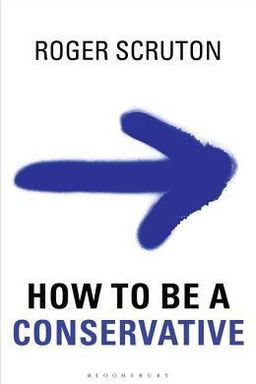
What does it mean to conserve something when everything around you seems to change? In How to Be a Conservative, Roger Scruton asks this question not only to defend conservatism but to redefine it: as a philosophy of care, gratitude, and trust in what civilization has achieved rather than a mere resistance to progress. Scruton argues that conservatism is not nostalgia but realism—a recognition that good things are easily destroyed but not easily created. The book is his intellectual journey toward understanding conservatism as the rational response to the fragility of Western civilization.
As Scruton puts it, conservatives are not dreamers of revolutions nor architects of utopia. They are guardians of the civilizational inheritance that makes freedom, law, and community possible. Conservatism begins from the feeling that family, nation, religion, and beauty are not arbitrary customs but repositories of value. These inherited commitments bind generations—the living, the dead, and the unborn—into a partnership of stewardship. From this sentimental foundation, Scruton builds a sophisticated moral, political, and philosophical defense of conserving what sustains human flourishing.
Why Conservatism Matters Today
Scruton opens with a dire warning: the beliefs of Western civilization—individual liberty, the rule of law, national sovereignty, the sanctity of home, and cultural beauty—are under threat. Globalization, bureaucratic governance, and ideological movements from socialism and liberalism to cosmopolitanism have eroded the civic and moral foundations of social order. For Scruton, conservatism is not an antiquated political label but a worldview that can answer modern crises without illusions. We preserve the fragile institutions that make peace and trust possible: not because they’re perfect, but because they’re proven to work. In his view, freedom must always be contextual—anchored in responsibility and belonging—to avoid degenerating into chaos.
Scruton’s Philosophical Core
Scruton distinguishes two kinds of conservatism: the metaphysical and the empirical. Metaphysical conservatism venerates the sacred—the defense of holy or transcendent things against desecration. Empirical conservatism, by contrast, is the modern project of conserving social institutions—the family, property, the law, schools, local communities, and the nation-state—that arose as enduring responses to human needs. It is this empirical version that he defends most passionately, seeing it not as dogmatic tradition but as accumulated wisdom. (In this, Scruton parallels Edmund Burke’s idea that prejudice contains the distilled reason of generations.) Conservatism, then, is an appeal to experiential knowledge—the wisdom formed in the slow learning of civil society rather than in the abstract reasoning of ideologues.
Scruton’s Moral Sentiment: Love of Home and Gratitude
Central to Scruton’s worldview is oikophilia, the love of home. Conservatism is not about profit or progress but about stewardship—the desire to preserve a home that belongs to us and our children. This love expresses gratitude toward the inheritance of the past, the “partnership of generations” Burke described. Gratitude enables a conservative to defend what is good—law, art, liberty, faith—without succumbing to bitterness or revolutionary zeal. Scruton’s philosophical conservatism is, thus, emotional as much as rational. It asks not, “What can society give me?” but “What am I able to preserve and pass on?”
The Journey and the Method
Scruton’s story begins autobiographically: as a young man in 1968 Paris, he saw revolutionary students destroying a civilization they didn’t understand. That moment transformed him from leftist to conservative. His journey unfolds like an intellectual pilgrimage, moving through political philosophies—socialism, nationalism, capitalism, liberalism, multiculturalism, environmentalism, internationalism—and teasing out the truth contained in each while rejecting their illusions. For Scruton, these systems find partial truths—social justice, solidarity, progress, equality—but distort them when detached from human scale and local responsibility. His method is generous yet cautious: accepting each ideology’s insights while placing them back into the framework of community and moral order.
The Stakes of Civilization
At its deepest level, How to Be a Conservative is a moral argument about culture and survival. Scruton believes Western civilization rests on Christianity’s moral gift—the sanctity of the person and the duty to forgive—and on the civic inheritance of English common law. When these cultural roots are forsaken, freedom itself collapses into license and control into technocracy. The conservative call is not nostalgic mourning for lost hierarchies but a defense of realms of value where meaning and fulfillment can endure amid change—family, faith, work, beauty, and national loyalty. In an age of consumerism and digital alienation, Scruton shows how conservation can be radical: to protect our civilization so that it remains a dwelling place for the human spirit.
The book is thus both a political defense and a spiritual meditation. It calls you to recognize the sacredness of what you already depend on—trust, civility, duty, reciprocity, and beauty—and to defend them, not out of fear of change, but out of love for what makes life meaningful. Conservatism, Scruton concludes, is an active moral posture: to build, preserve, and pass on the good things given to us by generations past before they vanish under the impatience of the present.