
Idea 1
Getting to Zero: Humanity’s Greatest Challenge
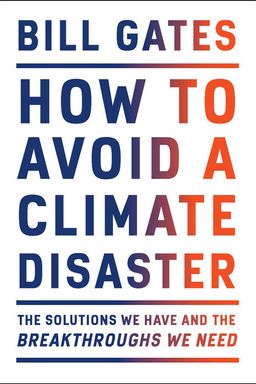
How can you keep living your modern lifestyle—driving, eating, charging your phone, working in an air-conditioned office—without heating up the planet beyond repair? In How to Avoid a Climate Disaster, Bill Gates argues that the only way to truly stop climate change is not to merely reduce emissions but to reach zero: stop adding greenhouse gases to the atmosphere altogether. He contends that cutting back or doing 'less bad' isn’t enough, because every additional molecule of carbon dioxide keeps warming the planet long after we emit it.
Gates’ central claim is as rigorous as it is urgent: The world must go from releasing 51 billion tons of greenhouse gases each year to nearly net-zero by 2050. This isn’t an idealistic pitch—it’s a technical and economic imperative grounded in physics and human survival. But Gates also challenges fatalism. He believes innovation, smart policy, and global cooperation can make this colossal goal attainable if we start immediately. 'Getting to zero,' he writes, is humanity’s most important project of the 21st century.
Why Zero Matters
Gates explains that greenhouse gases trap heat the way a greenhouse traps sunlight. Once carbon dioxide enters the atmosphere, it remains for thousands of years—roughly one-fifth of today's emissions will still linger in 10,000 years. That means even partial reductions merely slow warming; they don’t reverse it. If humanity continues emitting tens of billions of tons annually, we’ll face rising seas, destructive droughts, supercharged storms, and irreversible ecosystem collapse. Gates reduces this complex science to what he calls the 'bathtub analogy': the planet is filling up with carbon; even if you reduce the flow, the tub overflows unless you fully shut off the tap and eventually open the drain.
But zero doesn’t mean literal zero, Gates clarifies—it means net zero: a balance between emissions added and removed. In practice, some greenhouse gases will still be emitted (for example, from fertilizer or aviation), but new technologies and natural processes must capture or offset them. Ultimately, we may need to reach net negative—extracting more carbon than we emit—to stabilize temperatures.
The Scale of the Problem
The book’s introduction and first chapters paint a vivid picture of scale. Gates portrays modern civilization as built on fossil fuels—materials, transportation, food, and electricity all depend on them. Humanity currently emits about 51 billion tons of greenhouse gases annually: from making things like cement and steel (31%), manufacturing electricity (27%), growing things (19%), transporting goods and people (16%), and keeping cool or warm (7%). Each category presents unique technological and policy challenges. His message is clear: we must tackle every source of emissions, not just the headline culprits like cars and coal plants.
If this sounds overwhelming, Gates reframes it as a massive opportunity. 'Whoever develops affordable zero-carbon solutions,' he says, 'will lead the global economy for decades.' Rich countries, he insists, should go first—not merely because they caused most of the problem, but because they have the resources and infrastructure to innovate. Clean energy isn’t just a moral obligation; it’s an economic transformation comparable to the digital revolution. He draws from his technology background to argue that climate change needs its own version of Moore’s Law—where innovation drives exponential cost reductions—though he warns that energy transitions move far slower than computing leaps.
The Human Stakes
The book builds empathy through powerful stories: Kenyan farmers battling drought, families displaced by floods in Bangladesh, Puerto Rico’s infrastructure shattered by Hurricane Maria, and temperatures rising to 120°F in India’s villages. Gates links climate disaster to human suffering: by mid-century, climate-related deaths may rival those of COVID-19 each year, and by 2100, could be five times higher. Economically, unchecked climate change will cost the equivalent of enduring a pandemic-level economic shock every decade. The poorest billion people will endure the worst losses, despite contributing the least to the problem. For Gates, this moral asymmetry defines the urgency of action and adaptation.
The Plan for Hope
Despite the grim outlook, Gates insists on optimism grounded in engineering. He sees three imperatives: deploy existing low-carbon solutions faster (like solar, wind, electric vehicles), invent breakthroughs for the hard-to-abate sectors (like steel, cement, aviation, fertilizer), and create policies to scale them worldwide. He organizes his roadmap into five questions that frame every climate conversation: How much of the 51 billion tons are we addressing? What’s our plan for cement (i.e., the hardest stuff to decarbonize)? How much power and space do solutions require? And how much will it cost—the “Green Premium”? These tools, he argues, turn abstract climate debates into concrete choices.
Throughout the book, Gates draws on lessons from his work at the Gates Foundation—particularly how innovation and global coordination eradicated diseases and saved millions of lives. Just as vaccines needed R&D funding, political will, and market incentives, clean energy will need all three. He emphasizes that technology alone can’t solve climate change; we need supporting policies, finance, and behavioral shifts. Yet he’s confident that human ingenuity, coupled with global collaboration, can get us there.
Why You Should Care
You likely already feel the effects of climate change—in heat waves, wildfires, rising food prices, or floods that disrupt your community. Gates argues that every person, whether a citizen, consumer, or employee, has leverage to demand cleaner systems. He encourages you to see energy innovation not as a political fight but as humanity’s master problem, touching food, health, economy, and equality. Getting to zero isn’t optional—it’s the only path to keeping the planet liveable for the next generation.
At its heart, How to Avoid a Climate Disaster is a blueprint for optimism through realism. It reminds you that surviving and thriving in the coming century depends on mastering the art of global cooperation and technological innovation. As Gates writes: it’s less about guilt over emissions and more about inventing our way out of catastrophe.