
Idea 1
The Spiritual Science of Wealth Consciousness
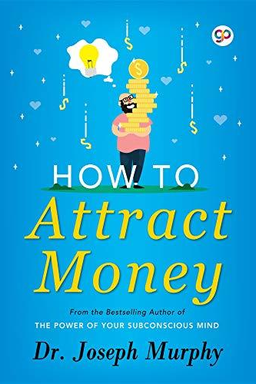
What if the key to wealth wasn’t in a bank account or a business plan—but in your own mind? In How to Attract Money, Dr. Joseph Murphy argues that prosperity is not a matter of luck or hustle, but of consciousness. He proposes that your relationship with money is an outward reflection of your inner beliefs about abundance, worthiness, and divine order. To transform your financial life, he insists, you must first cultivate what he calls a “wealth consciousness.”
Murphy’s approach belongs to the New Thought tradition—a spiritual and psychological movement that emphasizes the creative power of thought. Drawing from Scripture, Eastern philosophy, and modern psychology, he explains how the subconscious mind acts as a silent architect of your experience. According to him, money flows to those whose inner attitudes align with universal law—those who replace fear and resentment with faith, gratitude, and expectancy. Lack, by contrast, is a symptom of a blocked mental and spiritual circuit.
The Divine Right to Prosper
Murphy begins by rejecting the notion that poverty is virtuous. “Poverty,” he writes, “is a disease like any other mental disease.” To him, wealth is not greed—it’s a natural expression of life’s fullness. You were, he insists, born to succeed, win, and grow in every way. Because the universe itself is abundant and generous, you have a spiritual right to enjoy its resources. Denying this truth, or condemning money as “evil,” only cuts off the flow of supply. In fact, Murphy says, the biblical warning that “the love of money is the root of all evil” doesn’t mean money itself is corrupt—it means imbalance is. The obsession with money to the exclusion of other spiritual values leads to suffering. But rightly used, wealth is divine energy made practical.
Money as a Symbol and a Flow
To grasp Murphy’s view, it helps to shift how you see money. Money, he explains, is simply a symbol of exchange—“frozen energy” that enables circulation. When money flows freely, you’re in harmony with life; when you hoard or fear it, you block circulation and experience lack. Just as healthy blood must move through your body, so should wealth circulate through your life. This parallels Eastern conceptions of energy flow in Taoism and Hinduism, showing that stagnation—whether of money or energy—creates dis-ease. The key, then, is to regard money as divine substance, an instrument for good, and a channel for spiritual expression.
The Subconscious Law of Attraction
Murphy’s central principle is psychological: your subconscious mind accepts what you truly believe and feel. Idle affirmations like “I am rich” fail if you don’t actually feel prosperous. The subconscious only responds to the dominant emotion, so if fear or doubt outweighs confidence, it manifests as continued lack. His advice for beginners is to choose affirmations the conscious mind can accept easily—phrases like “I am prospering every day” or “My sales are increasing.” These build faith gradually until belief and feeling align. Once inner harmony is reached, results appear outwardly as opportunities, synchronicities, and “divine surplus.”
This inward causation echoes the philosophy of Think and Grow Rich by Napoleon Hill, which also insists that wealth-building begins with thought and belief. Yet Murphy emphasizes the spiritual source behind material success. He frames wealth not as manipulation of energy but as receptivity to God’s infinite abundance.
Faith, Imagination, and Divine Partnership
Dr. Murphy teaches that imagination is the womb of wealth. Whatever you clearly visualize and lovingly sustain will be impressed upon the subconscious and eventually take form—“the word becomes flesh.” One story tells of a poor janitor who dreamed nightly of a medical diploma bearing his name. Years later, through a series of uncanny events, he became a physician. To Murphy, this wasn’t coincidence but spiritual law in motion. The imagination, joined with feeling and faith, is how you co-create with the Divine Mind.
The Moral of The Road to Riches
The second major part of the book—“The Road to Riches”—extends these concepts using the biblical metaphor of turning water into wine. Water symbolizes your unconditioned consciousness, and wine your realized desire. Changing water into wine means transforming fear, lack, or confusion into conviction, supply, and satisfaction. Through examples—a bankrupt beauty salon owner who imagined being congratulated by her banker, a singer from Hell’s Kitchen who visualized global success—Murphy shows how emotional conviction molds reality. Prayer, he insists, is not begging a distant God but becoming one with your ideal through inner marriage of thought and feeling.
Why It Matters
Murphy’s message is timeless because it reframes both spirituality and prosperity as two sides of the same truth: you live in an intelligent, responsive universe that mirrors your dominant consciousness. By learning to see yourself as a creator rather than a victim, you gain mastery over your circumstances. The implication is radical: wealth is not something you chase, but something you allow. When you bless others, give freely, and keep your faith anchored in Divine abundance, you step into your “right to be rich.”
In the chapters ahead, we’ll unpack this spiritual science of prosperity: how releasing fear attracts flow, how imagination acts as spiritual alchemy, why resentment repels wealth, and how gratitude, balance, and faith make you a magnet for success. Ultimately, Murphy doesn’t just want you to have money—he wants you to understand that abundance, like love, is your birthright.