
Idea 1
The Geography of Memory and the Legacy of Slavery
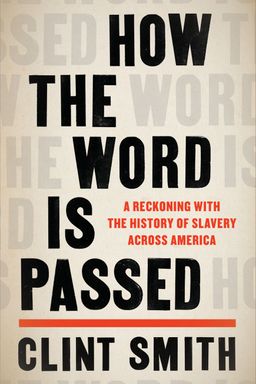
How can you truly see slavery’s ongoing presence in the world around you? In How the Word Is Passed, Clint Smith argues that memory is not abstract—it is grounded in geography, embodied in monuments, and contested through public history. Every landscape you encounter—whether a plantation, cemetery, prison, or city—reveals the stories a society chooses to remember or forget. Smith’s journey across ten historical sites becomes both a travelogue and a meditation on how truth, myth, and place interact.
Living landscapes and contested narratives
Smith begins in New Orleans, where the Mississippi River holds centuries of calls for justice. Activists like Leon A. Waters and Take ’Em Down NOLA remind the city that its levees, roads, and monuments are all built atop histories of enslavement. Places like the Whitney Plantation, Monticello, Blandford Cemetery, and Angola Prison form an arc—from memorials that confront slavery directly to institutions that obscure or recontextualize it. You learn to read these sites like social texts: each tells a story about what the country wants to believe about itself.
Three modes of remembering
Smith’s travels—the Whitney Plantation’s artful memorials to the enslaved, Monticello’s evolving interpretation of Jefferson, and Blandford’s Confederate glasswork—all reveal three models of memory: confrontation, complication, and denial. Confrontational sites like Whitney center Black suffering and resilience; complicated sites like Monticello reveal the contradictions of revered founders; denial manifests in places like Blandford, where mourning morphs into the myth of noble rebellion. These modes are not fixed categories—they reflect choices about who tells history and to whom.
Memory as political act
A monument is never neutral. Smith exposes how memorialization can be both redemptive and reactionary. Take ’Em Down NOLA’s removal of Confederate statues is an act of reclamation, while the United Daughters of the Confederacy’s century-long campaign to embed Lost Cause rhetoric in classrooms demonstrates how commemoration can sustain white supremacy. The stakes of memory are civic—the stories memorials tell influence laws, textbooks, and belonging.
Public history and personal truth
Smith’s encounters with interpreters and guides show that historical truth depends on who delivers it. At Monticello, David Thorson humanizes the enslaved with empathy and evidence. At Whitney, Dr. Ibrahima Seck situates his work within global and local responsibilities. These interpreters shape emotional and intellectual experiences, revealing that public history is an ethical collaboration between institutions and descendants. The reader is urged to become a participant—questioning absences, listening to oral histories, and unlearning simplifications.
Memory stretching across generations
The book closes on testimony—Smith’s grandparents recounting segregation-era terror and survival. Their stories reveal that slavery’s shadow reaches into modern life through memory, policy, and everyday experience. When his grandmother says, “I lived it,” you grasp the link between historical documentation and emotional truth. Memory, therefore, becomes a form of resistance.
Taken together, Smith’s work teaches you that understanding slavery’s legacy is not about mastering a list of facts; it is about learning to interpret society’s geography of memory. From the ruins of Gorée Island to the preserved walls of Angola, every space holds competing versions of history. Reconciliation begins when you choose to see and question those versions—not as static relics but as living debates that define who we are and what kind of future we imagine.