
Idea 1
How Proust Can Transform the Way You See Life
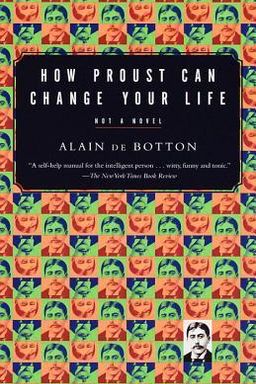
Have you ever felt as though you’re living on autopilot—your days slipping by in routine, with little time to notice the beauty or meaning behind it all? In How Proust Can Change Your Life, philosopher Alain de Botton invites you to step into the mind of Marcel Proust, the French novelist whose masterpiece In Search of Lost Time shows how art, love, suffering, and memory can radically transform how we live.
De Botton contends that Proust was far more than a literary eccentric; he was a life teacher, offering us practical guidance on seeing clearly, suffering intelligently, and loving deeply. While his seven-volume novel might seem sealed away in the drawing rooms of high art, de Botton argues it’s essentially a manual for living—a secular scripture on how to rediscover joy in the ordinary and meaning in pain. The result is a witty, tender exploration of how reading—and thinking like Proust—can awaken us to our own lives.
Seeing Life Anew Through Mortality
De Botton begins with an extraordinary moment from Proust’s life: his written response to a French newspaper asking what people would do if the world were ending. Proust replied that knowing death was imminent would make life appear suddenly wonderful—every neglected possibility, every overlooked pleasure would shimmer with renewed urgency. This insight shapes de Botton’s central argument: that we don’t need a catastrophe to love life. We only need to remember we’ll die. Awareness of mortality clears away laziness and renews desire, revealing how our dissatisfaction arises not from life itself but from the way we live it.
This sets up a major theme that runs through the book: the importance of slowing down and noticing the infinite richness of ordinary existence—a lesson in mindfulness long before the term became fashionable.
The Art of Reading Yourself
Proust’s notion of reading was revolutionary. He believed we read to discover ourselves, not simply to absorb another’s views. Books, he said, are “optical instruments” offered to help us perceive truths about life and ourselves that we might otherwise miss. De Botton draws out this idea—showing how Proust turned literature into therapy. Reading Proust isn’t about memorizing plotlines, but learning to see the patterns, emotions, and blind spots that shape us.
By reading deeply, we recognize ourselves in descriptions of fictional lives—those belonging to characters like the jealous Swann or the tender yet deluded narrator in In Search of Lost Time. Through what de Botton calls the “Marquis de Lau phenomenon,” we see familiar faces and emotions mirrored across centuries, discovering kinship where we thought there was distance.
Suffering as a Form of Knowledge
De Botton’s most striking theme lies in Proust’s view of suffering. While most philosophers—from Epicurus to modern psychologists—aim to minimize unhappiness, Proust insists that pain is our most accurate teacher. True wisdom, he suggests, can’t be learned from books or lectures but only from personal heartbreak and failure. “Happiness,” he wrote, “is good for the body, but grief develops the strength of the mind.”
Proust’s agonizing illnesses and doomed love affairs became the laboratory for his insights. He suffered—but he turned those sufferings into perception. And de Botton shows that the path of transformation lies in doing as Proust did: converting grief into understanding, disappointments into insights, and illness into empathy—a notion echoed in Viktor Frankl’s Man’s Search for Meaning.
Attention, Expression, and the Habit of Seeing
Another cornerstone of Proustian wisdom is learning to see and describe the world without clichés. He abhorred lazy language (“It rains cats and dogs,” “Bye-bye”), believing such phrases kill thought. Real expression, for Proust, means precision—the moral duty of noticing things as they truly are. His devotion to careful observation made him as revolutionary in art as Monet was in painting; both sought to depict reality as it is experienced, not as convention frames it.
In Proust’s example, de Botton finds an ethical call to “open your eyes.” To look long, patiently, and truthfully at people and the world—because seeing clearly is an act of love. It’s how we overcome habit and indifference.
Friendship, Hypocrisy, and Writing as Honesty
De Botton explores how Proust’s friendships reveal the limits of conversation and social life. Though Proust was charming, generous, and adored, he doubted that genuine truth could ever occur in polite company. In friendship, we lie to spare feelings; in art, we tell the truth. He advocates cultivating affection and direct kindness in life—but saving honest reflection for writing, where the mind can be free from flattery and fear. De Botton calls this the healing counterpart to friendship: the unsent letter or the written page.
Rediscovering the Extraordinary in the Ordinary
The final Proustian lesson, de Botton shows, is an invitation to re-enchant everyday life. By looking slowly, attentively, we discover beauty not in grand subjects but in humble ones—a loaf of bread in Chardin’s painting, the smell of a madeleine dipped in tea, the shimmer on a rain-soaked window. For Proust, the true art of living is learning to see the miracle within the mundane.
Ultimately, How Proust Can Change Your Life is about consciousness itself: how we can learn, as Proust did, to suffer wisely, to love slowly, and to wake up to the living beauty that habit has made invisible. It’s a playful, profound manual for attention, transformation, and joy—one that proves philosophy can hide inside a novelist’s long sentences and even teach us, quite literally, how to change our lives.