
Idea 1
How to Stop Worrying and Start Living Fully
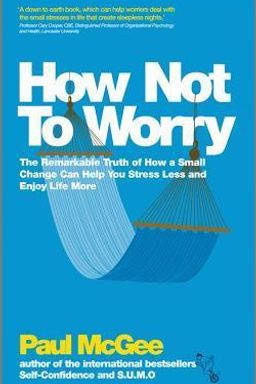
When was the last time you lay awake at night, replaying an endless loop of worries — about money, relationships, work, or even something as small as what someone thought of you? In How Not to Worry: The Remarkable Truth of How a Small Change Can Help You Stress Less and Enjoy Life More, Paul McGee explores the very human tendency to let worry, stress, and anxiety take the driver’s seat in our lives. He argues that while worry is a natural part of being human — even useful in small doses — we’ve let it spiral into a destructive habit that steals our peace, health, and happiness.
McGee’s central claim is disarmingly simple yet profound: the goal isn’t to eliminate worry altogether, but to understand it, manage it, and redirect it toward action and purpose. We’re not robots designed for perfect calm — we’re emotional, fallible beings wired for survival. Worry, as McGee shows, is an evolutionary gift that sometimes goes rogue. By learning how it works — in our brains, habits, and cultural conditioning — we can regain control, swap fear for perspective, and enjoy life more fully.
From Cavemen to CEOs: Why We’re Wired to Worry
McGee begins by taking us 50,000 years back to the African savannah. There we meet two archetypes: optimistic, laid-back Bob and cautious, fretful Frank. When danger comes — a sabre-toothed tiger — Bob shrugs it off, while Frank’s fear drives him to act and survive. Guess whose genes live on? McGee’s point is clear: anxiety once kept us alive, but in the modern world, our “inner caveman” still overreacts to false threats like traffic jams or workplace stress. Our biology hasn’t caught up with our technology.
That primitive part of the brain — the one responsible for our fight-or-flight response — is still triggered by every perceived threat. McGee likens it to a smoke alarm that blares not only for fires but also for burnt toast. The result? A life spent lurching between false alarms. Yet he reassures us: if we understand that our brains are doing their ancient job a bit too well, we can work with them rather than fight them.
Nine Reasons We Worry (and What They Reveal About Us)
In one of the book’s most practical sections, McGee outlines eight (plus one) reasons why we worry. Some are surprising: we may actually enjoy worrying because it gives life a sense of drama, or we may be subconsciously addicted to the adrenaline rush stress provides. Other times, our worries stem from a lack of control, knowledge, or confidence, from values that make us care deeply, or from upbringing and past experiences that taught us how to react.
He argues that identifying your personal “top three” worry triggers can be life-changing. Just as you can choose to walk downstairs with the other foot, you can choose new mental habits once you’ve brought the old ones to light. Awareness, as he’ll later show, is the first “A” in his Triple A strategy for reclaiming calm.
Loopy Logic: How We Think Ourselves Into Stress
A major section of the book is devoted to what McGee calls “loopy logic” — the strange, irrational loops of thought that perpetuate anxiety. Examples include feeding your fears with endless bad news, pretending problems don’t exist, adopting a victim mentality, or using worry like a superstition — as if fretting could magically prevent bad outcomes. These patterns are vividly illustrated with humor and anecdotes, like the man who threw paper from a train to “keep elephants off the tracks.” McGee’s playful wit makes these irrational habits easier to recognize — and abandon.
How to Reclaim Control: Small Shifts, Big Peace
The second half of the book — aptly titled “Move On” — offers practical tools to manage worry. These range from cognitive approaches, like using your rational brain to analyze and act, to more imaginative exercises like visualizing better outcomes or “talking” with historical figures for advice (his example: channeling explorer Ernest Shackleton’s resilience). McGee also emphasizes the importance of physical and environmental wellbeing: decluttering, exercising, laughing more, and spending time with supportive people instead of “Escalators” — those who double your troubles instead of halving them.
Why This Matters Now
Despite unprecedented safety, wealth, and longevity, modern humans are drowning in fear. As McGee and social psychologist Dan Gardner both point out, we are “the safest, healthiest, richest humans who ever lived” — yet our brains relentlessly scan for danger. McGee’s message is not to deny anxiety but to demystify it. When fear serves a purpose — alerting us, motivating us, prompting preparation — it’s constructive. But when it spirals into paralysis or obsession, it’s time to stop, understand, and move on.
“Nobody can go back and start a new beginning, but anyone can start today and make a new ending.”
This quotation, which McGee uses to close the book, sums up his empowering philosophy: Focus less on what’s gone wrong and more on what you can influence. Worry less, live more, and start today — with small but deliberate changes that accumulate into calm, confidence, and meaning.