
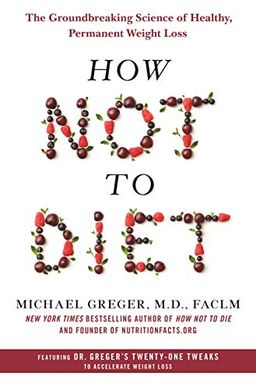
How Not to Diet cover

How Not to Diet

by Michael Greger, MD

How Not to Diet offers a comprehensive guide to achieving long-term weight loss through a healthy, plant-based diet. Dr. Michael Greger presents science-backed strategies to combat obesity by understanding calorie density, reducing sugar intake, and focusing on fiber-rich foods. This book is a must-read for anyone seeking sustainable, evidence-based weight management solutions.

The Power of One Diet

The Power of One Diet

Can one way of eating prevent and even reverse many of the leading causes of death? In his work, physician Michael Greger argues that it can. Drawing on thousands of scientific references, he presents the whole-food, plant-based diet as a single, evidence-based pattern capable of improving virtually every organ system. It's not about ideology or trends—it’s about using food as medicine, applying consistent research findings across heart disease, diabetes, cancer, and neurodegenerative illness.

A unified dietary approach

Greger’s central claim is elegantly simple: the same foods that heal your heart also protect your brain, your kidneys, and even your DNA. Rather than designing dozens of separate diets for each condition, he identifies one pattern—built from vegetables, fruits, beans, nuts, seeds, and whole grains—that simultaneously lowers cholesterol, blood pressure, inflammation, and oxidative stress. Processed foods, refined carbs, meat, dairy, and eggs are minimized or eliminated. This convergence explains why populations consuming traditional plant-based diets exhibit low rates of multiple chronic illnesses.

Science and clinical proof

Clinical researchers Dean Ornish, Caldwell Esselstyn, and Nathan Pritikin documented reversal of coronary artery blockage using such diets—sometimes verified with imaging. Greger’s own grandmother became his inspiration when she walked out of her wheelchair after joining Pritikin’s program and lived nearly forty more years. These cases highlight the body’s capacity for repair when underlying causes—dietary injury, not genetic inevitability—are removed.

Beyond heart disease: genes and aging

Greger moves beyond organs and arteries to the molecular level, explaining how food interacts with your genes. The Ornish‑Blackburn telomere studies demonstrated that plant-based diets can lengthen telomeres—the caps on chromosomes that shorten with age. The GEMINAL study revealed gene-expression changes in cancer tissues after lifestyle overhaul: hundreds of protective genes switched on and hundreds of harmful ones suppressed. His lesson? While you inherit genes, you write their story with your diet and habits. (Parenthetical note: epigenetics—the science of how environment alters gene activity—is a cornerstone of nutrition science today.)

Why the evidence matters more than the system

The medical establishment, Greger observes, rewards pills and procedures rather than prevention. Statins lower LDL but carry metabolic and muscular risks; by contrast, simple whole foods achieve similar biochemical goals without side effects. He cites Kaiser Permanente’s physician advisory recommending plant-based diets for high‑risk patients, underlining that this knowledge is mainstream enough to guide clinic policy—if not yet standard practice.

Core message

A heart‑healthy diet is a cancer‑healthy, brain‑healthy, kidney‑healthy diet. The same lifestyle that heals one system reverberates across all systems because biology is unified.

Practical implications for you

Start small but tangible: multiply your servings of fruits and vegetables, trade refined grains for intact ones, replace meat with beans, and minimize processed oils and sugar. Studies correlate even short-term diet improvements with measurable shifts—better insulin sensitivity, reduced angina, and improved vascular flexibility within weeks. The principle holds: one switch at the dinner table ripples through every cell, from arteries to telomeres.

Your fork, Greger insists, is your most powerful medical instrument. In a system that often profits from treatment, he hands you prevention—for free, three times a day.


Food as Gene Regulator

Food as Gene Regulator

Modern biology shows your diet writes instructions to your genome. Michael Greger uses examples from molecular genetics and nutrition science to illustrate that food determines which genes light up and which stay silent. You are not captive to hereditary codes; through what you eat, you alter gene expression and cellular aging.

Telomeres and cellular aging

Telomeres protect chromosomes every time a cell divides. They shorten with oxidative and inflammatory stress. The Nobel-recognized work of Elizabeth Blackburn and Dean Ornish showed that comprehensive lifestyle change—including a plant-based diet—doubles telomerase activity within three months and even lengthens telomeres over years. This is the first human evidence that aging at a cellular level can be partly reversed through diet.

Epigenetic control through nutrients

Foods such as turmeric, broccoli sprouts, berries, and green tea carry compounds that affect gene regulation. Curcumin reactivates silenced tumor-suppressor genes, while broccoli’s sulforaphane enables detox enzymes that block cancer initiation. Polyphenols from colorful fruits modulate brain gene networks related to Alzheimer’s pathology. These aren’t supplements but ordinary foods whose chemistry communicates with your DNA. (Note: Greger contrasts this molecular nutrition approach with the reductionist supplement industry, which often overshoots or misfires.)

The bee and royal jelly lesson

Honeybee larvae demonstrate how food shapes destiny: identical larvae become either short-lived workers or long-lived queens depending solely on diet. That metaphor translates directly to humans—our environment and food sculpt lifespan and resilience. Genes load the gun, but food pulls the trigger.

Key takeaway

Lifestyle can activate protective pathways and silence harmful ones. The same mechanisms operating in lab assays function in your cells every meal—food literally edits your genetic script.

If you carry genetic risks—heart disease, cancer, neurodegeneration—don’t resign yourself. By shifting toward whole, antioxidant-rich plants and minimizing animal fat and processed foods, you can create the biochemical environment that directs genes toward healing instead of harm.


Diet Against Disease

Diet Against Disease

Greger organizes much of his evidence around the major killers—heart disease, diabetes, cancer, kidney disease—and shows how a single set of dietary changes impacts them all. Each condition, though seemingly distinct, shares metabolic roots: oxidative damage, inflammation, and toxic dietary compounds. Plant-based eating targets each mechanism simultaneously.

Heart disease and cholesterol

Cardiovascular disease remains America’s top cause of death, yet Greger highlights data proving it’s almost entirely preventable and often reversible. LDL cholesterol is the driver of atherosclerosis. When LDL drops to levels typical in rural plant-based populations (about 50–70 mg/dL), the disease virtually disappears. Adopting diets rich in beans, greens, and grains instead of animal foods achieves these numbers without drugs. Statins help but bring side effects; whole foods fix the root cause.

Diabetes and fat toxicity

Type 2 diabetes stems from fat accumulating within muscle and liver cells, blocking insulin activity. Studies dating back to 1927 show high-fat meals trigger insulin resistance within hours. Switch to low-fat, high-fiber plant foods and insulin sensitivity rebounds—sometimes so fast patients must reduce medication within days. Even diabetic neuropathy, often deemed irreversible, improved under plant-based protocols. Greger makes clear: it’s not the sugar but the saturated fat that clogs metabolic machinery.

Cancer and protective compounds

While no diet eliminates cancer risk, Greger presents extensive food-based evidence: turmeric reduces genomic damage, berries regress precancerous polyps, and phytates from beans inhibit tumor growth. Populations eating plant-rich diets experience dramatically lower rates of colon and blood cancers. Conversely, processed meat, poultry, and high-heat cooking generate carcinogens like PhIP and nitrosamines. The practical defense: eat colorful plants daily and minimize meat—especially grilled or processed varieties.

Kidneys and dietary acid

Kidneys suffer from continuous exposure to animal-protein acids, excess phosphorus, and inflammatory response. Plant proteins prevent hyperfiltration and lower stone risk. Adding fruits and vegetables alkalinizes urine naturally, outperforming sodium‑bicarbonate supplements that add damaging sodium. Even basic swaps—from fish to tofu—immediately reduce renal strain. These findings reveal plant foods as renal medicine rather than mere produce.

Across diseases, the unifying theme holds: inflammation and oxidative stress are dietary phenomena. Remove their fuel—animal-based, refined, processed foods—and the body’s self-healing systems engage.


Environmental and Infectious Risks

Environmental and Infectious Risks

Beyond chronic illness, Greger links dietary habits to emerging infections and environmental toxicity. Animal agriculture, he argues, not only drives heart and cancer risk but also cultivates pandemics and pollutant exposure. What’s on your plate determines not just personal health but public safety.

Zoonoses and foodborne infections

Factory farming fosters the pathogens that threaten humanity—Salmonella in poultry, hepatitis E in pig livers, antibiotic-resistant bacteria spreading from livestock to people. These outbreaks survive modern sanitation because contamination begins in the food supply itself. Even home kitchens show cross‑contamination through cutting boards and cloths after handling raw chicken.

Antibiotic resistance and public policy

Over 80% of U.S. antibiotics go to animals, breeding superbugs. Regulatory inertia, industry lobbying, and profit-driven growth promotion endanger effective drugs for humans. Greger warns of entering a post-antibiotic era if diet patterns and farming practices persist. Opting for plant foods isn’t only healthy—it’s civic responsibility.

Environmental pollutants and neurological disease

Persistent pollutants—PCBs, dioxins, flame retardants—accumulate in animal fat and magnify up the food chain. Parkinson’s disease, for instance, tracks with dairy and pesticide exposure. Plants sit at the base of the chain; eating them directly bypasses toxin magnification. Berries and coffee may even offer neuroprotective antioxidants that counter damage.

Reducing animal foods minimizes infectious and toxic exposure, while plants reinforce immune defenses through phytochemicals, fiber, and improved microbiota. In Greger’s model, diet doubles as an environmental act and an immune strategy.


Food, Mood, and Brain Health

Food, Mood, and Brain Health

Greger connects nutrition to mental health and cognition, showing how inflammatory molecules in animal foods and deficiencies in plant nutrients influence emotion and brain performance. Your brain chemistry depends in large part on what's circulating in your blood after meals.

Depression, inflammation, and fatty acids

Arachidonic acid—concentrated in chicken and eggs—produces inflammatory eicosanoids that correlate with depression and suicide risk. Plant-based eaters have roughly ninefold lower intake of this compound. Lower inflammation translates into calmer mood and sharper focus. Trials transitioning omnivores to vegetarian diets found mood improvements within two weeks, supporting biochemical plausibility.

Exercise and neurochemistry

Exercise rivals pharmacologic antidepressants. Duke University trials comparing aerobic exercise to sertraline reported identical remission rates after four months. Pairing physical activity with plant-rich eating compounds benefits—antioxidants curb oxidative stress from workouts and folate enhances neurotransmitter synthesis.

Safe stimulants and harmful additives

Saffron shows antidepressant capacity matching Prozac with fewer side effects, while artificial sweeteners like aspartame provoke irritability in trials. Coffee and tea, by contrast, improve attention and lower neurodegenerative risk when consumed moderately and without additives. Greger frames dietary mental health as an achievable daily choice, not abstract chemistry.

Feeding your mind is not metaphorical—diet alters inflammatory tone, hormone signaling, and neurotransmitter precursors. A colorful plate supports a balanced mind.


Lifestyle as Medicine

Lifestyle as Medicine

Greger expands “food as medicine” into “life as medicine.” Exercise, sleep, light exposure, hydration, and minimal medical overuse combine with diet to form preventive health. The body heals when biology aligns with nature’s rhythms.

Movement and sitting

Studies show even active people suffer if they sit all day—each extra hour of sitting raises mortality risk. Standing desks, walking meetings, and brief movement breaks preserve vascular function. One minute of walking each hour offsets harmful endothelial changes. Exercise, especially brisk walking for an hour daily, substantially increases lifespan.

Medical risk avoidance

Hospital errors, unnecessary procedures, and drug side effects kill tens of thousands yearly. Prevention is safety: keep yourself out of hospitals. Whole foods rich in salicylic acid (the chemical cousin of aspirin) offer anti-inflammatory protection naturally. Transparency in screening and shared decision-making prevent overtreatment—ask if each test or drug is essential.

Hydration and longevity routines

Adequate water sharpens cognition and mood; tea and coffee supply antioxidants; hibiscus tea and beetroot further lower blood pressure. Flaxseed and nuts reduce strokes and mortality without weight penalty, disproving calorie fears. Greens and crucifers, cooked or raw, diversify nutrient protection—variety ensures full-spectrum defense.

Integrated insight

Diet and lifestyle are synergistic prescriptions: move more, sit less, hydrate wisely, eat plants, sleep dark—the simplest routine yields profound medical outcomes.

Together, these habits redefine medicine as what you do daily, not what’s done to you once disease appears.

Dig Deeper

Get personalized prompts to apply these lessons to your life and deepen your understanding.

Go Deeper

Get the Full Experience

Download Insight Books for AI-powered reflections, quizzes, and more.