
Idea 1
Money as Self-Expression and Meaning
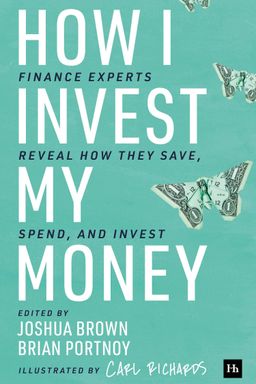
What does how you spend or invest your money reveal about who you are? How I Invest My Money, edited by Joshua Brown and Brian Portnoy, asks this deceptively simple question and draws surprisingly profound answers from financial experts. Across more than two dozen personal essays, wealth managers, advisors, and investors share the intimate stories of how they manage their own money—not their clients’ portfolios—and why they do it that way. The book’s argument is clear: money is not just a technical exercise but a deeply personal form of self-expression and meaning-making.
The editors contend that while most financial literature focuses on what people should do with their money—strategies, asset allocation, optimal portfolios—far fewer discussions reveal what the experts actually do themselves. This book turns the lens inward. It demonstrates that money decisions emerge from upbringing, psychology, values, and life purpose just as much as from spreadsheets and theories of efficient markets. As Nassim Nicholas Taleb’s epigraph declares, “Don’t tell me what you think, tell me what you have in your portfolio.” The result is a collage of lived experiences showing that every financial life is an impressionist painting rather than a geometrically precise chart.
Money as Narrative and Identity
Portnoy and Brown frame the book around the idea that money tells stories—stories of hope, frustration, resilience, and aspiration. Whether it’s Morgan Housel’s focus on independence, Dasarte Yarnway’s commitment to legacy and community, or Christine Benz’s devotion to simplicity, each chapter translates numbers into narratives. These stories reveal how people’s early experiences with poverty, generosity, risk, and luck shape their adult financial habits. Blair duQuesnay recalls her church’s offering plate as her formative money memory, while Leighann Miko recounts watching her mother shop far from home to avoid being seen using food stamps—deep lessons about shame, dignity, and value.
Money choices, the authors argue, are rarely rational in the pure mathematical sense. They are psychologically reasonable: we trade higher potential returns for lower anxiety, or take on risks that make us feel fulfilled rather than safe. This insight challenges conventional finance orthodoxy that assumes optimization leads to happiness. Instead, the contributors demonstrate that aligning money with personal meaning—freedom, generosity, legacy, creativity—is more valuable than squeezing out a few extra basis points of yield.
From Principles to Practice
The book addresses familiar investment principles like diversification, savings discipline, and long-term planning, yet it filters them through individual motivations. Morgan Housel’s story, for instance, shows that independence—not wealth—is his goal. He owns his home outright because the peace of mind it brings outweighs the rational benefits of leverage. Similarly, Shirl Penney structures his wealth around four capital “pools”: personal, family, philanthropic, and fun, highlighting how reframing asset categories around life purpose can clarify priorities. From Rita Cheng’s emphasis on financial literacy and women’s empowerment to Ryan Krueger’s focus on emotional dividends (“mailbox money”), the book transforms textbook concepts into reflections of lived experience.
(In contrast to books like The Psychology of Money or Your Money or Your Life, which focus on theory and behavior change, How I Invest My Money functions more like a mosaic of financial life philosophy. It mixes behavioral finance insights with memoir, presenting an authentic human dimension that most finance texts overlook.)
Why This Matters Now
In an era dominated by algorithmic trading and financial data dashboards, Brown and Portnoy remind readers that personal finance remains intensely personal. The book encourages you to rethink your own relationship with money: What are you investing for? Is it freedom, security, joy, philanthropy, or creativity? Its major takeaway is that financial success cannot be measured solely by returns but by the alignment between your financial actions and your life purpose. By bringing authenticity and vulnerability to an often impersonal industry, these advisors make money humane again. Ultimately, How I Invest My Money invites you to explore not only how much your money earns but what story it tells about you.