
Idea 1
How Great Founders Turn Ideas into Enduring Companies
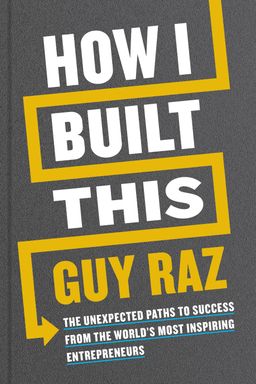
What separates people who dream from those who build? In How I Built This, Guy Raz distills the patterns behind thriving entrepreneurs—from early tinkers to global founders—and shows that the journey from idea to legacy is not miraculous but learnable. The book’s central argument is that entrepreneurship is a craft: you combine curiosity, calculated risk, disciplined experimentation, and deep purpose to create something that lasts. While luck plays a role, Raz insists that the common thread across hundreds of founders is this: the right mindset turns setbacks into insight and chaos into creativity.
Across fifteen years of interviews, Raz finds that every founder’s story follows a rhythm: first, openness to ideas and learning; then, a leap into uncertainty; followed by survival, testing, and iteration; and finally, the building of culture and mission that endure beyond profit. The roadmap isn’t linear—it loops, stalls, and restarts—but the underlying behaviors remain consistent.
Curiosity Creates Catalysts
The early phase is not about genius inspiration but about listening hard. Lisa Price (Carol’s Daughter) mixed beauty products at home out of passion, not profit, until customer excitement revealed a business. Stacy Brown (Chicken Salad Chick) tested recipes to solve a family problem and found widespread demand. Raz shows that good ideas surface where personal passion meets a shared problem—and that curiosity makes you an idea magnet. This is a form of prepared luck: you don’t wait for an epiphany, you create the conditions for one to land.
Whether your curiosity takes the shape of field research like Jen Rubio and Steph Korey (Away), or serendipitous tinkering like Stewart Butterfield’s game-chat turned Slack, the habit of receptive exploration is what connects opportunity with execution. Being open doesn’t mean chasing every thought—it means deliberately noticing, testing, and discarding what doesn’t hold up.
Leaps Are Calculated, Not Reckless
Fear is inevitable when you consider leaving safety for uncertainty. Raz uses Jim Koch’s (Samuel Adams) and Michael Dell’s stories to distinguish between the scary and the dangerous. Jumping off a cliff with a rope is scary but safe; staying in a job that suffocates your potential may be comfortable but dangerous in the long run. Successful founders treat fear as data: a signal to prepare, not a reason to freeze. They design their exits smartly—Daymond John kept his Red Lobster job while growing FUBU; Herb Kelleher funded Southwest while running his law practice. “Leaping safely” is the discipline of keeping a parachute while you climb.
Research and Resourcefulness Trump Perfection
Before you build, you learn. Jen Rubio and Steph Korey turned hundreds of interviews into data that shaped every feature of their luggage. Method’s founders read small-business pamphlets and hand-delivered bottles. Bootstrapping, Raz explains, is often the lab where your real education happens—you substitute time, sweat, and ingenuity for capital. Airbnb’s cereal-box hustle or Allbirds’ textile grant from New Zealand’s wool board reflect a mindset: use what you have, learn from each constraint, and prove demand before scaling. Resourceful founders know that perseverance without learning is just stubbornness, but learning paired with action fuels motion.
Story, Mission, and Culture Hold It All Together
Raz’s core insight in later chapters is that storytelling, purpose, and culture transform a startup into an institution. Whitney Wolfe Herd made Bumble stand out by embedding her mission—female agency in dating—into every brand touchpoint. Jenn Hyman grounded Rent the Runway in empowerment, not rental logistics, which guided both investor and product decisions. Companies that outlast their founders, Raz argues, rely not on charisma but on culture: shared values and explicit processes. Reed Hastings documented Netflix’s values to prevent dependence on one leader; Brian Scudamore rebuilt 1-800-GOT-JUNK? around alignment, not compliance.
Crisis and pivot phases test this foundation. When contamination hit Jeni’s Splendid Ice Creams, Jeni Britton Bauer responded with transparency and speed—saving trust at great cost. When Slack emerged from a failed game startup, it proved that humility and focus can alchemize failure into a breakthrough. Founders who tie decisions to values, clarity, and customer empathy survive both downturns and growth spurts.
Core insight
Entrepreneurship is not about avoiding risk or amplifying ego—it’s about disciplined curiosity, choosing meaningful problems, designing safe experiments, and aligning every stage of growth with mission and culture. You build not by giant leaps but by deliberate, persistent steps.
Ultimately, Raz’s founders remind us that success is cumulative. You practice curiosity to find an idea, courage to leave safety, research to refine it, grit to survive its crucible, and values to sustain it. The tools change, but the human pattern—open mind, measured risk, learning loop, and moral clarity—remains the same. Entrepreneurship, then, isn’t about emulating icons; it’s about mastering a repeatable mindset for turning passion and problems into purpose and impact.