
Idea 1
How Your Brain Constructs Emotion
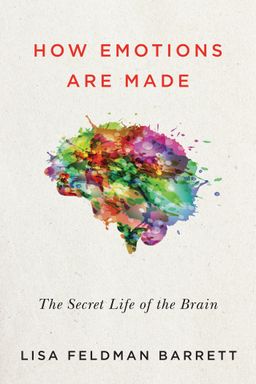
What if emotions aren’t hardwired reactions but mental events your brain builds on the fly? In her groundbreaking model of the mind, neuroscientist Lisa Feldman Barrett argues that emotions like fear, anger, and joy are not biological fingerprints. Instead, your brain constructs them moment to moment by predicting what will happen inside and outside your body and categorizing those predictions with concepts like “sadness” or “excitement.”
This theory overturns the classical view rooted in thinkers from Darwin to Ekman, who maintained that emotions are universal packages expressed by specific facial expressions, bodily patterns, and neural circuits. Barrett’s review of decades of evidence shows that variation—not uniformity—is the rule. There is no single facial scowl, amygdala spike, or heart rate pattern that defines anger or fear across contexts. Instead, each instance depends on predictions, concepts, and context.
The Predictive Brain: A Simulation Machine
Your brain isn’t a passive input-receiver; it’s a proactive prediction engine. Every fraction of a second, your brain issues guesses about what you’re about to see, hear, or feel, and then compares those predictions to actual input. When a prediction matches, you experience smooth perception. When it fails, the brain updates its internal model. This process—predictive processing—governs not only perception but emotion. Just as you see a bee in blurry blobs after learning what to look for, you feel “fear” or “joy” because your brain predicts which emotion concept best fits your internal and external signals.
Interoception and the Body Budget
The brain’s predictions begin with managing your body’s energy needs, what Barrett calls your body budget. The interoceptive network monitors signals like heart rate, respiration, glucose, and hormones. It allocates resources to keep you alive—speeding your heart when you run, slowing it when you rest. These continuous sensations of bodily regulation form your affect: the simple sense of feeling pleasant or unpleasant, calm or activated. Emotions then arise when your brain interprets these interoceptive changes using learned concepts.
For example, an elevated heart rate and flushed cheeks could be “anger,” “lust,” or “excitement,” depending on the situation and your conceptual repertoire. Affect provides raw data; concepts provide interpretation. That fusion is what you experience as emotion.
Concepts, Language, and Social Reality
Emotion concepts are learned tools, not innate modules. Through language and culture, your brain constructs categories by grouping past experiences around shared goals. Infants use words from caregivers as scaffolds—“toma,” “wug,” “angry”—to glue together otherwise disparate sensations. Cultures differ in the words they teach—Dutch gezellig (cozy togetherness) or Japanese arigata-meiwaku (grateful annoyance)—and therefore in the emotions people can feel. Words shape emotional granularity and determine what your brain can predict and experience.
Because emotions are conceptual, they also form part of social reality. Like money or marriage, they exist because people collectively agree on their meaning and use those shared concepts to coordinate behavior. When a culture defines “guilt,” “honor,” or “shame” differently, its members literally experience emotions differently. This view transforms emotion from a biological constant into a socially shared mental act.
Degeneracy and Whole-Brain Construction
At the neural level, Barrett finds no specialized emotion centers but degeneracy: the ability of different neural circuits to produce the same outcome. Many combinations of neurons can create an instance of anger; those neurons might contribute to joy or decision-making in another context. Core systems—the default mode network for prediction, the interoceptive network for body budgeting, and the control network for action—cooperate dynamically to construct each emotional event. Brain meta-analyses confirm that emotion arises from distributed activity across these networks, not isolated emotion circuits.
From Variation to Responsibility
Understanding emotion as construction reframes responsibility, health, and culture. Since emotions are predictions shaped by learning, you can change your emotional life by changing your concepts and environments. Societies can also reshape emotional repertoires by teaching new emotion words or reframing social scripts—why movements encouraging empathy, mindfulness, or civility can shift collective emotional norms. The theory dissolves the rigid boundary between biology and culture, showing that physiology and meaning are two sides of one predictive process.
Core Insight
You don’t discover emotions in your body—you make them in your brain. By managing your body budget, refining your concepts, and reshaping your predictions, you become an architect of your emotional world rather than its captive.