
Idea 1
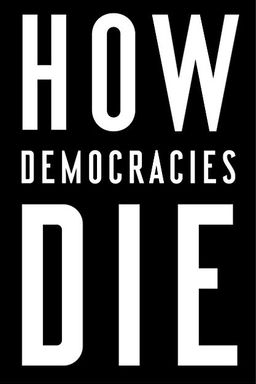
How Democracies Die—and Why It Matters Now
What does it really look like when a democracy dies? Not with the sound of tanks in the streets, but with quiet legal changes, angry speeches that erode trust, and the slow corrosion of norms that once kept power in check. In How Democracies Die, Harvard political scientists Steven Levitsky and Daniel Ziblatt offer a gripping, research-based answer to that question—one that feels alarmingly relevant to the early 21st century.
They begin with a sobering observation: modern democracies rarely collapse in sudden coups. Instead, they decay from within as elected leaders—sometimes popular, sometimes populist—undermine the institutions and unwritten rules that sustain freedom. Adolf Hitler, Hugo Chávez, and Recep Tayyip Erdoğan came to power through ballots, not bullets. The authors argue that the same dangerous dynamics—weak institutional gatekeepers, partisan polarization, and a steady erosion of mutual trust—now threaten the United States itself.
The Invisible Weakening of Democracies
Levitsky and Ziblatt’s analysis hinges on a critical distinction. During the Cold War, three out of four collapsed democracies died in coups d’état. But in today’s world, democracy erodes legally. Leaders exploit the rules to weaken opponents, pack courts, silence dissent, and tilt elections. People still vote, legislatures still meet, and courts still issue judgments, but the playing field becomes so uneven that one side can’t win fairly. In places like Venezuela, Turkey, and Poland, these changes happened incrementally—each step defensible on paper and widely dismissed as temporary or harmless until the system was already hollowed out.
The authors highlight the “paradox of democratic self-destruction.” The very institutions that safeguard liberty depend on self-restraint—what they call forbearance—and mutual acceptance of rival parties as legitimate, or mutual toleration. When politicians play constitutional “hardball”—stretching or exploiting every rule for partisan advantage—the system’s soft guardrails crumble. History, from interwar Europe to Latin America’s coups, shows that when this happens, democracy rarely survives intact.
America’s Uncomfortable Mirror
For much of the 20th century, the U.S. seemed exceptional—a democracy so stable that it weathered war, Depression, and Watergate. But Levitsky and Ziblatt challenge that complacency. They show how American norms, once strong, were forged in deeply undemocratic compromises, particularly over race. The stability that followed Reconstruction came only after both parties silently accepted the South’s suppression of Black voters. When the civil rights revolutions of the 1960s finally broke that exclusion, the old norms no longer fit a truly multiracial democracy. The polarization born in that era still drives American conflict today.
The election of Donald Trump, an outsider with open disdain for democratic customs, epitomizes what happens when political “gatekeepers” fail. In previous eras, party insiders blocked demagogues like Henry Ford or Huey Long. But after the reforms of the 1970s weakened the power of party elites in favor of primaries, that guardrail collapsed. Trump’s rise, abetted by partisan media and party leaders’ surrender, revealed how a democracy of laws can elect someone hostile to its spirit.
A Global Warning—and A Call to Civic Courage
Levitsky and Ziblatt draw on examples from Chile, Spain, Germany, and beyond to lay out a clear warning: democracy depends less on paper constitutions than on behavior. A legislature can impeach “legally” for partisan gain, just as Ferdinand Marcos declared martial law under constitutional authority. When the line between hardball and destruction blurs, citizens stop trusting elections, the press, and each other. That cynicism is what autocrats need most.
Yet the authors are not fatalists. They argue that citizens—not just politicians—can renew democracy through restraint, civic education, and coalition-building across ideological divides. Political rivals must once again become partners in defending the system itself. Their core question—“Can democracy survive without trust?”—is meant for you as much as for elected leaders. Understanding how democracies die, they suggest, is the first step toward keeping them alive.
“We know that extremist demagogues emerge from time to time in all societies. The test for democracy is not whether such figures emerge, but whether political leaders act to keep them from gaining power.”
In other words, the fate of democracy doesn’t rest with destiny—it rests with deliberate choices. How Democracies Die is a history lesson, a diagnosis, and a moral challenge, urging you to see politics not as combat but as collective self-preservation.