
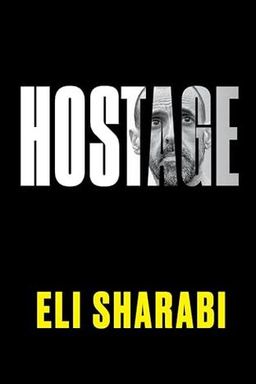
Hostage cover

Hostage

by Eli Sharabi

Sharabi, who spent 491 days in Hamas captivity, recounts his story of survival.

Surviving the Unthinkable: A Hostage’s Playbook

When your ordinary life shatters in an instant, what mindset keeps you alive and human? In Hostage, Eli Sharabi argues that survival in extreme captivity is not luck or brute endurance alone; it is a discipline. He contends that you must choose, again and again, to preserve agency, cultivate relationships strategically, structure time and food, and protect meaning. That choice begins the moment your world ruptures and continues for every one of the 491 days he spent a captive of Hamas after being abducted from Kibbutz Be’eri on October 7, 2023.

Sharabi’s core claim is stark: even in total powerlessness, there is always a choice. Not the cinematic kind of escape, but dozens of smaller, repeatable choices that stack into survival—how you speak, how you ration, how you pray, how you quell panic, how you negotiate, and how you remember who you are. To navigate terror, he argues, you must also learn to read the people who hold your life, to build a calibrated rapport that humanizes you without confusing the moral lines. And you must tether yourself to a future—to a why—so you can suffer any how (a theme that echoes Viktor Frankl’s Man’s Search for Meaning, which the hostages themselves quote via Nietzsche).

What You’ll Learn From This Story

This summary tracks the memoir’s arc from a family safe room in Be’eri to a Gaza house, into the belly of two tunnels, and back to a stage-managed release: a passage through fear, hunger, humiliation, moral clarity, and love. First, you’ll enter the breach—those first hours when five armed men tear open a safe room and a life, and a father decides, in seconds, to become ‘Eli the survivor.’ You’ll see the mechanisms of a coordinated abduction: an administrator at a breach in the fence, relay cars, and a euphoric convoy into Gaza.

Then you’ll sit in an upstairs children’s bedroom in Gaza—windows covered with UNRWA burlap—where a family and two guards, Sa’id ‘the Mask’ and Sa’ad ‘the Cleaner,’ watch over Eli and Khun, a Thai agricultural worker. You’ll watch the delicate, deliberate work of building a working relationship without crossing into identification (a careful inversion of Stockholm Syndrome), including card games with a patriarch called ‘hajj,’ proof-of-life filming by a German-accented cameraman, forced shaving, humiliating bathroom escorts, and the first routines of food, prayer, and listening.

Life Underground: Micro-societies and Micro-choices

From there, you’ll descend with Eli into the first tunnel, meet a cohort of abductees—Hersh Goldberg-Polin, Ori Danino, and Almog Sarusi from the Nova festival; and later, three more: Alon, Or, and Elia—and see how seven strangers become a fragile society. You’ll sit with them through a ceasefire that frees three and then breaks, the daily fear that a rescue attempt means certain execution, and rituals—Grace After Meals, Shabbat Kiddush—that keep identity intact. You’ll see what gets them through: games made from scraps, exercise with water jugs, a backgammon board homemade by Hersh and Ori, and the sentence they adopt as a mantra: ‘He who has a why can bear any how.’

You’ll also go with them into a second tunnel where hunger becomes systemic: one meager meal a day, stale pitas, worms in the drains, an overflowing cesspit, weeks without soap. You’ll see Eli’s quiet management—rationing, conflict mediation, gratitude circles at day’s end, tough-love coaching to pull a young father out of despair, and even a staged fainting to secure extra food. Throughout, you’ll meet the captors by the nicknames the hostages give them—‘Triangle,’ ‘Circle,’ ‘Peaky,’ ‘Smiley,’ ‘Trash,’ ‘Garbage,’ ‘Square,’ ‘Eyebrow,’ and ‘Nightingale’—and watch how ideology, ignorance, group dynamics, and small acts of professional pride shape their behavior.

Hope, Grief, and Moral Clarity

As the months stretch, Eli receives shards of news: murmurs of deals, hints of war, a whispered report that his wife and teenage daughters have been seen protesting for him (or perhaps it was his nieces; there is no way to know). He learns later, from fellow hostage Ohad Ben Ami—also from Be’eri—that three of the men who left in that first tunnel release were murdered months later; and, still later, that his brother Yossi was killed in captivity. The book never confuses kindness for goodness. It acknowledges small mercies and complex humans, yet it refuses to blur the line: the men who feed you today also stage your propaganda video tomorrow, and they would shoot you if the IDF came down that corridor.

Finally, you’ll witness a release choreographed like theater: dress rehearsals, onstage answers drilled by a Hebrew-speaking handler, a roaring crowd, and a Red Cross worker whispering, ‘You’re safe now’—the sentence that finally breaks Eli open. Back in Israel, wrapped in the flag, he showers, shaves, embraces his mother and siblings, and then walks to three new graves in Kfar HaRif: Lianne, Noiya (16), and Yahel (13). He falls to his knees, rises, and chooses life again.

Why This Matters For You

This book is a field manual for crisis leadership in the most extreme conditions and a meditation on dignity and memory. It matters because you, too, will face moments when you cannot control the terms of your life—illness, loss, high-stakes negotiations, chaotic teams. Sharabi shows you how to think straight under duress, keep a group together, protect boundaries while staying human, and carry grief without surrendering purpose. If Frankl gives you meaning and Amanda Ripley (The Unthinkable) gives you disaster instincts, Hostage gives you the operating system: the daily decisions that protect your mind, body, and soul in the dark.


Day One: The Choice To Survive

Eli Sharabi’s crisis starts in a safe room that isn’t safe. It’s Simchat Torah, October 7, 2023. He, his wife Lianne, their daughters—Noiya (16) and Yahel (13)—and their dog crowd into a reinforced room meant for rockets, not intruders. Hours later, five armed men, then more, breach the house, break the door that doesn’t lock by design, and drag Eli away barefoot. In those minutes—hostiles in balaclavas, bullets ricocheting off concrete, a room full of birthday balloons—he makes the mental pivot that runs through the entire book: ‘There is no more regular Eli. From now on, I am Eli the survivor.’

From Routine To Rupture

Like you, he starts that morning with familiar patterns: an app shrieking rocket alerts, tea for his British-Israeli family, TV news in the background. Then the WhatsApp pings change from noise to dread. Neighbors report breaches, Molotov cocktails, and arsons—homes in Be’eri burning: the Ors, Levs, Zohars. Eli locks windows and shutters and then feels the stairwell glass burst. A commander barks orders; the family is separated; Eli is hauled outside, head down, reading glasses knocked away.

As he’s marched toward a breach in the fence, he notices an ‘administrator’—a man without a mask, calmly directing traffic. It’s not chaos; it’s logistics: hostages pooled and loaded into kibbutz cars for exfiltration. The kidnappers swap headbands for blindfolds and shove Eli and a Thai worker named Khun under a blanket. The car slides past a gate—creak of iron—and enters Gaza.

First Decisions Under The Gun

Even before the border, choices pile up. Lianne shouts ‘British passport!’ banking on a different risk calculation for UK citizens. Eli decides not to fight in the safe room to shield the girls. Dragged through the kibbutz, he lifts his head once, takes in the burning homes and terrorists riding bicycles, and gets punched down. In those moments, he reframes his identity as a mission. That reframe isn’t bravado; it’s a practical operating mode that will determine how he talks, bargains, eats, and waits.

(Context: Crisis researchers like Amanda Ripley describe a three-phase arc—denial, deliberation, decisive action. Eli telescopes that arc into minutes by naming a role—‘the survivor’—and stepping into it.)

The Machinery Of Abduction

Inside Gaza, a mob tries to tear him apart until the gunmen shove him into a mosque and then into a side room that looks more like a corporate boardroom than a place of worship. Interrogations switch between Arabic and English. They doubt his age (‘Fifty-one?’), suspect he’s intelligence because he speaks Arabic, and batter Khun for not understanding. Eli translates, steadies Khun, and in doing so, starts his second, crucial mission: caring for those near him to stabilize himself. He doesn’t yet know he’ll do this for a year and four months—for a wounded college student from Ra’anana, for three men abducted from a rocket shelter at Reim, and for a quiet boy from the Galilee who will become his shadow son.

Consequences Of The First Day

After a jittery relay of stopovers meant to confuse IDF tracking, he’s pushed into a house, tied with ropes so tight they brand his flesh—hands behind his back, legs bound—for three days. The physical sequence matters: excruciating shoulder pain becomes his entire world; the humiliation of being escorted to pee, blindfold slipping over nose and mouth; the burlap curtains stamped UNRWA; rockets whooshing from nearby launchers and airstrikes answering from the sky. Pain collapses time, he writes; all he craves is to bring his arms forward.

On day three, two guards arrive who will define much of his early captivity: Sa’id, the stocky, bashful ‘Mask,’ and Sa’ad, the sullen ‘Cleaner’ with a prayer scar and a rage that traces back to an earlier airstrike injury. They treat his rope burns, chain his legs, leave his hands free, and start a conversation that will span card games, lectures about Abu Obaida, a surprise love of ‘Titanic,’ and a thousand small negotiations about Coke, Sprite, and soap.

Key Idea

Survival starts with a chosen identity under threat. Name it. Then align every micro-action—translations, posture, tone, rationing—to that role. Even when nothing is under your control, something is: the role you play.

As you face your own ruptures—medical news, a layoff, a late-night call—this chapter invites you to make that same pivot. You are not the person you were five minutes ago. You are the person who will steer the minutes to come.


House Arrest: Rapport Without Surrender

For nearly two months, Eli lives aboveground in a Gaza family’s home: a second floor under burlapped windows, card games in the evenings, and shackles at the ankles. The father is a strong, religious man who used to work construction in Tel Aviv and now carries wads of cash in his shirt pocket; the sons—Ahmed, Mosab, and Yusuf—study hard and speak English. The guards are ‘the Cleaner’ and ‘the Mask.’ Next to Eli lies Khun, a Thai worker who cries constantly and cannot communicate with anyone but Eli.

Reading The Room

Eli’s first tool is attention. He studies routines and relationships: who prays when, who cleans weapons, who likes sweet drinks, which son seeks status, which one keeps a distance. He notices that the guards fear Israeli ingenuity—chips in skin, trackers in bruises—and that his Arabic both earns respect and raises suspicion. He also sees that the family’s means are higher than the propaganda suggests: enough food, new clothes, toiletries, and later even soft drinks on request. This matters because every future ask—soap, toothpaste, a bucket shower—must be calibrated to the true baseline, not the story he’s told.

Building Managed Rapport

He starts conversations but sets guardrails. The Mask lectures him about land and identity; Eli counters gently with democracy and Israeli diversity, avoiding politics that could backfire. He teaches the guards basic economics—decision trees sketched in air—and earns the honorific ‘Mu‘allim!’ (teacher), which loosens treatment without confusing allegiance. He uses empathy without erasing moral clarity: he can talk hummus in Jaffa with the father, then remind himself that these same people would shoot him if a rescue attempt came down the corridor.

(Comparison: Negotiation experts like Chris Voss advise building rapport through tactical empathy while preserving clear boundaries. Eli lives this line daily, not to win a deal, but to keep a pulse.)

Guardrails Against Stockholm

Sharabi is explicit: this is not Stockholm Syndrome. He does not identify with Hamas or pity the cause. He names what is human but does not blur what is evil. He tells you exactly when and why he would grab a weapon: only if it would plausibly lead to freedom, not death in a neighborhood where any stranger is a target and an IDF unit might mistake him for a combatant. That calculus—desire, opportunity, probability—keeps him from rash heroics that would orphan his daughters.

Tiny Dignities, Tiny Terrors

Life here is made of humiliations and kindnesses: forced shaving of all body hair before filming; bucket showers followed by orders to remove even pubic hair; being undressed to use the toilet; a German cameraman orchestrating a proof-of-life video; a rare breeze through a bathroom window that smells of the sea. Eli sneaks peeks at the sky, signals drones with his hands, and then returns to mediating Khun’s panic with gestures and broken words. He asks you to notice how these acts—translating, teaching, soothing—also keep him anchored.

Practice

In hard rooms—workplaces, hospital wards, tense homes—pretend you are a ‘Mu‘allim.’ Listen for routines, map influence, and trade in dignity. Offer knowledge that elevates without threatening—and keep your red lines clear to yourself.

By the time ‘the Cleaner’ brings Eli to a large open window at sunset to feel the sea breeze, the book has taught you what strength looks like under guard: soft voice, firm boundaries, open eyes. Eli stands next to the man who would end him if ordered and hears him say, ‘It’s a shame not everyone in Israel is like you.’ Eli answers, ‘Most Israelis are like me.’ Two truths stand side by side: tiny common ground and an unbridgeable chasm. Learning to hold both is his second survival skill—and one you can use anywhere complexity and conviction collide.


Tunnels: Building a Life in the Dark

Eventually, the house goes dark and the trapdoor opens. Eli argues, refuses, then faces the true hostage’s choice: submit to the tunnel or die on the mosque floor. He descends. What he finds is a world-within-a-world—arched concrete walls, ceramic tiles, a sink and kitchenette—and a cellmate roster that becomes a lifeline and a wound.

Anatomy of the First Tunnel

Underground, the captors are a crew with roles: ‘Triangle’ the commander; ‘Circle’ the logistics officer; ‘Nightingale’ with a pure voice; ‘Smiley’ the superintendent; ‘Peaky’ the boss above them. The hostages become seven in a row on thin mattresses: Eli and Almog Sarusi (wounded, rescued from a bed where he bled for ten days), Hersh Goldberg-Polin (missing an arm), Ori Danino (gentle, Haredi-schooled), and three friends from the same rocket shelter: Alon (fair-haired), Or (a young father), and Elia (dark-haired and intense).

They build a micro-society with bathroom slippers shared regardless of shoe size, morning lines at the sink, and prayer as ritual structure. Eli asks Ori to recite Birkat Hamazon. The words—‘Who provides food for all’—float through sealed concrete and enter their chests like oxygen. On Shabbat, they do Kiddush with water; at Havdalah, they sing table hymns they learned from fathers long gone. Religion here isn’t ideology; it’s identity maintenance, like brushing teeth when toothpaste runs out.

Fear of Rescue, Fragility of Hope

The deepest fear in the tunnel isn’t the airstrike; it’s rescue. The leg shackles are not for escape prevention alone; they are execution devices—a guarantee captors can shoot before a commando reaches the cell. So the men pray—not for a raid—but for a deal. When a November hudna begins, the Mask and Nightingale wake three in the group. ‘You’re going back to mommy,’ the Circle tells them. Hersh, Ori, and Almog vanish. Eli, Alon, Or, and Elia stay behind, clinging to the logic—surely men are next—only to watch the truce collapse into ‘Big war outside.’

Weeks later, after a deafening blast caves the mosque shaft, they evacuate. The line snakes through a wasteland—concrete teeth, twisted rebar, whistle of bullets—and into a steeper, poorer tunnel where hunger and filth become characters with speaking roles.

The Second Tunnel: Hunger as a System

Here, there’s no electricity, no running water, and for weeks, only biscuits. Then stale pitas reclaimed from bombed streets; then a gas burner; then long stretches of one meal a day after captors declare that if Palestinian prisoners get one meal, so do you. Worms bloom in the cesspit; soap disappears; toothbrushes sit in putrid water. Health fails. Eli grows dizzy; the others suffer diarrhea and fungi; toenails peel off and alarms captors into grudging vitamins.

Yet meaning still arrives. The trio obsesses over a single English fantasy novel—Leigh Bardugo’s Shadow and Bone—reading it again and again until Elia teaches himself English to join. They sneak a contraband Fanta and face down the Circle’s interrogation—no proof, no case. They devise stealth workouts with water tanks and fans and end nights by each naming something good—even a sweet tea, a missing cruel guard, a wedge of pita—so their brains keep scanning for light.

Mantra

‘He who has a why can bear any how.’ — quoted by Hersh and adopted by the cell (echoing Frankl). Find or forge your why daily, or the how will swallow you.

If you’ve ever lived through a season of ‘no fixes’—caregiving, burnout, grief—this chapter gives you a template: build rituals; define a role; steward tiny wins. The tunnel is an extreme mirror of ordinary endurance—and the same principles hold.


Leading When You’re Starving

Starvation shrinks the world. In the second tunnel, meals become a tray of bland pasta or a siniyah of rice and beans with a pita and a half per man. That’s when Eli’s third role becomes indispensable: manager. He doesn’t appoint himself; the need selects him. He has decades running a kibbutz farm and business units, and he’s been a father longer than his cellmates have been adults. Those muscles flex in the dark.

Managing Scarcity

At first, scooping from shared trays leaves Alon—soft-spoken, conflict-averse—hungry. Eli names the problem plainly and suggests new norms. When talk fails, he adapts: fills his own pita slowly to protect a fair share and quietly coaches Alon to ‘save Mr. Nice Guy for Dizengoff bars’ and ask directly. Food logistics turn into moral education. Eventually, he formalizes gratitude circles: three good things nightly. The exercise transforms their attention systems; they start looking for small goods to report.

Tough Love for Breaking Hearts

Or, a young father, spirals into fetal sobbing over his wife Einav and toddler son Almog. Eli gives him two days to weep and then speaks truth: ‘Self-pity will break us. Your task is not you; it’s them. Survive for Einav and Almog.’ He reframes grief into mission, offers a tool—schedule your tears; then move—and models it himself. Later, when Eli learns aboard an army van that Einav was murdered, the leadership you watched in the tunnel reads differently: it wasn’t empty pep talk; it was a way to keep a father whole until the world told him otherwise.

Agency Moves (When No One’s Looking)

The team adds clandestine workouts (against rules): squats, push-ups, lifting fans. They run a staged fainting operation to secure more food. It’s theater—razor cut to the eyebrow for blood, leg-elevating co-star, panicked guard, a bowl of dates, a week of extra pitas—then back to one meal a day. It still matters. It proves to their own minds that they can bend reality an inch.

The Sentence That Saves Focus

When the others ask, ‘When do you fall apart?’ Eli answers: later. ‘When the gate closes behind me and I know I’m in IDF hands—then you’ll see me cry. Until then, I’m on a mission.’ This is not denial; it’s sequencing. He treats emotion like a resource to time, not a truth to suppress. (In resilience science, this resembles cognitive reappraisal and temporal distancing.)

Leadership Notes You Can Use

  • Name the mission. ‘Survive for X’ beats ‘survive because.’
  • Make norms explicit. Fairness rarely emerges on its own under stress.
  • Schedule feelings. Allow breakdowns; put them on a clock; return to tasks.
  • Close each day with gratitude. It reprograms what your mind seeks.

In workplaces or families, you can borrow this playbook: explicitly define purpose, design fair resource rules, ritualize attention on what is working, and teach people how to move from rumination to action. In tunnels and offices alike, those are the levers you control.


Inside the Captors’ System and Story

Eli names his guards with geometry and garbage: ‘Triangle’ the competent commander; ‘Circle’ the drill-sergeant logistician turned zealot; ‘Peaky’ (Abu Malik) the top boss who curses him to go blind; ‘Smiley’ the superintendent who smiles and sometimes sneaks halva; ‘Nightingale’ with a velvet voice; ‘Eyebrow’ with a unibrow and panic attacks; ‘Trash’ and ‘Garbage,’ whose names need no explanation; ‘Square’ who later takes charge and slips a pita over the partition when no one’s watching; ‘Orange,’ likely Peaky’s kin, first vicious then unexpectedly kind—once handwashing Eli’s foul shirt. The nicknames do two things: keep story straight and blunt terror with humor.

Beliefs, Blind Spots, and Information Diet

The guards chant an all-or-nothing ideology: all the land is theirs; Jews must return to Morocco, Yemen, Iran; Israel must vanish; the world will be an Islamic empire. Their information diet feeds this: Al Jazeera, Abu Obaida’s bulletins (a near-religious figure to them), snippets of Israeli TV they misinterpret. They celebrate ‘new captives,’ sweets for Iran’s missile barrage, and Hezbollah’s shelling; they also despair and sob at night when orders or losses weigh heavy. Economic motives surface too: the Circle’s falafel stand math (1.5 shekels a pita vs. 20 in Israel), professional pathways blocked, joining Hamas for salary and status. Eli listens, nods when prudent, and holds his line.

Pack Cruelty, Private Kindness

A pattern emerges you can recognize in any high-conflict group (see Amanda Ripley’s High Conflict): in a pack, cruelty spikes; alone, humanity leaks through. Smiley is cordial solo, cruel in company. The Square tosses bread unseen. The Circle, once solicitous, later watches October 7 videos on loop and spits, ‘Say thank you I haven’t killed you. Tea? In your dreams.’ Trash breaks Eli’s ribs after a grim phone call about his family and is later scolded: ‘Not the way of the Quran.’ The hypocrisy stings; the pain lasts a month.

What This Teaches You

Sharabi keeps two truths in mind: acknowledge the human to survive; never confuse that with justice. He learns whom to ask for food (send Alon to the Circle, Eli to the Square, Elia to the Triangle), when to avoid a group room, and how to sniff hope from shifts in tone. He also keeps moral clarity so sharp it cuts through fog: the men who stage smiles on Saturday are the men who starved you on Friday and would kill you on Sunday if ordered. That clarity keeps him sane in a system that gaslights by design—especially on release day, when a Hebrew-speaking handler scripts him to blame Netanyahu for babies and war, threatening to drag him back underground if he deviates.

Takeaway

When you live inside someone else’s story, learn it fluently—so it cannot swallow you. Translate it, map it, and use it to protect your purpose. But write your own margins, in bold.

You can apply this anywhere narrative power is asymmetric—hostile negotiations, political misinformation, toxic teams. Fluency without surrender is a discipline. Eli shows you how to practice it.


Hope, Ritual, and Grief Work

Hope, in Hostage, is not a mood; it’s a muscle. Eli strengthens it with ritual, story, and chosen attention. Each morning: Elia’s prayers. Fridays: Kiddush over water, ‘Eshet Chayil’ (Woman of Valor) for the women he loves—his mother, sisters, Lianne, and his girls. Saturdays: zemirot to close the Sabbath. Between rituals, he tells Alon about Yahel’s skydiving at twelve and how Noiya volunteered with autistic children. He traces their personalities like a finger over a cherished photograph, so his daughters live at the center of his tunnel, not at its edge.

Story as Oxygen

They trade biographies in the dark: Alon’s eight months backpacking Vietnam and the Philippines; Or’s love of music and life with Einav and their two-year-old son; Elia’s independence and later dreams to study. Eli helps Alon prepare for after: ‘Do the thing you love, not just the thing that pays.’ They imagine dives in turquoise water, not to escape, but to keep a future mapped on the inside of their skulls. (In trauma recovery, this resembles ‘future-self’ orientation.)

Pre-grieving Without Collapsing

Eli rehearses tragedies he cannot verify—Lianne and the girls hostage, maybe worse; brother Yossi missing—in a small mental corner. He allows the possibility, refuses to dwell, and returns to his mission. Later, in a grim tunnel upgrade staged for propaganda, fellow hostage Ohad Ben Ami arrives and confirms what a Hamas commander hinted: Yossi was killed in captivity. Eli absorbs it without theatrics—he had already made room for grief—and keeps moving toward a release he suspects is finally real. Only after freedom does he let the full weight land.

After the Tunnel

At the IDF handover, a social worker tells him his mother and sister Osnat will meet him at Camp Reim. He needs no one to say the rest; the absence of Lianne and the girls speaks. He showers in a hospital room, stares at a skull-thin face in a mirror, wraps himself in a flag, and embraces his family. The next day, at Kfar HaRif, he falls at three new graves and weeps for forty minutes. Then he rises and says, ‘OK, let’s go.’ That is not dismissal; it is direction. ‘This here is rock bottom. I’ve seen it. I’ve touched it. Now, life.’

Practice

If you carry anticipatory grief—a diagnosis, a parent’s decline—make ritual a spine: weekly words, photos, a shared meal. Let a small part of your mind rehearse the worst so the rest can serve the living.

Hope here is neither naïve nor toxic positivity. It’s structured attention in service of purpose—people and promises you choose to honor. That is work you can begin today, before the tunnel arrives.


Release as Theater, Freedom as Choice

The last act is absurdist and deadly serious. A senior figure (‘Tippy’) visits with an aide (‘the Trumpet’), orders shackles off, instructs captors to feed more, and quizzes the men while promising a deal. He returns with a laptop full of hostage photos—twenty-five alive, eight dead—and points to dates and faces, including toddlers and a baby ‘born in captivity.’ He gives Eli a date: February 8 for him and Or; March dates for Elia and Alon if Phase 2 is signed. Alon breaks down. Eli sits beside him and vows to find his parents the moment he’s free.

Propaganda Pageant

Days before the release, a new cell whisks Eli and Or to a filthy, rat-infested tunnel, then to a fine house for filming. There are rehearsals for everything: how to exit the car, mount the stage, answer pre-scripted questions in Hebrew blaming Israel’s leadership, wave to the crowd, and accept the chorus of ‘Allahu Akbar!’ The warning is explicit: deviate, and you go back underground. They even buy new black slip-on shoes to match ugly brown tracksuits the morning of.

Crossing The Line

A Red Cross team receives them. ‘You’re safe now,’ says Felicity, a New Zealander. The sentence detonates Eli’s composure; he sobs like he hasn’t since captivity began. Ohad asks her, ‘Where were you?’ She answers softly, ‘They didn’t let us reach you.’ A convoy winds toward the IDF line. An officer calls Eli by phone to confirm names in the car. They step out into olive drab, and an Israeli social worker tells Eli who is at Camp Reim waiting. Absence names the rest.

First Day Back

In the hospital, a hot shower becomes a sacrament. Soap and water rinse Gaza off skin, not memory. Family embraces begin. On the flight north, an officer asks if he’d like to walk out wrapped in a flag. ‘Would I ever.’ In the van, he slows by crowds waving blue-and-white to see familiar faces. That night he calls two households: Lianne’s parents, and then Alon’s family, to tell them who their son has become. He promises he will keep fighting for those still in the dark—including Alon and Elia as of that date in the memoir’s timeline.

Meaning

Freedom doesn’t happen to you; you step into it. Eli chooses it each time he honors a promise—first to his daughters while captive, then to fellow hostages once home, then to the dead at Kfar HaRif. Freedom is an action verb.

If your return from any ordeal feels anticlimactic, staged, or contested, take this as permission: cry when safety is named, cleanse what you can, and then do the next faithful thing—call, visit, stand by a grave, show up for someone still in the tunnel.


A Toolkit You Can Use Tomorrow

Hostage is a memoir, but it doubles as a compact toolkit for crises large and small. You can’t choose your tunnel, but you can choose your posture, practices, and people.

Personal Preparedness

  • Name your survivor role early. In shocks—diagnoses, layoffs, sudden responsibility—say out loud who you’ll be for the next hour or month. Then align choices to that persona.
  • Build bilinguality. Eli’s Arabic both endangered and protected him. In your world, fluency might be literal (a second language) or figurative (how legal, medical, or corporate systems speak).
  • Pre-rehearse asks. Calibrate requests to real baselines, not official narratives. Ask for what exists, not what’s promised.

Mental Skills

  • Ritualize identity. Weekly words, songs, or prayers keep you yourself when context tries to erase you (as in Frankl and in Primo Levi’s accounts of preserving selfhood).
  • Gratitude as attention training. A nightly ‘three good things’ rewires scanning for threat into scanning for resource—without denying reality.
  • Schedule grief. Give sorrow a seat and a clock; then return to task. Eli’s ‘later’ isn’t avoidance; it’s sequencing.

Relational Intelligence

  • Humanize without surrender. Offer dignity, teach, and listen—but remember your red lines, especially when packs gather.
  • Make fairness explicit. Under scarcity, design rules for splitting, turn-taking, and hygiene—or conflict will devour energy.

Moral Clarity and Media Hygiene

  • Learn the story you live inside—propaganda, corporate spin, family myths—so it can’t rewrite you. Fluency without endorsement is a discipline.
  • Beware theater. Many ‘releases’ in life are staged. Take the win; honor the cost; then do the next faithful action.

(For broader context, compare to Amanda Ripley’s The Unthinkable on disaster instincts, Terry Waite’s Taken on Trust on long captivity and faith, and Daryl Davis’s work on deradicalization through relationship—each echoes parts of Eli’s playbook, with different emphases.)

Eli’s last sentence at the gravesites—‘Now, life’—isn’t closure. It’s a cue. Whatever your tunnel looks like, this toolkit helps you walk out and keep walking.

Dig Deeper

Get personalized prompts to apply these lessons to your life and deepen your understanding.

Go Deeper

Get the Full Experience

Download Insight Books for AI-powered reflections, quizzes, and more.