
Idea 1
Turning Failure into Entrepreneurial Fuel
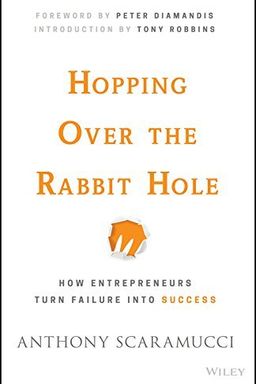
What if your biggest setback turned out to be the beginning of your greatest success? Anthony Scaramucci’s Hopping Over the Rabbit Hole: How Entrepreneurs Turn Failure into Success explores that very idea — that business and life are not defined by avoiding failure but by how you rebound when it inevitably strikes. Scaramucci, best known as the founder of SkyBridge Capital and creator of the SALT Conference, argues that entrepreneurial success depends not on luck or timing but on conviction, resilience, and the courage to reinvent yourself when things fall apart.
The book is both memoir and manual — a candid look at how Scaramucci built SkyBridge from near-collapse during the 2008 financial crisis into a global investment firm. His core argument is simple: failure isn’t fatal, unless you let ego, fear, or bitterness destroy your ability to act. By learning to pivot, to partner wisely, and to focus on character as much as competence, you create enduring success.
The Psychology of the Entrepreneur
Scaramucci shares that 80 percent of success is psychology and 20 percent is mechanics — echoing Tony Robbins’s foreword to the book. He calls entrepreneurs modern gladiators, stepping into the arena knowing the odds are stacked against them. This mental framework defines how you face crises. When the Great Recession hit, SkyBridge was bleeding money, but instead of freezing, Scaramucci launched SALT, a conference that would position his firm as a thought leader amid chaos. That willingness to act boldly, he says, is the essence of entrepreneurial survival.
He describes a constant emotional tug-of-war between fear and faith — fear of embarrassment, failure, losing control; and faith that, by serving others and adapting fast, you can thrive. Entrepreneurs, Scaramucci insists, must focus on adding more value to others than anyone else can imagine.
Core Concepts Across the Journey
Through gripping stories — being fired at Goldman Sachs, losing money in his first ventures, redeveloping his management style, and learning humility in partnerships — Scaramucci structures the book around lessons drawn from experience. The chapters mirror stages in entrepreneurial evolution: recognizing mistakes (From Peril to Pivot), confronting fear (Fear. Failure. Focus.), managing ego (Holding Grudges), defining what really matters (The Key to Living a Rich Life), hiring smart and humble teammates (Don’t Hire Quarterbacks, Hire Linemen), and mastering relationships (Networking, Sprezzatura, & Authenticity).
Collectively, they form a blueprint for building not just profitable companies, but ethical, emotionally intelligent organizations. Scaramucci’s DEA method — Delegation, Empowerment, Accountability — underpins his leadership philosophy, inspired by Jack Welch’s ability to empower talent at General Electric. He contrasts it with the bureaucratic “yes-man” culture that doomed firms like Lehman Brothers. The entrepreneur’s job, he says, is to create a culture where people feel they own their destiny.
Why These Ideas Matter Today
In a world obsessed with startup culture and instant success stories, Hopping Over the Rabbit Hole serves as a sobering reminder that progress requires patience, grit, and humility. His philosophy resonates with other thought leaders like Richard Branson and Elon Musk, who also argue that adaptability and purpose outweigh fear of failure. Each story Scaramucci shares — from apologizing to an enraged business partner to forging trust with a handshake that saved his company — illustrates that entrepreneurship is about character as much as strategy.
Scaramucci frames failure not as a collapse but as a crucible. Like the Apollo 13 mission he admired, SkyBridge’s setbacks became “successful failures” because they exposed weaknesses and inspired reinvention. By embracing vulnerability, maintaining integrity, and checking your ego at the door, you learn to survive downturns without losing your humanity.
At its heart, the book argues that success is not measured by wealth or fame, but by impact — by whether the people you work with trust you, whether you grow through adversity, and whether you believe, as his daughter Amelia said before singing at Shea Stadium, that "I am enough."
This belief — that you are enough, even amid chaos — is Scaramucci’s gift to entrepreneurs. Fail forward, lead with integrity, and treat your setbacks as scaffolding for stronger outcomes. Ultimately, hopping over the rabbit hole means mastering the art of recovery and turning fear into fuel for continuous reinvention.