
Idea 1
The Addiction of Eating
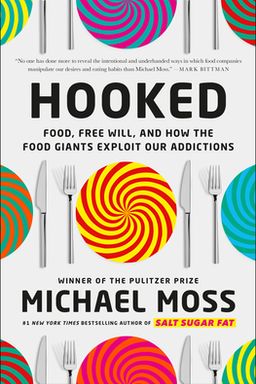
Why do some people lose control around food even when they know it harms them? The book argues that modern processed eating behaves like an addiction—though not in the traditional chemical sense. It stems from a combination of biological triggers, corporate design, legal framing, and cultural memory that together make quitting certain foods unusually difficult. Rather than focusing on personal weakness, the author reframes overeating as an orchestrated interplay between biology and industry.
A social and legal shift
The narrative opens with Jazlyn Bradley’s lawsuit against McDonald’s, which argued that Happy Meals and other fast foods were addictive. Her attorney, Sam Hirsch, borrowed from tobacco litigation, claiming that if food can be addictive, then consumers cannot be held entirely responsible. Judge Robert Sweet acknowledged the idea’s plausibility, and though the case was eventually dismissed, it redefined overeating as a public issue, not private failure. This debate set the stage for a new scientific and cultural lens on food behavior.
The brain’s two systems: wanting and liking
Scientists such as Kent Berridge and Roy Wise revealed that your brain doesn’t just feel pleasure—it runs separate circuits for wanting (dopamine-driven desire) and liking (opioid-driven satisfaction). That distinction helps explain compulsive eating: the wanting intensifies even as liking dims, creating pursuit without pleasure. This mechanism links fast food to broader addiction literature and shows why willpower struggles against biology's speed and power.
Speed and the sensory edge
Processed food’s physiological advantage lies in speed. Sugar signals your brain in about 600 milliseconds—faster than nicotine’s ten-second route. The brain gets a hit before you can judge or resist. Industry engineers this sensory speed into everything: fast-melting fats, salty mouthfeel, and convenience packaging that turns eating into reflex. Because the stimuli reach your mind faster than reasoning can catch up, impulsive eating is built into design.
Evolutionary mismatch
From Ardipithecus to modern humans, appetite evolved for survival under scarcity. The same brain that once sought variable flavors and efficient calories now confronts cheap, dense foods with endless variety. Fat storage, once adaptive, now defends weight against loss through hormonal feedback like leptin and ghrelin. This mismatch, emphasized by Daniel Lieberman and Dana Small, shows how evolution itself becomes a vulnerability exploited by industry.
Culture, memory, and marketing
What you eat is shaped not only by biology but by memory. Advertising embeds food cues into emotional moments—colors, jingles, and logos paired with happiness or comfort. Neuroscientists like Pranav Yadav proved that brands placed at emotional peaks are remembered more deeply. Thus, food habits become encoded memories reinforced each time you see or smell a cue, merging craving with nostalgia.
Industry reinforcement
Flavor houses synthesize sensations—80-ingredient pumpkin spice blends, cheap vanillin to mimic real vanilla—while packaging minimizes friction between hand and mouth. Legal protections, like the Commonsense Consumption Act, shield food corporations from discovery, limiting transparency about internal design and marketing. Meanwhile, industry-funded science often directs blame toward genes or exercise rather than product design, allowing companies to maintain both profit and moral distance.
In sum, the book weaves neuroscience, law, economics, and culture into one argument: addiction is not just chemical dependency—it is a systemic pattern where biology meets design. Understanding that pattern helps you see why food sometimes feels irresistible and why reform requires both personal awareness and structural change.