
Idea 1
From Myths to Masters of the Planet
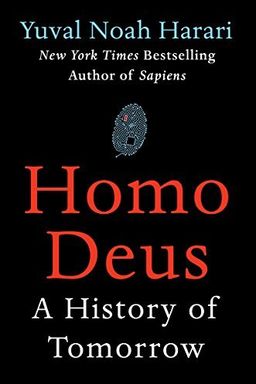
What makes humans the planet’s dominant force? In Homo Deus, Yuval Noah Harari argues that shared fictions—collective imaginations turned into institutions—are the engine of human power. Unlike any other species, you can cooperate flexibly with strangers by believing in the same stories: gods, nations, money, human rights. These stories have built empires, economies and religions, and now they fuel science and technology that aim to turn humans into gods. But each leap in power has come with profound ethical and existential costs.
The rise through storytelling
The Cognitive Revolution, around 70,000 years ago, marks the origin of this ability. You can share myths about things that do not exist outside collective belief—spirits, tribes, corporations—and coordinate thousands or millions through this network of trust. Harari stresses that this “fictional cooperation” distinguishes you from chimpanzees or bees: it’s flexible, not hardwired. The first sculptures, like the Lion-Man from Stadel cave, record this awakening of imagination. It is here that humans become historical agents rather than biological curiosities.
Agriculture and civilization
The Agricultural Revolution transforms storytelling into social order. By domesticating wheat and livestock, you enter a “luxury trap” that multiplies population but erodes wellbeing—bent backs, repetitive labor, malnutrition. Wheat, Harari quips, domesticated you. The same myths that once connected bands—about gods and duties—now legitimate hierarchies and suffering. Farmers serve kings and deities; animals serve humans. Religion and bureaucracy stabilize these arrangements through what Harari calls the Agricultural Deal: obedience exchanged for divine protection and cosmic order.
Empire, writing and the invention of order
Once you write, arithmetic and paperwork extend these fictions across continents. Clay tablets, cuneiform and eventually Aristotle’s logic turn stories into instruments—contracts, titles, tax ledgers. Empires like Rome or Persia rely on them to administer diversity. Religion, money and empire converge as unifying forces: money makes strangers trust one another, universal religions make them share values, and empires build the infrastructure that carries both. Humanity moves toward cultural unity because common myths travel faster than swords.
Science, capitalism and the modern covenant
Modernity begins when science turns ignorance into method. You admit “we do not know” (ignoramus), test by observation and mathematics, and transform doubt into discovery. When this empiricism meets capitalism—the belief in credit and perpetual growth—a new covenant emerges: give up eternal meaning in exchange for material power. This marriage fuels empires, industries, and digital revolutions. But it also replaces gods with humans and humans with markets, creating the paradoxical world you inhabit today: richer, healthier, longer-lived, yet morally and ecologically precarious.
Where it leads
Now that famine, plague and war are largely under control, humanity pursues immortality, happiness and artificial divinity. Biotechnology and artificial intelligence promise to redesign bodies, brains and even consciousness. The story that once gave you dominion over the Earth may soon close its circle—humans remaking evolution itself. Harari’s question for you, the reader, is unsettling: when Homo sapiens becomes able to play god, who decides what god to be?