
Idea 1
Scars, Stories, and the Price of Survival
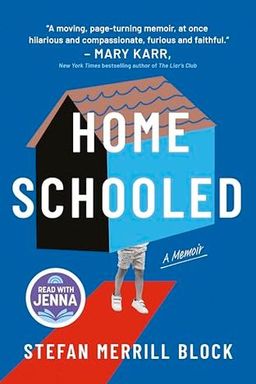
What story do you tell yourself to make your life make sense—and what does that story cost other people? In Homeschooled (through the short story “Life Lessons”), Stefan Merrill Block argues that we survive by turning pain into narrative. His narrator, a nineteen-year-old with severe facial burns who failed out of basic training before Iraq, builds a persona—Inferno Man, Sloth, Grotesque Pumpkin Head—to control how others see him. Ava, his brilliant, wounded, manipulative best friend, builds a different survival mechanism: lies so audacious they create room to breathe. The book contends that storytelling is both medicine and toxin; the same narrative that gives you purpose can anesthetize you to the harm you cause.
You watch a semester spiral from dorm hallway jokes to a fake pregnancy, a fistfight, an arrest, an eviction, and a sex act that lands like a punishment. Sixteen years later, an AA amends email lands, and one meeting in a hotel lobby reopens old questions: Who were we, really? What were we doing to each other? Is telling the truth an adult skill—or just another performance? Block’s core argument is unsettling but clarifying: identity is a story we keep revising, but adulthood begins when you accept accountability for the debris those revisions scatter across other lives.
The Survival Kit: Pity and Performance
After a training stun grenade disfigures him, the narrator is discharged from Walter Reed with a therapist’s prompt: keep a list of “life lessons” to teach your future child. He translates pain into maxims and banter. On campus in 2003 St. Louis, he routinizes his disfigurement—Rorschach his scars, kiss his biceps, bellow “Heeey, yoooou guuuys!” like the Goonies’ Sloth—because pity feels less like a trap if you can turn it into a joke. But the attention he harnesses as a shield also isolates him; he’s the circus act others can applaud without seeing.
Ava’s survival kit is different. She keeps her Idaho past padlocked and refuses straightforward no’s with men. Instead, she spins: a dead brother in the towers, terminal illness, a violent PI husband. With the narrator, she co-authors an escalating repertoire of “get-out” stories. Their private theater is intimate and intoxicating—until it pulls an innocent person into its undertow.
When Fiction Meets Power
The house at 544 Etzel sits in a majority-Black neighborhood, owned by Andre DeWitt, a grieving father trying to stave off foreclosure after his daughter’s death. The white student tenants treat the blight as adventure—their quote board turns life into punchlines—and Andre becomes their “crazy character,” a nightly cameo that flatters their myth of edginess. When Ava sleeps with Andre and later fakes a pregnancy to dodge intimacy, a private fiction collides with public power. The narrator’s single punch—backed by police deference to a disfigured white veteran and by a house consensus that Ava is “drama”—gets Andre cuffed and Ava evicted. Their theater suddenly has real stakes.
Consent, Condemnation, and the Story You Can’t Stop Telling
When Ava climbs into the narrator’s bed the night before she’s forced out, the sex reads not as long-delayed tenderness but as verdict. “I’m done pitying you,” she says—then leaves for good. Sixteen years later, she reappears, newly sober, to apologize. She also drops a final bomb: the pretend baby might not have been pretend; she says she got pregnant “in the end” and placed the child for adoption. Is this confession, manipulation, or both? He chooses not to press—the adult move, he hopes—but he never fully escapes the gravitational pull of his old narrative. He still whispers her name when shame floods back.
The ideas that matter here are intimate and civic: how trauma tempts you to perform a version of yourself people can handle; how deception, when normalized, turns other people into props; how whiteness and pity can become force multipliers of harm; how “amends” can be another story unless tethered to accountability. You’ll see how a list of life lessons can keep you alive—and how the bravest lesson might be refusing a story that lets you off the hook.
Key Idea
We build selves out of stories. The question is whether your story clarifies your responsibility—or erases it.
Across the remaining ideas, you’ll unpack: pity-as-performance; friendship as collusion; race and power on Etzel Avenue; the escalating cost of “white lies”; how we keep remaking ourselves; and what real atonement requires. By the end, you’ll have a map for noticing the stories you default to—and tools to revise them with care.