
Idea 1
How Swearing Reflects Cultural Values Through History
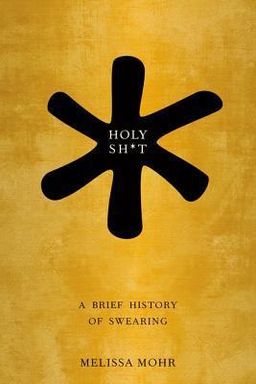
Have you ever thought about what your favorite curse word really says about you—or rather, about the world that shaped it? The book Explore Roman Swearing and Its Unique Cultural Context makes the bold claim that the evolution of swearing isn’t just a story of bad words, but an anthropological mirror of what societies have valued, feared, and forbidden throughout history. It traces the transformation of profanity from ancient Roman sexual insults to modern racial slurs, showing that what we consider shocking reveals far more about our communal moral structures than about language itself.
The author argues that every era’s concept of obscenity aligns closely with its social hierarchies, its prevailing view of the body, and its relationship to divine authority. In ancient Rome, insults revolved around sexual dominance and masculinity; during biblical times, swearing invoked oaths that tied words to God’s truth; in medieval Europe, body talk was normal but false oaths were sins; and by the Victorian age, repression fostered euphemism and the rise of nonliteral swear words to express emotion. In modern times, as sexual taboos loosened and media normalized obscenity, racial and identity-based slurs became the new linguistic frontiers of offense.
How Language Mirrors Power and Morality
The book begins by asking us to imagine the graffiti-covered walls of Pompeii. These crude inscriptions remind us that language and power have always been intertwined. In Roman society, being sexually passive was equated with femininity and therefore shameful for men—so “cunnum lingere,” meaning to perform oral sex on a woman, became one of the worst insults possible. This wasn’t about the act itself but what it symbolized: a reversal of power. The Romans saw masculinity as active, penetrative, dominant. To accuse a man of being passive was to attack his very identity.
From this starting point, the book establishes the foundation for its central thesis: swearing evolves alongside shifting definitions of what power, morality, and impurity mean. That pattern runs through every historical chapter—from oaths by God in the Old Testament to the privatized shame of the Victorian bathroom.
From Divine Witness to Dirty Word
Moving from Rome to the biblical era, the author contrasts secular obscenity with sacred speech. In the Old Testament, to swear was not to curse, but to promise—a linguistic contract with God as witness. Saying “by God” wasn’t an expletive; it was a public guarantee of truth. Yet the misuse of God’s name—“taking the Lord’s name in vain”—was considered deeply destructive, converting a sacred element of social trust into blasphemy. This shift reframed swearing from an act of dominance into a moral transaction, one that bound words to divine accountability.
Later, in the New Testament, Jesus extends this moral lens, warning that even careless or euphemistic words can corrupt the soul. He urged followers to avoid not only obscene expression, but any speech devoid of good purpose. This concept—that language itself carries moral weight—introduces ethical speech as central to Christian identity, contrasting sharply with Roman physicality. The apostles went further still, banning even references to impurity, arguing that words could incite sinful thoughts.
The Rise of Privacy and the Decline of the Oath
After Christianity dominated medieval Europe, oaths served as social glue. To swear by God’s bones or Christ’s body was a solemn act—one that could determine guilt or innocence through compurgation, where enough allies swearing truth could acquit the accused. Yet by the Renaissance, Protestantism shattered this bond between divine witness and human speech. God was seen as non-physical, unreachable by touch—or by oath. The rise of capitalism replaced oaths with contracts and reputation as guarantors of honesty. Language shifted from sacred proof to emotional instrument.
At the same time, the development of physical privacy witnessed the birth of embarrassment. The invention of the privy made bodily functions private, converting poop jokes from normal talk to forbidden speech. “Sirreverence” became a euphemism—a polite apology before saying “turd.” For the first time, the sight of excretion generated discomfort, and the linguistic fences separating classes grew taller.
Victorian Repression and Emotional Swearing
By the Victorian era, repression reached its peak. Industrialization democratized privacy, making bodily shame universal. As sexual and excretory words became unacceptable, the educated classes turned to Latinized replacements—“defecate” instead of “shit,” “expectorate” instead of “spit.” Even “trousers” and “legs” were taboo, replaced with euphemisms like “limb” or “lower extremity.” Here, swearing transitioned from a physical act to a class marker. To swear was to sound ignorant.
And yet, this repression birthed a new kind of linguistic power: figurative swearing. Words once literal—like “bugger” or “bloody”—shed their sexual or sacrilegious meanings and became carriers of emotion. They expressed frustration, anger, or intensity without reference to bodily acts. This innovation made swearing more universal, more human—and strangely, more socially acceptable. It represented a shift from taboo violation to emotional catharsis.
Modernity, Media, and the Limits of Obscenity
The twentieth century democratized obscenity. Soldiers in World War I and II used “fucking” so often it became meaningless filler. Movies and media normalized sexual content, robbing traditional curses of their shock value. But as sexual obscenity lost its charge, language found new frontiers of offense: racial slurs. These words didn’t just signify impurity or immorality; they attacked identity. The N-word’s evolution—from a descriptive term in the 1500s to an incendiary weapon today—marks a profound linguistic shift. Curiously, even near-homophones like “niggardly” became suspect, underscoring how modern taboos are tied less to meaning than to cultural trauma.
Ultimately, the book argues that the evolution of swearing reflects humanity’s deepest anxieties about control—of the body, of truth, of purity, and of belonging. What shocks a society reveals what it fears losing. From Roman masculinity to modern racial justice, swearing—and its regulation—remains a linguistic fingerprint of who we are and who we aspire to be.