
Idea 1
The Child Turned Toward Peers
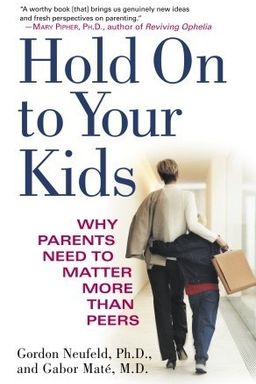
Why do today’s children seem more influenced by their friends than by their parents? In Hold On to Your Kids, Gordon Neufeld and Gabor Maté argue that the central shift shaping modern childhood is peer orientation—the tendency for children to take their cues, values, and identity not from adults but from other children. This shift, they say, underlies the erosion of family influence, emotional fragility, school disengagement, and early sexualization that parents and teachers witness every day.
The compass that changed direction
Human development is guided by a psychological compass called attachment. Children orient themselves toward whomever they are attached to—those they look up to for security, cues, meaning, and belonging. Traditionally, this compass pointed toward parents and other caring adults. But as economic and cultural patterns have fractured the adult network around families, many children have turned that compass horizontally, toward peers. The authors compare it to losing north on a map: when peers become the source of direction, everything dependent on orientation—learning, discipline, empathy, protection—gets distorted.
How peer orientation looks in daily life
You see it in Jeremy ignoring homework for online gossip, Cynthia acting warm with friends but cold at home, or Ross deliberately dumbing down to fit in at school. These children aren’t rebelling deliberately—they’re simply tuned to a different “north.” Parents feel powerless not because they’ve failed but because the attachment relationship has shifted elsewhere. The book insists that love alone isn’t enough; influence flows through attachment, not through affection or logic.
Cultural roots of the problem
Peer orientation isn’t an individual failure—it’s a cultural phenomenon. Industrial mobility, dual-income households, secularization, and age-segregated institutions have dismantled what Neufeld calls the attachment village: grandparents, neighbors, teachers, clergy, and extended kin who once shared responsibility for connecting children to adult society. When that fabric frayed, children defaulted to each other for belonging. The authors describe Rognes in Provence as a living counterexample—a community where multigenerational routines naturally keep adults present at the gates of children’s worlds.
Consequences of a lost village
Without adult anchors, peer culture breeds pseudo-maturity but emotional fragility. Kids learn sarcasm, style, and dominance rather than integrity or compassion. Bullying, early sexualization, anxiety, and suicidal trends all correlate with widening peer orientation. In schools, it manifests as lost teachability—kids learn only from those they are attached to, so when attachment flows horizontally, teachers lose their power to educate. In families, parents lose the power to parent, meaning their natural authority evaporates even though their skills may remain intact.
What the book sets out to do
Neufeld and Maté’s project is practical as well as diagnostic. The book teaches how to rebuild attachment so the compass points back to adults. It shows you how to recognize peer orientation’s subtle signs, how to re-collect a child into relationship, how to handle defiance without alienation, and how to time exposure to peers and technology so attachment comes first. Each following key idea develops a piece of this solution—from understanding attachment dynamics and authority loss to recovering discipline, emotional openness, and maturity.
Core premise
If we want resilient, teachable, empathic children, they must belong first to parents and other caring adults. Peer orientation flips the natural flow of culture and development; restoring attachment to adults brings that flow back to order.
In short, this book offers a compass for parents and educators who feel adrift. It reframes familiar problems—defiance, emotional withdrawal, sexual confusion, and digital obsession—as symptoms of a single displacement: children turning toward peers instead of adults. The cure, therefore, is not technique but reconnection—renewing the relationships that make guidance, learning, and maturity possible.