
Idea 1
The Director’s Paradox
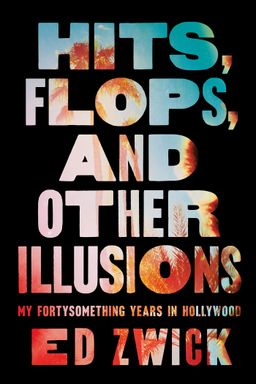
How can you lead a creative army while admitting you’re often guessing? In his memoir of making television and films, Ed Zwick argues that directing is a paradox: you are both invisible and omnipotent, a changeling who must become whatever the moment demands. He contends that authority in filmmaking is part competence, part performance—and you need the emotional agility to switch from coach to inquisitor, confidant to field marshal, in a heartbeat. The book then shows you how this shape-shifting plays out across apprenticeship, actor direction, production logistics, politics, and personal resilience.
Identity as performance—and why it matters
Zwick opens with the image of a nineteenth-century sailing ship: you stand at the prow, beard in the wind, bellowing, "+Follow me!+" while still guessing the course. On set, that performative confidence galvanizes carpenters (key grips), sailmakers (gaffers), and the crew (ADs and DPs) to move in one direction—despite imperfect information. You learn that your credibility is made daily: not just through shot lists and lenses, but through tone, timing, and the courage to claim responsibility when no one else can.
The apprenticeship engine
Authority isn’t innate—it’s built through apprenticeship. Zwick’s notebooks from Woody Allen’s set, his ruthless critiques at AFI (Antonio Vellani’s "+Mood is doom spelled backwards+"), and two pivotal teachers—Nina Foch and Ján Kadár—give him a double education: the psychology of performance and the grammar of mise-en-scène. He insists that "+Creation is memory+": the more you observe and record, the more raw material you can transmute into work. You discover that humiliation is not a detour; it’s the crucible where taste and stamina harden. (Note: this echoes Kurosawa’s own emphasis on disciplined craft in +Something Like an Autobiography+.)
Partnership as a force multiplier
Zwick and Marshall Herskovitz form a durable creative dyad built on complementary strengths—structure and staging (Zwick) balanced by character and subtext (Marshall). Their "+forbearance+" pact—permission to argue brutally, forgive quickly—fuels +Special Bulletin+, +thirtysomething+, and later ventures. You learn to value rituals and honesty (the Toss-the-Crumpled-Page game, frank notes like "+This part makes me tired+") as the grease and grit that keep collaboration alive over decades.
Directing actors: the inner life on camera
From Nina Foch, Zwick extracts field rules: be present, create obstacles, and let discovery happen. He avoids line readings, uses physical prompts ("> Television (and low-budget ingenuity) becomes his discipline gym. +Special Bulletin+ invents a news format on a shoestring; +thirtysomething+ evolves a weekly-reinvention model without a rigid writers’ room. Later, previews and technology—video taps, digital abundance—teach restraint: "+There is no such thing as one more take.+" You learn to move fast without panic, to design coverage that serves emotion, and to hear audiences without surrendering your film. With +Glory+, +Legends of the Fall+, +The Last Samurai+, and +Blood Diamond+, Zwick shows how you forge scale from constraint: re-staging extras like Kurosawa to multiply crowds, building a practical house for magic hour, commissioning an animatronic horse ("> Zwick reframes resilience as a skill, not a temperament. Movie jail, lawsuits, and illness (non-Hodgkin’s lymphoma during +Love & Other Drugs+) force him to practice triage, delegation, and gratitude. Art becomes medicine; community becomes infrastructure. By the end, you don’t just know how Zwick makes images—you understand how he survives to make the next one. The paradox holds: to seem omniscient, you must be honest about what you don’t know and brave enough to keep going.Constraints into style
Scale, politics, and ethics
Resilience as craft