
Idea 1
Hitting Refresh: Rediscovering Purpose Through Empathy and Transformation
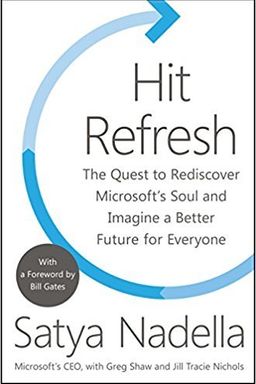
When was the last time you hit “refresh” in your own life—paused, reflected, and chose to reinvent yourself or your work? In Hit Refresh, Satya Nadella, CEO of Microsoft, invites you to do exactly that. This is not merely a corporate story; it’s a meditation on human transformation in a technological age. Nadella argues that empathy and renewal are the twin engines of progress—for individuals, organizations, and societies navigating unprecedented technological change.
At its core, Nadella contends that meaningful innovation begins within—the capacity to connect deeply with people’s experiences, to see challenges through their eyes, and to transform culture accordingly. He ties this philosophy to Microsoft’s own evolution: a company once at risk of losing its soul, bound by bureaucratic inertia and internal competition, now revived around a mission to empower every person and organization on the planet to achieve more.
From Hyderabad to Redmond: An Empathetic Journey
Nadella’s childhood in Hyderabad, India, provides the spiritual foundation for his worldview. His father was a Marxist civil servant who valued intellectual ambition; his mother, a Sanskrit scholar, sought happiness and mindfulness. This tension—between striving and serenity—colored Nadella’s early values. Later, his experience raising his son Zain, born with cerebral palsy, deepened his sense of empathy. That shift from focusing on his own disappointment to embracing Zain’s reality reframed Nadella’s entire outlook. “It’s not about what happened to me,” he realized, “but about understanding what happened to Zain.”
That empathy would later become central to his leadership philosophy. At Microsoft, he began dismantling a culture defined by arrogance and internal battles, replacing it with an ethos of curiosity, inclusion, and collaboration. His journey echoes leaders like Howard Schultz (in Pour Your Heart Into It) and Ed Catmull (in Creativity, Inc.), who similarly reconnected their companies with a shared human purpose.
Renewing Microsoft’s Soul: Purpose Above Products
When Nadella became CEO in 2014, Microsoft was stagnating—missed opportunities in mobile, declining PC sales, demoralized employees. His “refresh” began with a single question: “Why do we exist?” The answer redefined the company’s mission beyond technology toward empowerment. Nadella shifted focus from individual products (Windows or Office) to human experiences—helping people do more, collaborate better, and achieve personal or organizational growth.
He launched an all-company memo calling for Microsoft’s rebirth around a mobile-first, cloud-first worldview. This meant seeing technology not as devices but as experiences powered by connectivity and data intelligence. Employees resonated with the idea instantly—it wasn’t about competing with Apple or Google’s market share; it was about regaining the company’s moral center, its soul.
Leadership through Empathy and Growth Mindset
To realize this vision, Nadella turned to empathy as a leadership tool and Carol Dweck’s concept of the growth mindset. A fixed mindset sees ability as innate and success as finite; a growth mindset sees learning and adaptability as infinite. Nadella embedded this philosophy at Microsoft—from engineering teams to boardroom strategy—and modeled it himself through transparency and humility. Mistakes, such as his awkward comment on women asking for raises, became learning moments that illustrated growth rather than defensiveness.
He mobilized leaders to bring clarity, generate energy, and deliver success by enabling others. Culturally, this shift meant moving from “know-it-all” arrogance to “learn-it-all” curiosity. It encouraged innovation through listening—to customers, partners, and employees—and through inclusive collaboration. (This cultural ethos parallels Peter Senge’s “learning organization” concept in The Fifth Discipline.)
Beyond Microsoft: Technology with a Human Soul
Yet Hit Refresh extends far beyond corporate memoir. Nadella reflects on how humanity can “hit refresh” at a societal level amid the Fourth Industrial Revolution—where artificial intelligence, mixed reality, and quantum computing will reshape jobs, ethics, and identity. He argues that empathy must remain our guiding compass. Leaders must design technology that complements human labor, preserves dignity, respects privacy, and spreads opportunity globally.
This broader vision—combining innovation with ethical foresight—places Nadella among thinkers like Klaus Schwab (The Fourth Industrial Revolution) and Nick Bostrom (Superintelligence). His contention is simple yet profound: you cannot separate technological progress from human compassion. Without empathy, innovation risks becoming alienating; with empathy, it can empower billions.
Why It Matters to You
For you, Nadella’s story is an invitation—a reminder that any organization or individual can reinvent themselves by rediscovering purpose grounded in empathy. Whether leading a team, launching a startup, or navigating personal change, hitting refresh means asking, “Why do I exist? What do I contribute?” It’s a call to balance ambition with mindfulness and innovation with humanity.
In the chapters that follow, you’ll walk through the framework Nadella used to rebuild Microsoft’s mission and culture, explore how empathy shapes leadership and technology, and learn how the future of AI and human experience depends on rediscovering our collective soul. By the end, you’ll see that “refresh” isn’t a corporate command—it’s a timeless human impulse to grow, learn, and create anew.