
Idea 1
How Hits Happen
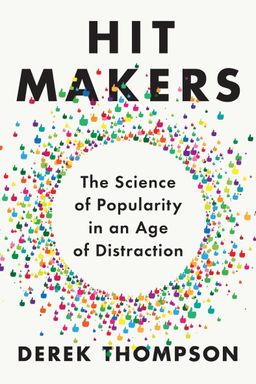
Every cultural hit—from a pop song to a painting, a viral video to a blockbuster film—obeys a web of psychology and distribution rather than a mystery of genius. Hit Makers by Derek Thompson argues that success in culture is less about divine inspiration and more about how the brain, networks, and media structures shape attention. You may love what you love not because it’s objectively superior but because it feels both familiar and surprising, easy to process yet rewarding to master, widely distributed and socially reinforced.
The book weaves history, psychology, and network theory to answer one question: why some ideas and products break through while others vanish. Thompson’s core insight is that popularity follows patterns—predictable ones once you understand exposure, familiarity, novelty, and distribution. From Brahms’s lullaby traveling with immigrants to Instagram’s strategic launch to Star Wars’ myth remixing, the same forces apply in different guises.
Familiarity: The Comfort of Recognition
One of the strongest engines of popularity is the mere exposure effect: you grow to like what you repeatedly encounter. Repetition breeds processing fluency, and fluency feels good. Caillebotte’s donation of Impressionist paintings to the French state changed taste itself by deciding what the public saw repeatedly. Brahms’s lullaby became universal not through radio but through migration—a cultural distribution network centuries before social media. Visibility creates cultural value.
In the digital age, this dynamic persists in algorithmic form: playlists, influencers, and feeds decide which products cross your perceptual threshold. Thompson neatly sums it up: “Content might be king, but distribution is the kingdom.”
Fluency and the Pleasure of the Aha
Fluency alone can bore you. The brain seeks the sweet spot between ease and effort. When something initially puzzles you but then clicks, you experience the “aesthetic aha.” Psychologists like Claudia Muth show that disfluency can make audiences more attentive and invested. In music, familiar chords (I–V–vi–IV) ground you, while a new modulation or rhythm rewards your curiosity. The most satisfying hits make you work just enough to earn a payoff.
MAYA: The Familiar Surprise
Industrial designer Raymond Loewy captured this balance with his rule, MAYA—Most Advanced Yet Acceptable. Loewy learned to push audiences gently: give them 25% novelty on a 75% familiar base. Spotify’s Discover Weekly, Netflix’s programming strategy, and even CNN’s repetitive coverage of major stories reflect this principle. You return because you know what to expect but still crave a small surprise. Innovation must live at the border of recognition and audacity.
Networks, Clusters, and Cascades
Great ideas rarely spread by slow contagion alone. Duncan Watts’s research shows that most “viral” events are in fact broadcast cascades: one or several high-reach nodes ignite mass exposure. The malaria awareness video that went global did so when Bieber and Kutcher tweeted it—not through millions of small shares. Likewise, Fifty Shades of Grey built up quiet fandoms on Goodreads and FanFiction.net before a few broadcast events (Random House’s deal, TV interviews) made it explode. Real virality is a marriage of contagion plus broadcasting.
The Delicate Dance of Story
Thompson demonstrates that “original” stories are often collages. George Lucas built Star Wars from the bones of serials, samurai epics, and Campbell’s hero’s arc. Familiar story shapes give audiences cognitive handles; novelty comes from fresh settings or combinations. Good storytellers, he argues, are recombiners, not inventors from scratch. They repackage recognizable myths for new contexts—a principle equally true of music sampling and tech design.
The Limits and Dangers of Familiarity
The same psychology that makes hits can also mislead. Repetition can make falsehoods feel true (the so‑called illusory truth effect). Stories, laugh tracks, and media stereotypes normalize patterns—sometimes harmful ones. The book warns creators to recognize their power: exposure doesn’t just reveal taste; it trains it. Tools like the laugh track, once powerful, also show how social-proof mechanisms can lose value over time as the culture adapts.
The Chaos of Prediction
Hits emerge from complex, heavy‑tailed systems. Duncan Watts likens cultural success to a chaotic cascade system where chance dominates. The success of Bill Haley’s “Rock Around the Clock” hinged less on intrinsic superiority than on luck and timing—its placement in Blackboard Jungle. Therefore, humility is essential. You can model behavior and spot early signals, but no formula guarantees success.
From Attention to Prediction
Modern data firms, from Shazam to Facebook, chase the promise of predictive insight. Shazam’s local spike data helped Republic Records scout songs before radio did. Facebook’s News Feed balances what people click (behavioral), what they say they want (aspirational), and what they don’t yet know they want (latent). Like Gallup’s living-room observers, these systems measure actual behavior to foresee emerging hits. But even here, Thompson cautions, we can forecast trends better than individual phenomena.
What the Book Teaches You
Taken together, these ideas form a manual for anyone who makes or markets culture. To build a hit, seek the right blend of fluency and surprise, concentrate your exposure, empower social networks that multiply distribution, and treat prediction as art constrained by chaos. Hits may seem magical, but their ingredients—repetition, networks, and psychological balance—follow human logics you can learn to use. The next viral song, meme, or movie will not break the rules of taste; it will remix them masterfully, right at the edge of recognition.