
Idea 1
Faith in Action: The Moral Arc of John Lewis
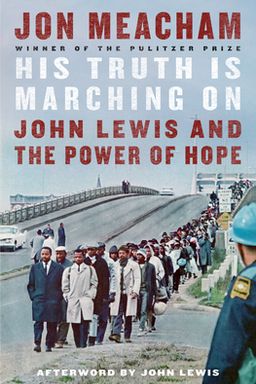
How can one person's faith transform public life? In His Truth Is Marching On: John Lewis and the Power of Hope, Jon Meacham argues that John Lewis turned spiritual conviction into civic transformation. The book presents Lewis as a moral exemplar—someone who fused theology and politics, scripture and strategy, suffering and progress—to help reshape twentieth-century America. It’s a story about how conscience, when made public, can realign a nation's moral compass.
You begin on the red clay of Pike County, Alabama, where Lewis is raised in poverty by parents who lived one generation removed from slavery. You move through seminary training in Nashville, where Christian ethics become the architecture for nonviolent action. From there, the story unfolds through the crucible of sit-ins, Freedom Rides, Selma, and the slow climb from protester to policymaker. Across it all, Lewis exemplifies what Meacham calls a 'modern saint'—a man who treats politics as a vocation of love and justice.
The spiritual foundation
Lewis’s conscience is formed early at the intersection of hardship, scripture, and segregation. He learns compassion tending chickens on the family farm and courage through watching his parents endure Jim Crow. The turning point comes when he hears Martin Luther King Jr. preach on the radio: 'A light turned on in my heart,' Lewis later says. From that moment, his calling is clear—to merge gospel truth with social reform. At American Baptist Theological Seminary, under mentors like Kelly Miller Smith and James Lawson, he studies Thoreau, Gandhi, and Walter Rauschenbusch’s Social Gospel, translating theory into disciplined, lived ethics.
The book shows how faith is not a background influence but the fuel of Lewis’s activism. Nonviolence, for him, is not merely strategic resistance; it's a spiritual exercise in seeing the image of God even in one’s oppressors. This conviction explains his readiness to endure jail, beatings, and humiliation without hatred. His faith becomes both armor and compass—a belief that redemptive suffering can awaken the conscience of others and bring reconciliation to community life.
Turning belief into movement
The seminarians of Nashville become the laboratory for this conviction. Here, under Lawson’s workshops, student activists rehearse being spit on and cursed at, practicing self-control as moral preparation. When the sit-ins begin in 1960, Lewis and his peers showcase that discipline, claiming dignity through composure. Their 'jail, no bail' stance transforms punishment into moral testimony. This phase of the movement, Meacham argues, reveals Lewis’s genius for blending faith with strategy—his belief that social movements must be built on inner transformation as much as collective protest.
Across the South, Lewis’s leadership extends the gospel of nonviolence through the Student Nonviolent Coordinating Committee (SNCC). The Freedom Rides, the March on Washington, and later the march across Selma’s Edmund Pettus Bridge reflect the same logic: that love, dramatized and disciplined, has power to move political systems when laws alone fail. Each episode reinforces the pattern Meacham traces—conscience, confrontation, conversion—moving from the individual heart to the national polity.
Selma and the moral climax
Selma becomes the symbolic high point of this theology in motion. When troopers assault Lewis and hundreds of marchers on March 7, 1965, television reveals the raw face of oppression and the moral clarity of those who refuse to retaliate. The beating Lewis endures—fractured skull, blood streaming—becomes sacramental: suffering that exposes injustice and invites repentance. Within months, Congress enacts the Voting Rights Act, translating Selma’s anguish into national law. The book’s moral claim becomes visible—love, when steadfastly performed, alters history.
Renewal, schism, and legacy
After Selma, Lewis faces new trials: the rise of Black Power fractures SNCC; moral persuasion collides with realpolitik. Yet he never abandons the nonviolent creed. His later political career—election to Congress, advocacy of 'good trouble'—shows how the same faith that once led him into jails now guides him through legislative corridors. To call him a saint, Meacham suggests, is not to deny his humanity but to honor a consistency of moral vision: a life where public service is a daily form of spiritual practice.
You end the book reminded that history’s work is unfinished. Lewis’s witness, extending to his final visits to Black Lives Matter protests in 2020, urges ongoing moral responsibility. The core lesson is timeless: faith can be political, courage can be humble, and love can be organized. Through Lewis’s life, you see how nonviolent conviction—tested by suffering and sustained by hope—becomes both the method and meaning of democratic renewal.