
Idea 1
Curation As Hip-Hop’s Living History
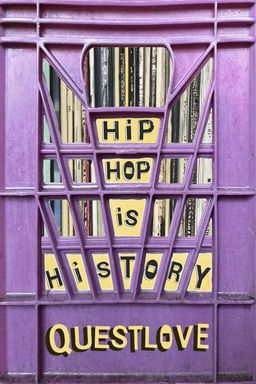
How do you fit an unruly, global culture into a neat narrative? In Hip-Hop Is (Revisionist) History, Questlove argues that any history of hip-hop is a high-wire act of curation. The opening Grammy saga—thirteen minutes to honor fifty years—sets the stakes: to tell this story, you must compress, omit, elevate, and sometimes disappoint. That labor is not merely technical; it is moral and political. Who gets the mic, which eras you emphasize, what you exclude—all these choices shape public memory as surely as the records themselves.
Why curation matters now
You watch Questlove build a thirty-three-minute medley that producers slice to thirteen. There are call sheets, last-minute walk-offs, security reshuffles, and a surreal scramble to trim forty-three seconds when an act storms out. He cajoles with the Quincy Jones playbook—diplomacy, tough love, the 'we're doing this for the culture' plea. And yet, even within crisis, the live show proves history is a living organism: Lil Uzi Vert’s spontaneous rush salvages a shaky beat change; LL Cool J anchors the moment on mic; Jay-Z mouths along from the seats. Breath of Fire meditation in a broom closet steadies the conductor. You feel it—history on TV is part choreography, part improvisation.
A curator’s burden
"I would have to demote some artists and cut others out. I would have to make hard choices and play favorites." The book argues that making the cut list is the story.
Origins are plural, not singular
Questlove explodes the tidy birth myth of 1520 Sedgwick by placing disco, boogie, Jamaican toasting, and spoken-word poetics at hip-hop’s roots. Philadelphia International grooves, Leroy Burgess’s synth basslines, Leon Sylvers’s arrangements, and Jamaican sound systems form the substrate. The 1977 NYC blackout replenishes DJ arsenals with new gear; local radio figures like Lady B and stations like WDAS forge circuits of taste. If you accept 'multiple origins,' you’re primed to hear how later styles—Run-D.M.C.’s minimalism, Public Enemy’s density, Dr. Dre’s G-funk—are recombinant, not ex nihilo. (Note: This plural lineage echoes Jeff Chang’s Can’t Stop Won’t Stop while leaning harder on the studio-musician DNA.)
From block party to broadcast
The book tracks how a local party form becomes mass media. 'Rapper’s Delight' turns rap into an accessible rite of participation—learn bars, win recess prestige. Grandmaster Flash transforms the turntable into an instrument with 'The Adventures of Grandmaster Flash on the Wheels of Steel.' You witness kids recording radio blocks on cassettes, replaying 12-inches, and swapping bootleg tapes—early peer-to-peer culture before MP3s. What looked like novelty becomes a repeatable, teachable joy.
Sound becomes argument
Run-D.M.C. rebrands the form with bone-dry Oberheim DMX drums, Adidas, and three-minute cuts built for radio and MTV. Public Enemy and the Bomb Squad answer with maximalist sampling—the 'Black CNN' made of horns, sirens, and funk shards—that weaponizes sound for civic critique. Legal regimes around sampling tighten in the ’90s, nudging producers from dense collages to replayed instrumentation and fewer samples, clearing a path to Dre’s retooled P-Funk synth-laced G-funk sheen on The Chronic. (Note: You hear how law, technology, and taste are co-authors of style.)
Maps, movements, and markets
Center of gravity shifts—first West (N.W.A. and Death Row), then South (Outkast, T.I., Jeezy, Lil Wayne), and mid-Atlantic hubs (Virginia’s Pharrell/Chad, Timbaland). The 1995 Source Awards put rivalry onstage; the murders of Tupac (1996) and Biggie (1997) scar the culture. By 1998, a stunning pluralism reasserts itself: Gordon Parks’s group portrait of 177 artists becomes hip-hop’s 'A Great Day in Harlem,' while Aquemini, Moment of Truth, Capital Punishment, and Slum Village’s Fan-Tas-Tic, Vol. 1 showcase creative breadth.
Producers, platforms, and preservation
The 2000s elevate the superproducer—Neptunes, Timbaland, Dr. Dre, Kanye—who imprint albums like directors. Mixtape economies (50 Cent, DJ Drama’s Gangsta Grillz) prefigure streaming’s playlist logic, then DatPiff and Spotify complete the pivot from albums to flows. The emotional arc bends toward loss (Dilla, Phife, Trugoy, Jam Master Jay, Takeoff) and responsibility: preservation becomes a duty—archives, royalties, healthcare, and institutional memory—so the culture outlives its shocks. (In Summer of Soul, Questlove practices what he preaches: restore, contextualize, reintroduce.)
How to use this history
You’re invited to read like a curator: track choices, constraints, and the ecology around each sound. Notice how departures (Prince’s 'Around the World in a Day', Kanye’s '808s', Lil Yachty’s 'Let’s Start Here') seed new grammars. Pay attention to how nostalgia, when handled as source rather than shrine, fuels renewal (Griselda’s dust-and-grit updates, Kendrick’s cinematic arcs). This isn’t a neutral encyclopedia; it’s a field guide to making and reading history in motion—on air, onstage, and in your playlists.