
Idea 1
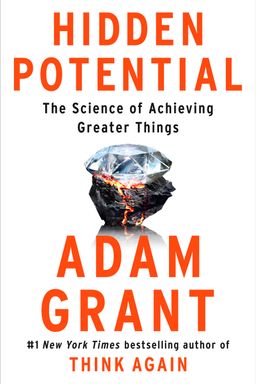
Hidden Potential: How People Grow Farther Than Talent Predicts
How far you can travel matters more than where you begin. In Hidden Potential, Adam Grant argues that potential should be measured by distance traveled—how much someone grows with opportunity, motivation, and support—rather than snapshots of early ability. Across stories of chess prodigies and late bloomers, educators, entrepreneurs, and rescuers, Grant shows that hidden potential is not about innate gifts but about learnable character skills, supportive systems, and environments that transform setbacks into springboards.
Grant opens with Maurice Ashley’s Harlem chess team, the Raging Rooks. They tied for first in a national championship not because they began with elite training but because Ashley created scaffolds—temporary supports that built discipline, teamwork, and curiosity. That story reframes the book’s central claim: when given encouragement and tools, novices can outgrow prodigies. The goal, Grant insists, is not to reward early excellence but to cultivate continuous improvement.
The shift from talent to teachability
Traditional approaches—admissions tests, hiring resumes, and IQ-focused evaluations—privilege visible starting points. Grant synthesizes psychological, educational, and economic research to show that these indicators mispredict success. Raj Chetty’s longitudinal studies reveal that teachers who shape character—proactivity, prosocial behavior, and persistence—raise students’ adult earnings far more than those who focus only on academics. Guggenheim data show that most award-winning creators were not childhood stars but consistent improvers. Together, these findings redefine potential as cumulative improvement rather than raw birthright.
Character skills and learnable resilience
The foundation of progress is not personality; it’s character skill—habits of initiative, discipline, determination, and collaboration. Grant demonstrates that these can be trained. In West Africa, entrepreneurs taught persistence and initiative increased business profits by nearly 30%, outperforming technical training threefold. Maurice Ashley’s method and Finnish schools’ equity-first pedagogy demonstrate how scaffolding and play shape these abilities from kindergarten to career. Character training replaces the myth of fixed aptitude with the practice of flexible learning.
Learning through discomfort and imperfection
Grant’s human development model relies on adaptive discomfort: when you step into awkward, uncertain space—like comedians bombing or polyglots speaking unready—you accelerate expertise. He pairs this with imperfectionist discipline: tolerating flaws that don’t block progress. The secret is to scaffold risk with social and emotional supports. Twyla Tharp’s creative iteration and Sara Maria Hasbun’s language immersion prove that embracing discomfort transforms fear into growth. (Note: this echoes Carol Dweck’s growth mindset, but Grant expands it with systemic and social dimensions.)
Opportunity and the systems that enable it
Growth isn’t only personal—it’s structural. Systems determine how many people get scaffolding. Chetty’s and Finland’s models show how institutional design—teacher autonomy, looping, early support—can democratize opportunity. Grant urges leaders to design opportunity systems where access to mentors and learning environments isn’t luck-dependent. You bring out potential not by finding geniuses but by building networks that make excellence replicable.
Collective growth and social scaffolds
Hidden potential scales when people collaborate. The Golden Thirteen, a group of Black Navy officers in WWII, turned bootstraps into a collective lift—each man tutoring, coaching, and holding others accountable. That social scaffolding multiplied learning speed. In organizations, team intelligence emerges from listening, inclusion, and sensitivity—the prosocial glue that outperforms IQ averages. Collective intelligence depends not on geniuses but on groups that make one another smarter.
A new map of success
Grant’s map of human growth flows through five steps: 1) redefine potential as distance traveled; 2) cultivate character skills; 3) embrace discomfort and imperfection; 4) rely on scaffolds and play; 5) build collective systems that amplify opportunity. Hidden potential isn’t hidden because people lack it—it’s hidden because we mismeasure it. When you stop judging snapshots and start tracking journeys, you reveal people’s capacity to travel farther than talent predicted.
Core insight
Potential is not a fixed quality—it’s the distance someone can travel when systems, character skills, and social scaffolds align to support growth over time.