
Idea 1
Paradox and Power in Iran
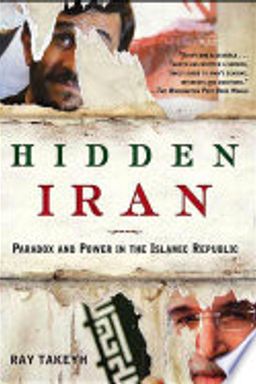
How can you make sense of a state that holds competitive elections yet lets unelected clerics veto the results? In Hidden Iran, Ray Takeyh argues that the Islamic Republic is best understood as a theocratic republic animated by a fundamental paradox: vigorous electoral competition coexists with entrenched clerical oversight. That duality—enshrined in velayat-e faqih (guardianship of the jurist) and institutions like the Supreme Leader’s office and the Guardian Council—creates a system where popular legitimacy matters, but ultimate authority remains insulated. If you expect either pure dictatorship or liberal democracy, you will miss how Iran actually makes decisions—and why outside observers repeatedly “get Iran wrong.”
The book’s core claim is that Iran’s behavior emerges from a constant tug-of-war among three forces: Islamic ideology, national interests, and factional politics. You watch this play out domestically as reformists, pragmatists, and hard-liners compete across multiple power centers; and you see it abroad in a foreign policy that oscillates between revolutionary zeal and hard-edged realism. That is why Iran sometimes expands civil society (Khatami’s “Tehran Spring”) and at other times retrenches (judicial closures of newspapers), why it cooperates tactically with Washington in Afghanistan after 9/11 yet rails against the “Great Satan” on other stages, and why it pursues nuclear “optionality” more than immediate weaponization.
How the Paradox Works Day-to-Day
Elections in Iran are genuine arenas of competition: Khatami’s 1997 landslide (around 69%) and Ahmadinejad’s 2005 upset (62% in the runoff against Rafsanjani) both reshaped public policy and elite coalitions. Yet unelected organs—Guardian Council, judiciary, Revolutionary Guards (IRGC), and the Supreme Leader—hold decisive vetoes. The result is policy churn. Reformers expand press freedoms; courts close papers. Presidents campaign on change; the Supreme Leader calibrates how far they can go. Even radical presidents like Ahmadinejad have to bargain with clerical and security institutions to move their agenda forward.
This dual system, Takeyh shows, is not accidental. Ayatollah Ruhollah Khomeini deliberately built it to combine mass legitimacy with clerical guardianship. The 1979 constitution (revised in 1989) created durable levers for nonelected power—mechanisms to vet candidates and legislation—while preserving electoral mobilization as a source of popular validation. Where Saddam Hussein’s Iraq staged empty plebiscites, Iran’s contests produce real winners with real social bases (a crucial distinction for you as an observer evaluating legitimacy and risk).
The Factional Chessboard
To navigate Iran, you need a factional map. Hard-line conservatives cluster around Ayatollah Ali Khamenei and institutions like the Guardian Council, judiciary, and IRGC; they prioritize ideological purity and regime security. Pragmatists (Rafsanjani’s orbit) emphasize economic recovery, trade, and measured cultural relaxation as pillars of regime survival. Reformers (Khatami, intellectuals such as Abdol Karim Soroush) argue for rule of law, civil society, and reinterpretation of Islam (ijtihad) to reconcile faith and democracy. These currents do not disappear; they ebb and flow as elections, crises, and institutional maneuvering realign coalitions.
A generational shift produces a “new Right”—war-hardened conservatives like Mahmoud Ahmadinejad, Muhammad Qalibaf, and Ali Larijani—who promote austere social policy and an “Eastern orientation” toward Russia, China, and India. They talk less about Western approval and more about self-reliance and eastward trade. But, as Takeyh cautions, rhetoric cannot fully substitute for Western capital and technology; mega-projects and the fuel cycle still reveal inescapable interdependence with global finance.
Foreign Policy as a Three-Circle Matrix
Abroad, Iran behaves differently depending on the arena. In the Persian Gulf—the strategic core—pragmatism dominates to protect oil exports and shipping lanes (Rafsanjani and Khatami pursue détente with Gulf monarchies). In the Arab East, ideology and proxy politics loom larger: support for Hezbollah and Palestinian factions projects influence and signals steadfast anti-Israel credentials. In Eurasia/Central Asia, geopolitical realism governs: cooperation with Russia on arms and nuclear matters; restraint on Muslim insurgencies to avoid backlash (e.g., muted response to Chechnya). This “three-circle” lens helps you predict when national interests temper ideology and when costs are low enough for revisionism.
Nuclear Optionality and the U.S. Shadow
Iran’s nuclear drive reflects deterrence needs shaped by trauma (Iraq’s chemical warfare) and by a U.S. military footprint perceived as encircling (Afghanistan, Iraq). Technical progress—from Natanz centrifuges to Bushehr with Russian fuel—creates a short “breakout” horizon while building domestic constituencies (scientists, IRGC-linked industries, nationalist students) that make rollback costly. Inside Tehran, hard-liners push acceleration; pragmatists (Rafsanjani, Hassan Rowhani, Ali Akbar Salehi) advocate hedging within the NPT to avoid crippling isolation.
Across four U.S.–Iran turning points—1953 coup, 1979 hostage crisis, Iran–Contra, and the missed Khatami/9-11 openings—mistrust deepens. After 9/11, Iran quietly helps in Afghanistan, but “axis of evil” rhetoric shuts the door, reinforcing hard-line narratives. Takeyh concludes that Washington’s default tools—containment and broad “linkage” demands—have hardened Iranian defiance; a selective engagement strategy with parallel tracks (nuclear, Iraq, terrorism), security assurances, and measured sanctions relief offers a better chance to empower pragmatists and recalibrate Tehran’s cost-benefit calculus.
A guiding formula
“The best way to understand Iran’s foreign policy is to imagine a matrix with three competing elements—Islamic ideology, national interests, and factional politics—all constantly at battle.”
For you, the payoff is practical. If you want to forecast Iran’s next move, identify which circle of foreign policy is engaged, which factions gain materially or ideologically, and how unelected veto players will edit electoral mandates. Then weigh how U.S. actions tilt the internal balance between pragmatists and hard-liners. That approach—grounded in paradox, factionalism, and strategic geography—lets you read Iran beyond slogans and see opportunities for diplomacy that others miss.