
Idea 1
Writing Your Own Story: Living a Life of Meaning
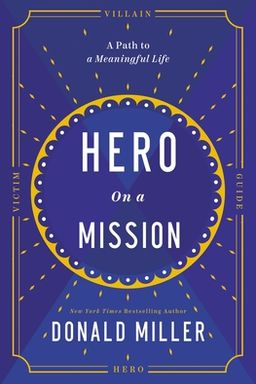
Have you ever felt like the story of your life is being written by someone else—by fate, circumstances, or even other people’s expectations? In Hero on a Mission: A Path to a Meaningful Life, Donald Miller argues that we each hold the pen that writes our own story. Life, he insists, is not a random series of events dictated by fate but a narrative we create and edit through our personal choices, agency, and vision. The book’s central claim is that meaning isn’t something we stumble upon; it’s something we generate by living intentionally, crafting our days to play the right roles in the grand story of our lives.
Miller believes life mirrors the structure of any great story. Most stories—and our lives—are filled with four archetypal roles: the Victim, the Villain, the Hero, and the Guide. These roles constantly compete within us. When we fall into the victim role, we surrender responsibility; when we play the villain, we assert destructive control; when we live as the hero, we courageously rise to challenges and transform; and when we evolve into the guide, we use our experience to help others live meaningful stories of their own.
Meaning as Motion
Miller builds much of his philosophy on the ideas of psychiatrist Viktor Frankl, author of Man’s Search for Meaning. Frankl argued that meaning isn’t discovered in abstract thought but experienced through action. Life becomes significant when you take on a mission—when you pursue something that stretches you, share that pursuit with other people, and find purpose even in pain. Meaning, Miller says, is “experienced in motion.” You can’t think your way into it; you must live your way into it.
Like Frankl, Miller rejects fatalism. He describes how his own early life spiraled into depression and paralysis because he believed fate was writing a dull story on his behalf. When he shifted his mindset—when he accepted that he was the author—his entire life changed. He began to treat himself like a character pursuing something worthwhile. This simple reframing led to transformation, productivity, better relationships, and eventually meaning. The moment you pick up the pen, he argues, you stop being a victim and start becoming the hero.
From Victimhood to Agency
Miller’s first shift was understanding the concept of agency: our ability to make intentional choices about how our lives unfold. Drawing from psychology, he explains the difference between an external locus of control (believing life happens to you) and an internal locus of control (believing you shape life through your decisions). Many of us live as victims because it’s easier not to try. We use helplessness as an excuse to avoid responsibility. But the moment we realize we can act, the story changes. We become authors rather than characters written by fate.
The Journey Toward Meaning
In Miller’s framework, a meaningful life follows a journey similar to the hero’s arc. You define what you want—your mission. You face challenges that transform you. You endure suffering but give it purpose. You surround yourself with guides who have empathy and competence. And eventually, you evolve into a guide yourself, passing wisdom and compassion to others. This path moves from self-discovery to service—from curiosity about who you can become to generosity in helping others become heroes.
Throughout Hero on a Mission, Miller brings these principles to life through personal stories. He recounts his own periods of despair when he sold books for pizza money, envied his successful roommates, and sabotaged relationships. He admits feeling bitter and resentful until he realized those behaviors were symptoms of victim and villain energy. By accepting agency, setting goals, and creating his Hero on a Mission Life Plan, he found the discipline to move forward every day. Over time, he built a thriving career, company, and family—proof that life changes when you structure it like a story worth living.
Tools for Living a Better Story
This isn’t just a philosophical book—it’s a practical system. Miller provides real tools for structuring life around meaning. He introduces exercises like writing your eulogy (to start with the end in mind), defining ten-, five-, and one-year visions (to turn purpose into achievable steps), and using the Daily Planner (to reinforce habits that add “something to the plot” each day). These tools drive what Miller calls narrative traction—the energizing momentum that makes you interested in your own story.
When we lose meaning, we experience the “existential vacuum” Frankl warned about: the haunting emptiness of living a story with no plot. The cure is not pleasure or distraction, but creative motion. You build meaning through three simple acts—creating something, loving someone or something outside yourself, and transforming pain into purpose. Whether you’re starting a business, building a family, or simply navigating hardship, Miller assures you that meaning can always be made if you live like a hero on a mission.
Why This Matters
The implications are profound. Miller’s message challenges modern nihilism—the belief that life is inherently meaningless. He contends, like Frankl, that life already asks us a question: Will you make it meaningful? The answer depends entirely on how you live your story. You don’t need perfection or certainty. You need direction, courage, and daily action. Heroes aren’t strong because life is easy; they’re strong because they face challenges with purpose. Guides aren’t wise because they started flawless; they’re wise because they failed, learned, and kept going.
By the end of Hero on a Mission, you see that Miller’s approach is not about productivity or success for its own sake—it’s about meaning. He invites you to craft your life with deliberate authorship, choosing ambition, community, courage, and grace as your guiding plot points. In his words, “Life forces us to live a story. We might as well write a good one.”