
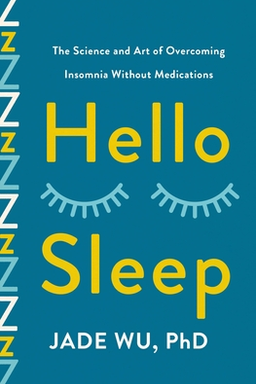
Hello Sleep cover

Hello Sleep

by Jade Wu

Hello Sleep by Jade Wu unveils the misunderstood nature of insomnia, emphasizing that less effort and more acceptance can lead to peaceful nights. Through science-backed strategies, it guides readers to rediscover sleep''s natural rhythm and overcome insomnia without medication.

Rebuilding Your Relationship with Sleep

What if insomnia isn’t a broken mechanism to fix but a strained partnership to mend? In Hello Sleep, Jade Wu reframes the way you think about sleeplessness. Instead of engineering or hacking sleep, she invites you to treat sleep as a lifelong relationship—one based on trust, patience, and respect. The book blends science-backed behavioral therapy (CBT-I) with gentle psychological reframing so you can stop forcing sleep and start cooperating with it.

Why the relationship metaphor changes everything

When you treat sleep like a partner, the old battle—data tracking, perfectionism, endless rituals—shifts into curiosity and mutual care. Wu’s metaphor works because the behaviors of the “controlling partner” match how many of us treat our nights: clock-watching, worrying, and micromanaging. Instead, you learn how to offer sleep space, consistent rhythms, and an atmosphere of calm. Kate, an engineer in the opening story, learns that charts and trackers can’t repair her insomnia; trust and gentle consistency can.

From fixing to cooperating

The book’s heart lies in teaching you to work with your biology. Wu introduces you to the “sleep drive piggy bank” model: sleepiness accumulates while you’re awake and resets each night. If you go to bed too early, the balance is off. The signature technique, the Big Reset, uses consistent wake times and limited time in bed to restore this drive. Pair that with “stimulus control”—only using your bed for sleep and sex—and you recondition your brain to expect rest rather than struggle in bed.

The cognitive layer: thoughts as triggers

Wu’s version of CBT-I adds the “pocket Socrates” method to examine catastrophic sleep thoughts. Kai learns how a simple thought—“I’ll be useless tomorrow”—fuels anxiety and wakefulness. Through Socratic questioning (“Is this based on fact or fear?” “Have I coped before?”), you learn to replace destructive certainty with balanced realism. Thought work complements behavioral tools by unpairing fear and sleeplessness.

Expanding focus: the daytime dimension

Insomnia isn’t a nighttime problem alone. Wu emphasizes how poor daytime rest, lack of processing time, and low movement fuel night-time arousal. She introduces “rest rehab,” a scheduled way to relearn restorative downtime, along with the “mental litter box,” a daily slot for worries to keep them out of bedtime. Daytime light, movement, and regular processing cycles power the sleep drive and keep hyperarousal low.

Modern obstacles: technology, substances, and metrics

The book’s nuanced stance on habits—screens, caffeine, alcohol, and cannabis—undermines common myths. Rather than total bans, Wu suggests context-sensitive strategies: bright daylight exposure makes evening screens less harmful, and blue-blocking glasses can help sensitive sleepers. Likewise, micromanaging sleep tracker data can turn into “orthosomnia,” a new kind of insomnia born of obsession with numbers. Wu encourages “dropping the rope”: trust your perception, not the gadgets.

Circadian care and life stages

Your suprachiasmatic nucleus (SCN) acts as your body’s sleep conductor. Restoring strong day-night contrast through daylight, darkness, and regular timing supports not only sleep but mood, metabolism, and focus. Later chapters show how this rhythm applies through life stages—pregnancy, postpartum chaos, and menopause shifts—each requiring flexibility rather than perfection. Wu provides adaptations for caregiving, pain, and aging so sleep remains resilient through changing biology.

Medication, tapering, and trust

CBT-I is the first-line treatment for chronic insomnia, but medication remains part of some people’s journey. Wu gives detailed taper plans for common drugs (trazodone, Ambien, eszopiclone) with strict prewritten schedules and physician collaboration. Her message: don’t rely on spontaneous “rescue” doses—automate decisions and build behavioral foundations first. Like sleep itself, tapering succeeds through preparation, consistency, and emotional safety.

Sustaining trust and adapting through setbacks

Improvement doesn’t mean perfection. Wu closes with Wayne’s story—anxiety restored even after big gains—and uses his experience to show how gratitude, perspective, and proactive resets prevent relapse. You’re encouraged to appreciate progress, maintain daytime rhythms, plan for life disruptions, and remember that sleep will return if you give it patience. Like any long-term relationship, it thrives on communication and forgiveness.

Core takeaway

You can’t fix sleep by tightening control. You can only heal it by rebuilding trust—with your body, your routines, and your expectations. When you stop fearing sleep and start collaborating with it, you set the stage for lasting, natural rest.


The Science of Sleep Drive

Wu’s behavioral foundation rests on one powerful biological truth: sleepiness builds up like currency while you’re awake. She uses the metaphor of a “sleep drive piggy bank” to make the concept intuitive: each hour you’re awake adds coins; spending them prematurely leads to bounced checks at bedtime.

The Big Reset technique

The Big Reset reduces time in bed temporarily to rebuild robust sleep pressure. You calculate a personalized “time-in-bed window” using one week of sleep logs (average sleep time + 30 minutes) and fix a consistent wake time—including weekends. If your average sleep is 6 hours, you add 30 minutes for a 6.5-hour window. You stick to this schedule regardless of how tired you feel, resisting the urge for early bedtimes until sleep consolidates naturally. Within two to three weeks, your brain learns to fill that window with concentrated sleep rather than fragmented wakefulness.

Why it works biologically

Creating a slightly shorter sleep opportunity heightens adenosine pressure, conditions the brain to associate the bed with sleep (not frustration), and resets your circadian rhythm via predictable light cues. As efficiency climbs to the 85–95% range typical of healthy sleepers, you gradually extend your time in bed. The new relationship feels cooperative rather than desperate.

The psychological complement

Tracking sleep is encouraged only through perception, not hardware. Wu warns that consumer trackers can create orthosomnia—the anxiety of never meeting “perfect” scores. Instead, use simple sleep diaries and morning reflections. This approach preserves awareness without coercion. (Note: Matthew Walker’s Why We Sleep also highlights the role of adenosine buildup, but Wu adds the behavioral precision missing from that neurobiological description.)

Key insight

Sleep drive is earned, not engineered. The more you respect wakefulness—through daylight, movement, and activity—the more naturally evening sleep arrives.


Unlearning Conditioned Wakefulness

Conditioned arousal explains why you may feel alert in the very place meant for rest. Through repeated nights of trying, failing, and worrying in bed, your brain learns that your mattress means battle. Wu uses Pavlov’s famous bell experiment to illustrate this: when the bed is paired with anxiety often enough, it becomes the bell that rings “stay awake.”

Stimulus control: re-teaching your brain

Two core behavioral rules reverse this conditioning: 1) reserve the bed for sleep and sex only, and 2) if awake for long periods, get up and do something pleasant until sleepiness returns. Liwen’s story shows the effect—in her filmed episode, she discovered she was sleeping biologically even while she felt awake, proving how distorted perception can be under high arousal. Frank’s metaphor of the bed as a dentist’s chair captures this anxiety vividly.

Dropping the rope

Wu calls the transformation “dropping the rope.” You stop pulling in the tug-of-war against sleeplessness. Each night becomes a quiet rehearsal of safety—if tension spikes, you get up briefly; if tranquility remains, you stay. Through repetition, the bed reclaims its identity as a peaceful cue. This approach takes time but restores the automatic sleep response through relearning.

Making stimulus control flexible

Wu adapts stimulus control for practical limits—small apartments, caregiving roles, mobility issues—by creating mini contexts: sit on a chair rather than the bed when awake, turn on soft light, engage the senses differently. These micro-boundaries reinforce “awake here, sleep there” distinctions even within tight spaces.

Core takeaway

Sleep isn’t only lost to stress—it’s lost to learned alertness. The cure is gentle re-teaching, not forcing. Every night teaches the brain afresh what the bed means.


Daylight, Rhythm, and Biology

The circadian system governs when you feel sleepy and when you feel alert. At its core sits the suprachiasmatic nucleus (SCN), the conductor of your biological orchestra. When the cues it receives—light, meals, activity—become erratic, your rhythms distort. Wu restores order using light exposure and timing consistency.

Strengthening day-night contrast

Bright morning light and dim evenings send the strongest message to your SCN. Hugh’s story shows how morning walks, social activity, and sunlight revived his energy and improved sleep. For those who can’t get outside, Wu suggests blue-enriched light boxes or goggles for about 20 minutes after rising. In the evening, shift to warm light and screen filters to avoid confusing your internal clocks.

Chronotypes and flexibility

You might be a natural night owl or morning lark. Wu insists neither is better—what matters is alignment. If your job forces an earlier schedule, use controlled light exposure to gradually advance your internal rhythm. Consistent rise times and predictable meals reinforce this biological choreography.

Why daytime brightness shields you

Bright days buffer evening screen harm. A Swedish lab study found no difference in sleep between paper and e-books when daytime exposure was strong. This means lifestyle rhythm, not evening prohibition, determines your resilience. Wu’s advice: live brightly by day so your nights can safely dim.

Practical takeaway

Build your own light rhythm: sunlight first, dimness last, and steady timing throughout. The SCN thrives on contrast—it tells sleep exactly when to arrive.


Thoughts, Rest, and Emotional Calm

Sleep improves not only through behavior but through emotion. Wu integrates cognitive and daytime tools so your mind stops sabotaging your nights. The combination of Socratic questioning, real rest, and structured worry time keeps mental clutter from spiking arousal after lights out.

The pocket Socrates technique

Kai’s 3:00 a.m. panic—“I’ll be useless tomorrow”—illustrates how thoughts drive insomnia. By capturing the thought, asking fair questions, and reframing (“I’ve coped before; I might feel tired but can function”), you reduce emotional charge. Wu teaches you to focus on whether thoughts are helpful, not merely true. Balanced cognition restores calm confidence.

Daytime rest and processing

The “rest rehab” protocol counters constant productivity. True rest means low-pressure enjoyment—walking, reading, or hobbies—not passive distraction like endless scrolling. Wu’s “mental litter box” method sets aside 15–30 minutes daily for structured worry so nighttime doesn’t become the mental inbox. Judy, whose vacation sleep improved dramatically, learns that laughter and novelty heal arousal better than data collection.

Movement and mood

Even gentle exercise strengthens sleep drive and improves vigor more reliably than sugar or caffeine. For anxious personalities, Wu urges planned rest breaks and boundaries—they’re not indulgent but essential therapy.

Key insight

Peaceful nights start with peaceful days. The way you think, rest, and process emotions determines how naturally your body trusts sleep to come.


Adapting Through Life Stages and Health

Sleep isn’t static across life. Hormones, aging, pain, and medical conditions transform it. Wu guides you to adjust, not resist, these biological shifts so your relationship with sleep endures through change.

Pregnancy to menopause

In pregnancy, hormonal surges and physical discomfort fragment nights. Wu advises leniency: maintain rhythms and bright daylight but allow longer time in bed and scheduled naps when exhaustion peaks. Postpartum care emphasizes bright daytime light and teamwork—sharing feeding shifts restores adult circadian signals. By menopause, hot flashes and apnea risks rise; behavioral tools plus medical support manage fragmentation safely.

Aging and circadian change

Older adults experience earlier rhythms, lower circadian amplitude, and lighter sleep. Wu reframes these as normal, not failures. Strategic midday naps and bright daylight strengthen rhythms. Always screen for treatable causes—especially obstructive sleep apnea, which becomes common and profoundly affects health.

Comorbid conditions and pain

Chronic pain, depression, PTSD, and restless legs syndromes often coexist with insomnia. CBT-I and circadian strategies still help, especially when paired with medical treatments. In trauma-related insomnia, Wu teaches grounding and imagery rehearsal, balancing behavioral work with emotional safety. For restless legs, check ferritin levels and treat deficiencies—it’s a solvable contributor.

Core message

Every phase of life requires new communication with sleep. Flexibility, medical partnership, and continued behavioral care make your sleep relationship durable across decades.


Sustaining Sleep Gains

Improving insomnia isn’t a one-time victory. It’s a relationship that matures. Wu closes by showing how gratitude, perspective, and relapse planning secure lasting confidence.

Maintaining perspective

Wayne’s story anchors the final lesson: progress matters more than perfection. He shortens his insomnia dramatically yet obsesses over minor awakenings. Wu’s cure is gratitude—compare old and new logs, then write a “love letter to sleep” acknowledging progress. This practice replaces performance anxiety with trust.

Planning for setbacks

Life interrupts sleep through illness, travel, and grief. Wu’s reset roadmap helps you recover: monitor with logs, redo the Big Reset if insomnia resurfaced, reapply cognitive tools to reduce rumination, and return to your light and rhythm routines. Relapse becomes maintenance, not failure.

Living beyond insomnia

Wu ends with freedom: better sleep gives you back vitality, creativity, and health. Wayne travels to Oktoberfest—not because he sleeps perfectly, but because he trusts his biological resilience. That trust, Wu says, is the ultimate victory.

Final insight

Healthy sleep isn’t a static target but a dynamic relationship built from understanding, light, rhythm, and compassion. Treat it gently, and it stays with you for life.

Dig Deeper

Get personalized prompts to apply these lessons to your life and deepen your understanding.

Go Deeper

Get the Full Experience

Download Insight Books for AI-powered reflections, quizzes, and more.