
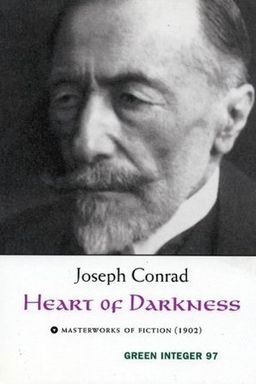
Heart of Darkness cover

Heart of Darkness

by Joseph Conrad

Joseph Conrad''s ''Heart of Darkness'' is a gripping novella that delves into the heart of human darkness and the moral complexities of colonialism. Through Marlow''s harrowing journey up the Congo River, readers encounter the haunting figure of Kurtz and a powerful critique of imperialism''s brutal realities.

The Descent Into Human Darkness

What happens to human morality when stripped of civilization? In Heart of Darkness, Joseph Conrad explores one of literature’s most haunting questions: when the boundaries of society fall away, what remains of our humanity? Through the eyes of Charles Marlow—a seaman traveling up the Congo River in search of the mysterious Kurtz—Conrad challenges you to confront the brutal realities hidden beneath the surface of modern imperialism and human nature itself.

At its core, Heart of Darkness is about the journey inward—psychologically, morally, and spiritually. The novel tracks Marlow’s voyage into Africa as a mirror for the journey each person takes toward their own inner darkness. As Marlow penetrates deeper into the jungle and deeper into Kurtz’s story, boundaries blur: civilization versus savagery, reason versus madness, light versus dark. Conrad argues that the darkness lies not in Africa, but in every human heart. His vision, amplified in Matt Kish’s illustrated edition, turns the philosophical question into a visceral, unsettling experience.

Imperialism’s Concealed Horror

Conrad sets his story against European imperialism during the late 19th century—a period marked by the scramble for Africa and the exploitation of its people and resources. The traders and explorers who claim they bring "light" to native populations are, in reality, motivated by greed and violence. Marlow, who initially approaches his assignment as a simple adventure, gradually realizes that the so-called civilizing mission is nothing more than organized plunder and hypocrisy. This revelation begins the novel’s central theme: the darkness of empire reflecting the darkness within each man.

The Symbolism of the Journey

The Congo River functions as both physical route and metaphor. As Marlow travels farther inland, the geography mirrors a descent into subconscious layers of the mind. At the end lies Kurtz, the symbolic heart of this darkness—a man both brilliant and hollowed out. For the illustrator Matt Kish, Conrad’s single-minded descent was visually claustrophobic: not a sprawling adventure like Melville’s Moby-Dick, but a tunnel drawing you downward toward one unavoidable truth. By portraying Europe’s representatives as grotesque caricatures and Africa as unnervingly radiant, Kish highlights the irony that atrocity can occur in broad daylight, not just under cover of night.

Marlow and Kurtz: Reflections of the Self

Kurtz, the brilliant yet depraved ivory trader adored and feared in equal measure, represents what happens when a person’s moral restraints dissolve in the wilderness. Isolated from any social check, his intellect turns into infinite self-justification. In him, Conrad crafts an archetype of human corruption—the moment when civilization’s thin veneer cracks. Marlow’s simultaneous disgust and fascination with Kurtz show how easy it is to be drawn to darkness once the illusion of moral superiority disappears. As Marlow admits, he is changed by his journey; Kurtz becomes his dark mirror, forcing him to examine his own capacity for horror.

Why It Matters Now

The question Conrad poses still resonates today: what happens when we remove the structures that make us accountable? Whether in politics, business, or personal ethics, the pull of power and greed remains timeless. Kish’s foreword expands this relevance, insisting that Heart of Darkness isn’t just about colonial Africa—it’s a universal depiction of human complicity in violence. His art visualizes the shocking simplicity of Conrad’s thesis: every era, every civilization, carries its own version of Kurtz—those who justify cruelty as progress. Conrad’s masterpiece endures because it refuses comfort; its river leads straight into the depths we’d rather ignore.

Through vivid contrast—between shining sun and moral rot, between eloquent words and vile actions—it reveals that true darkness doesn’t come from the outside world. It emanates from within us. As Kish concludes, illustrating Conrad left him changed, wary, and less hopeful. Heart of Darkness forces every reader, every artist, every human being, to confront that same transformation. In this way, it remains not just a novel about exploration, but about exposure—the moment you realize that light doesn’t banish darkness, it only makes it visible.


Marlow’s Journey and the Mirror of Self

Marlow’s voyage up the Congo River isn’t merely adventure—it’s introspection. From the calm Thames to the fever-ridden jungle, every stop strips away layers of illusion. At first, Marlow speaks like a detached observer, describing European colonizers as absurd bureaucrats motivated by profit. But as he pushes deeper into Africa, each mile also pulls him further into self-examination. He starts to recognize the universality of greed, the fragility of morality, and his own attraction to the chaos Kurtz embodies.

The River as Psychological Descent

For Conrad, rivers aren't paths forward—they're spirals inward. Marlow perceives the Congo like an immense snake, hypnotic and dangerous. Each bend brings decay: stations filled with sick and starving workers, machinery rusting useless in the heat, managers obsessed with ivory rather than humanity. When he finally reaches the Inner Station, where Kurtz rules, his journey is complete—but not geographically. He arrives at the mind’s abyss, where civilization collapses and primal instinct reigns.

The Duality of Kurtz

Kurtz is more than a man—he’s myth. His voice dominates every conversation long before he appears. The rumors describe him as visionary and tyrant, prophet and monster. When Marlow meets him, Kurtz’s physical body is frail, yet his influence is enormous. The natives worship him; Europeans fear him; Marlow both reveres and despises him. This paradox embodies Conrad’s concept of duality: every human can be both enlightened and damned, driven by intellect and instinct simultaneously.

Kurtz’s famous last words—“The horror!”—are a judgment not only of his own soul but of humanity itself. When Marlow repeats them later to Kurtz’s fiancée, he hides the truth, telling her that Kurtz died with her name on his lips. This lie marks Marlow’s final descent—not into madness, but moral survival. In civilization, truth often must be sacrificed to maintain illusion.

The Reader’s Reflection

As you follow Marlow, you realize his story isn’t meant to entertain. It’s meant to implicate. His narration blurs reality and dream, forcing you to question what separates you from the men who commit atrocities for profit. The farther he goes, the more Conrad invites you to see yourself in him—the civilized traveler discovering the savage possibilities within. That’s the genius of Heart of Darkness: Marlow’s journey mirrors your own descent into uncomfortable conscience. The river flows endlessly, carrying with it the reflection of anyone who dares look too deeply.


The Myth of Civilization

Heart of Darkness dismantles the idea that civilization and morality are synonymous. The Europeans in Conrad’s story see themselves as conquerors bringing light to a dark continent. Yet Conrad shows that their institutions—trade, bureaucracy, religion—are simply organized systems of exploitation. When Marlow observes colonial agents casually overseeing starvation and death, he realizes that barbarity is not a native condition; it’s imported under the guise of progress.

Colonial Masks and Hidden Motives

The Company, described as a “continent-wide concern,” becomes a symbol of moral disguise. Its hierarchy of managers and accountants pretends order and efficiency while chaos reigns. Conrad mocks their obsession with paperwork and percentages as grotesque echoes of the same violence they condemn in “savages.” The accounting office, filled with clerks and ledgers, mirrors a slaughterhouse—clean but complicit. This criticism parallels modern institutions where bureaucracy hides ethical decay (similar to Kafka’s later treatment of bureaucratic absurdity).

Efficiency as Moral Shield

Marlow’s defense of “efficiency” ironically saves him from moral conflict. He claims that devotion to work alone protects him from the madness of conquest. This idea anticipates Max Weber’s warning in The Protestant Ethic: that bureaucratic efficiency can substitute for genuine morality. When Marlow focuses on repairing his ship and collecting rivets, he avoids confronting the suffering around him. In doing so, Conrad shows how mechanical devotion becomes an emotional refuge—a way to remain sane in immoral systems.

Civilization’s Fragile Veneer

Ultimately, the story proves that civilization is only a thin surface. Remove its structure—the rules, the oversight, the fear of punishment—and what remains is impulse and appetite. Kurtz’s descent from idealist to despot exposes this fragility. He begins as a man of reason, carrying a report to the “International Society for the Suppression of Savage Customs.” He ends with a scrawled directive at the bottom: “Exterminate all the brutes.” That single note collapses rhetoric into horror. The masks fall away, and humanity stands bare.


The Power and Corruption of Language

Conrad’s—and Kurtz’s—language saturates the novel. Words appear as instruments of both truth and deceit, capable of illuminating reality or obscuring it entirely. Kurtz’s eloquence, his ability to speak and command, elevates him above others. Yet it is also the source of his corruption. His voice reshapes morality itself. To Marlow, Kurtz becomes not a man, but a voice—a disembodied intelligence untethered from conscience.

Words as Illusions

Throughout the novel, Conrad portrays language as civilization’s primary illusion. The colonizers justify violence with soothing rhetoric: bringing civilization, educating natives, spreading progress. Their language sanitizes brutality. Kurtz’s report to the Suppression of Savage Customs is the ultimate example—pages of noble exhortation ending with the stark reversal: “Exterminate all the brutes.” Language reveals itself as a mask, capable of proclaiming virtue while endorsing atrocity.

Marlow’s Narration as Moral Filter

Marlow’s retelling aboard the yawl Nellie blurs speech and silence. His words wrap events in haze, leaving listeners uncertain what is real. The ambiguity reflects his inability to articulate horror directly—language fails before moral truth. Kish’s illustrations echo this with chaotic color and symbols, showing that visual language fares no better at containing darkness. You, as the reader, are left translating abstraction into emotion, realizing that the horror cannot be spoken, only felt.

The Final Lie

When Marlow lies to Kurtz’s fiancée, claiming his last words were her name, he performs what Conrad calls a mercy of language. Words become protective veils again. The moral question lingers: is truth always redemptive? Conrad implies that illusion may be necessary for survival—that civilization itself depends on shared fictions communicated through words. Kurtz’s “voice” echoes even after death, forcing Marlow and readers alike to wonder whether our speech conceals more darkness than it reveals.


Light, Darkness, and the Illusion of Meaning

Light and darkness dominate Conrad’s imagery, yet their meanings constantly invert. Light, traditionally justice and knowledge, often exposes corruption. Darkness, usually danger and ignorance, becomes the realm of truth. Kish’s interpretation amplifies this paradox visually: he paints Africa in blinding yellows and greens, turning the "dark continent" into relentless brightness—a place where atrocities happen under glaring sun. The metaphor forces you to rethink where evil really resides.

The False Comfort of Light

Marlow’s aunt sends him off as a missionary of light, a man destined to illuminate ignorance. But when he arrives, sunlight reveals suffering rather than redemption. Villages burn in daylight; men waste away beneath radiant skies. Conrad shows that light—whether of reason, enlightenment, or empire—can serve as a justification for cruelty. The glow that Europe calls civilization blinds rather than guides.

The Depth of Darkness

Darkness in Conrad’s world is not external but internal. It’s the shadow each person carries. When Kurtz declares “The horror,” he finally sees this truth stripped of metaphor. The jungle didn’t corrupt him; it simply reflected his soul. Kish’s visual approach resonates: instead of painting emptiness in black, he turns the images luminescent, revealing that horror exists even in brightness. You understand that darkness isn’t the absence of light—it’s the presence of truth too awful to face.

Meaning Amid Moral Chaos

Conrad ends the novel under an overcast sky, returning to the Thames—“the heart of an immense darkness.” The final inversion forces self-recognition: Europe itself, birthplace of colonial ideals, casts its own shadow. The reader’s journey mirrors Marlow’s, discovering that darkness begins not in jungles but in cities, institutions, and conscience. Once you see that, light can no longer console—it only reminds you of what’s hidden beneath its glare.


Matt Kish’s Artistic Descent

In his foreword to the illustrated edition, artist Matt Kish recounts his challenge in visualizing Conrad’s descent. He compares the experience to illustrating Moby-Dick, which he calls expansive and multifaceted, versus Heart of Darkness, which feels suffocating and singular. While Melville’s ocean allows wandering, Conrad’s river only pulls downward—toward inevitability. Kish’s mission was to capture that claustrophobia through color, distortion, and grotesque figures.

Daylight as Accusation

Kish rejects the literal darkness. His Africa glows with sickly yellows and greens—a world too visible, too bright to hide atrocity. This visual subversion reinforces one of Conrad’s deepest insights: horror thrives in the open. Kish recalls his college professor’s story of a murder on a sunny day as proof that evil doesn’t require night. Through art, he forces you to acknowledge that sunlight is no moral shield—it’s merely illumination over decay.

Grotesque Humanity

In his illustrations, Europeans become fleshy monsters—bloated, pale, and cruel—while Africans are gaunt, spectral victims. The distortion isn’t realism but symbolism. Kish pulls away from time and place to show the universality of Conrad’s message: this isn’t the story of Europeans versus Africans but of humanity consuming itself. His art makes every figure complicit, echoing Conrad’s line about “robbery with violence, aggravated murder on a great scale.”

The Artist’s Transformation

Like Marlow and Conrad himself, Kish emerges changed. He confesses feeling older, wearier, less hopeful. Having illustrated every page, he calls the work “a travelogue of our history as human beings.” His conclusion mirrors Marlow’s paradoxical loyalty to Kurtz: understanding darkness doesn’t purify—you can never feel “spotless as the lamb.” Instead, it infects awareness. Kish’s testimonial makes this edition not just visual accompaniment but an emotional continuation of the novel’s descent.


The End as Beginning: Confronting the Horror

Conrad ends not with resolution but reverberation. Marlow’s recounting of Kurtz’s death and his own lie to the Intended closes the story in ambiguity. The phrase “The horror! The horror!” isn’t answer or confession—it’s echo. It exposes the vast emptiness beneath human ambition. When Marlow returns to London, the sepulchral city, civilization feels grotesque—a carnival of denial. The reader, too, returns from the river changed but unable to explain the transformation.

Kurtz’s Vision and Judgment

For a man who spent his life commanding words, Kurtz’s final utterance is blunt and pure. It judges everything—not Africans, not Europeans, but existence itself. Marlow interprets it as a moment of “moral victory” because Kurtz, unlike others, dares to see truth before death. The horror is knowledge: awareness of human frailty and complicity. In this way, Conrad redefines heroism—not moral triumph, but seeing clearly and surviving the vision.

The Intended and the Lie

Marlow’s visit to Kurtz’s fiancée reveals civilization’s desperate need for illusion. The woman’s unwavering faith represents humanity’s refusal to face horror. By lying, Marlow preserves her belief, and perhaps the social order itself. Conrad implies that civilization endures through selective blindness. Truth would shatter it. His final setting—the Thames flowing into the “heart of an immense darkness”—confirms that the river never ends. The horror persists, not in jungles, but at home.

Living With Darkness

Your own confrontation with Heart of Darkness doesn’t end with interpretation. It haunts you. Conrad forces each reader to wrestle with awareness: to admit that beneath all progress, civility, and reason lies appetite—our shared inner wilderness. Once seen, it cannot be unseen. Like Marlow, you return changed, knowing that every human journey, no matter how civilized, navigates the same current toward the center of our own complexity.

Dig Deeper

Get personalized prompts to apply these lessons to your life and deepen your understanding.

Go Deeper

Get the Full Experience

Download Insight Books for AI-powered reflections, quizzes, and more.