
Idea 1
The Heart as Machine, Metaphor, and Mystery
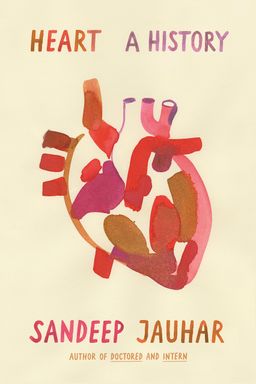
What does it really mean to have heart? For centuries, this question has occupied philosophers, poets, and physicians alike. In Heart: A History, cardiologist and author Sandeep Jauhar invites you on a sweeping, intimate journey through the biological, emotional, and cultural life of our most charged organ. He argues that we have spent too long viewing the heart solely as a machine—a pump to be repaired and optimized—when it also serves as a mirror for our emotions, relationships, and spiritual life. Understanding the heart’s scientific evolution, he insists, is inseparable from understanding our own emotional and cultural development.
Framed around his family’s generational history of heart disease—both of his grandfathers and later his mother succumbed to cardiac conditions—Jauhar blends memoir, history, and medical science. He reveals how the heart’s cultural power shaped medical taboos and propelled some of humanity’s most daring innovations. His narrative spans the earliest anatomical investigations of the Renaissance to modern-day transplants, defibrillators, and heart-lung machines. Yet, as the author’s own CT scan uncovers early coronary artery disease, it becomes clear that these scientific marvels cannot disentangle the heart from its metaphorical depths.
The Heart’s Dual Identity
From the ancient Egyptians, who preserved the heart as the seat of the soul, to Shakespearean lovers dying of heartbreak, the symbolic weight of the heart has always persisted. Jauhar shows that only in the past few centuries did medicine wrench the heart free from myth to reimagine it as a biological device. The transformation was both liberating and alienating—enabling lifesaving interventions while stripping away the sense of awe that once accompanied matters of love, courage, and grief. As Jauhar argues, the tension between machine and metaphor defines how we live and die today.
Medicine’s Triumph and Limit—From Galen to Modern Cardiology
The book unfolds chronologically through three parts: Metaphor, Machine, and Mystery. In the early chapters, we encounter early anatomists like Galen and William Harvey, whose discovery of the circulation of blood marked science’s first true understanding of the heart’s mechanics. Later, as surgery invaded the body’s sacred core, figures like Werner Forssmann, who famously threaded a catheter into his own heart, and Daniel Hale Williams, who performed one of the first open-heart surgeries, revolutionized cardiology.
Each breakthrough emerges from an act of audacity. Jauhar recounts the 1950s creation of the heart-lung machine by John Gibbon and the subsequent open-heart procedures by Walt Lillehei, who connected patients to living donors through cross-circulation. Such stories illuminate how the heart’s mystique forced medicine to confront moral, technical, and symbolic boundaries. The heart’s transition from untouchable sacred organ to technological frontier mirrors our civilization’s trajectory—from reverence to control.
Emotion, Stress, and the Social Heart
Jauhar—himself a heart-failure specialist—extends this exploration into the present by showing that medicine’s mechanical paradigm has blindsided us to the psychological and social factors shaping cardiac disease. Chronic stress, loneliness, and socioeconomic inequality exert as much strain on the heart as cholesterol or hypertension. Drawing on landmark epidemiological studies like the Framingham Heart Study and the Whitehall Study, he demonstrates how our emotional lives literally harden arteries and alter physiology. In this light, the metaphorical heart—symbol of empathy and connection—becomes a biological truth.
From Loss to Reconnection
Ultimately, Jauhar’s exploration is both professional and personal. As his mother declines and dies from heart disease, his reflections transform from scientific curiosity into moral reckoning. What he concludes is as spiritual as it is clinical: to heal our hearts, we must heal our ways of living. The heart’s mechanics have yielded to human hands—but its meaning, he writes, must be reclaimed by human communities, relationships, and compassion.
“To treat our hearts,” Jauhar concludes, “we must repair our societies and minds.” The heart, as both organ and metaphor, remains the central reminder that science and emotion, body and soul, are never far apart. In this fusion of memoir and history, he offers a new way to live—with heart in every sense of the word.