
Idea 1
Hearing Yourself: The Journey from External Noise to Inner Peace
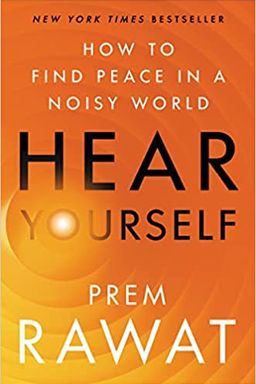
When was the last time you truly heard yourself—not the chatter in your mind, not the opinions of others, but you? In Hear Yourself, Prem Rawat invites readers on a profoundly human quest: the journey from outer noise to inner peace. His central argument is simple but transformative—peace does not come from the world around you; it comes from knowing yourself. Rawat contends that genuine fulfillment, clarity, and serenity are not learned through belief or ideology but through an inner awareness that connects you to the “music of your own heart.”
Throughout this book, Rawat blends autobiography, philosophy, and universal wisdom drawn from his upbringing in India and his decades speaking about peace across the world. His message echoes ancient traditions (“Know thyself,” as Socrates urged) yet feels urgent in today’s era of constant distraction. The result is a roadmap to self-knowledge grounded in practice, choice, and experience rather than theory.
Noise and the Modern Condition
Rawat begins by diagnosing the central problem of modern life: noise. The roar of thoughts, anxieties, devices, ambitions, and social pressure creates a mental environment where we rarely hear the voice of peace within. Technology, he explains, has amplified this noise. Smartphones, notifications, and social media simulate connection while diminishing our silence. (He humorously recalls a young woman in Cambodia whose grief over losing her phone seemed greater than the loss of a friend.) The central insight: the true chaos is not in the outside world—it’s between our ears.
Rather than condemning technology or modern progress, Rawat balances appreciation with caution. He loves innovation—he became a pilot to control his own travel—but insists that technology must serve humanity, not enslave it. His solution to the overwhelm is a deliberate inward turn, a conscious decision to reconnect with the heart.
Knowing Versus Believing
Rawat draws a sharp distinction between “knowing” and “believing.” Believing is passive; it relies on external authorities, traditions, or ideas someone else handed us. Knowing is active—it comes through experience. He illustrates this with an evocative metaphor: being offered a glass of cold water versus a thirty-minute lecture about water. The thirst is quenched only through direct experience. Similarly, peace cannot be theorized—it must be felt.
This difference parallels teachings from other contemplative figures: Eckhart Tolle emphasizes awareness beyond thought; Deepak Chopra explores consciousness beyond belief systems; and ancient Indian yogic philosophy calls this realization “Raj Yoga”—a union with the divine within. Rawat reframes these traditions in a modern voice: stop searching for peace externally, uncover it inside yourself.
Self-Knowledge as the Door to Peace
The heart of Rawat’s philosophy is that peace is not something given to you—it’s something you recognize. From childhood, he learned this through his father, a revered teacher of inner knowledge who taught that the divine lives within every person, not above the clouds. That insight shaped Rawat’s life: at age four, he began speaking publicly with the message “peace is possible when you start with yourself.”
As Rawat’s own journey unfolded—from Dehra Dun to Glastonbury, from Indian temples to United Nations halls—his message stayed consistent: humanity’s most overlooked treasure is the quiet joy inside each person. This peace does not depend on culture, religion, or wealth. It’s universal because anyone can experience it through stillness and awareness. The path to peace, he emphasizes, involves mindfulness, heartfulness, and peacefulness—a progression from mental focus to emotional openness, culminating in deep spiritual serenity.
Why Hearing Yourself Matters
Rawat’s appeal lies in its practicality. He repeatedly insists that peace is not an abstract ideal but a lived necessity. Without hearing yourself, life becomes a carnival of distractions; with it, everyday existence transforms into a symphony. He recounts learning this firsthand—sitting under a magnolia tree as a child, realizing that the same power that created the universe was also beating inside his heart. That moment, he says, felt like the divine whispering, “Just feel.”
In an age saturated with beliefs, ideologies, and external validation, Hear Yourself proposes a radical simplicity: turn inward, listen, and rediscover the infinite calm waiting within you. Through gratitude, forgiveness, love, and kindness, Rawat argues we can build peace not only in our hearts but across the world—one mindful breath, one conscious choice at a time.