
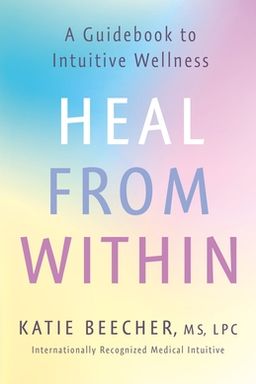
Heal From Within cover

Heal From Within

by Katie Beecher

Heal From Within by Katie Beecher empowers readers to harness their intuition and emotional awareness for profound self-healing. By exploring the connection between emotions and physical health, Beecher offers transformative strategies for addressing the root causes of illness and achieving holistic wellness.

Healing from Within: Awakening the Body’s Intuitive Intelligence

What if your body could whisper its own roadmap to healing—if only you could learn its language? In Heal from Within, medical intuitive and licensed counselor Katie Beecher argues that every symptom, every ache, and even every illness is a message from within, waiting for you to listen. She contends that true wellness isn’t just about curing physical disease but reconnecting to your intuition—the inner, divine intelligence that knows exactly what you need to return to balance.

Beecher’s core message is simple yet revolutionary: you can heal from anything if you cultivate self-love, self-acceptance, and a relationship with your inner guidance. Drawing from thirty years of work as a medical intuitive and Jungian therapist, she bridges science, spirituality, and psychology to show that healing happens when we treat the whole person, not the symptom. Her method teaches readers how to tune into intuition, use it to uncover emotional and spiritual root causes of illness, and implement practical healing strategies for every energy center—or chakra—of the body.

A Journey from Illness to Insight

Beecher’s journey began at sixteen when her intuitive guides told her she would one day write this book—a message she received while recovering from bulimia. Struggling with self-loathing, control issues, and perfectionism, she discovered that her eating disorder wasn’t just about food; it was a symptom of deeper wounds—fear of not being loved, fear of being seen, and unresolved family trauma. Guided by intuition and her therapist’s Jungian approach, she slowly learned that healing required radical self-acceptance and listening within. Later in life, she applied the same principles to overcome Lyme disease and years of emotional pain, watching her clients achieve results that often defied medical expectations.

A New Paradigm: Whole-Self Healing

At the heart of Beecher’s work is what she calls Whole-Self Healing—a process that integrates physical wellness with emotional and spiritual health. She argues that modern medicine, while technologically advanced, often treats symptoms instead of causes. “You can’t apply one-size-fits-all solutions,” she writes, because what triggers disease in one person may be harmless in another. True, lasting healing demands looking beyond lab results to assess lifestyle, trauma history, emotional state, relationships, and spiritual connection. Each factor plays a part in maintaining—or disrupting—your body’s natural harmony.

Beecher’s system uses the framework of the seven chakras—the body’s primary energetic centers—to locate and decode life imbalances. Each chakra corresponds with certain physical organs and emotional themes: self-esteem, creativity, communication, intuition, and spirituality, among others. Through intuitive questionnaires, guided writing, and visualization, readers learn to interpret the language of symptoms—seeing chronic fatigue, digestive distress, or anxiety not as random misfortunes but as intuitive signals guiding them back to self-alignment.

Science Meets Spirituality

Beecher’s synthesis of Jungian psychology and medical intuition brings a grounded credibility to concepts that might otherwise sound mystical. She highlights Carl Jung’s belief that the unconscious mind holds archetypal symbols and wisdom capable of guiding us toward wholeness. Her methods—especially intuitive dialogue and symbolic painting—mirror Jung’s idea of using creativity to make the unconscious conscious. Every symptom, she argues, represents a shadow aspect of ourselves seeking integration. Facing it without fear can unlock immense transformation.

In practice, this means grounding spirituality in actionable science: detecting gut imbalances alongside emotional “dis-ease,” supporting detoxification while also healing past trauma, and working with stress physiology (the overactive adrenals, the immune system’s burnout) rather than against it. Beecher cites evidence that chronic emotional stress activates the same physiological imbalances behind autoimmune conditions, anxiety, and depression—validating what ancient systems like Ayurveda and Chinese medicine have taught for centuries.

Why Intuition Matters Now More Than Ever

In a world where six in ten Americans live with chronic illness, Beecher challenges readers to reclaim their healing power. The intuitive relationship she describes—what Jung called the “God within”—isn’t mystical elitism; it’s our birthright. We were born with self-love and intuitive knowing, she writes, until family, culture, and fear taught us we didn’t deserve it. Reawakening that connection can help you interpret your body’s messages, choose supportive practitioners, and trust your own decisions about food, relationships, and life purpose.

The book unfolds as both a memoir and a guidebook. Her early chapters teach you to connect with intuition through daily written dialogues, creative self-expression, and chakra-based journaling. Later sections dive into each energy center—from the crown (divine connection) to the root (safety and family)—complete with healing strategies and case studies. The second half serves as a reference guide, aligning specific conditions—like thyroid dysfunction, autoimmune disease, or anxiety—with their physical and spiritual root causes.

A Call to Healing with Compassion and Courage

Beecher’s vision isn’t about ignoring medicine but enhancing it through intuition and self-awareness. Her compassionate voice, drawn from personal trials, encourages readers to stop identifying as victims of illness and start conversing with their symptoms as allies. “Healing this way can be hard,” she warns—but it’s also the most rewarding work of your life. Like Jung, she believes it’s by going down into the abyss that we recover the treasures of life.

“With connection to intuition, self-love, and acceptance, we can heal from anything,” Beecher writes. The goal isn’t perfection—it’s authenticity. Only when you listen to your body’s wisdom can you transform pain into progress, disease into discovery, and symptoms into your soul’s language of healing.


The Power of Intuition: Your Inner GPS

Beecher defines intuition as “God within”—the ever-present awareness that always operates from love and truth. She discovered this force while clawing her way out of bulimia in her teens. As she practiced disclosing her inner world through writing and therapy, she heard an inner voice guiding her toward self-compassion, a voice that was not judgmental but supportive. Since then, intuition has guided her through illness, career changes, motherhood, and grief.

Common Barriers to Listening

When clients tell Beecher they “don’t have” intuition, she reveals that fear, control, and overthinking are usually the real culprits. She lists common blocks: fear of being wrong, demanding instant clarity, assuming intuition means mystical visions, or fearing contact with negative energies. As a survivor of trauma and religious shame, Beecher remembers blocking her abilities for years because she associated intuition with danger. The turning point came when she realized love-based intention protects you from negativity—fear opens the door, not intuition itself.

Written Dialogue: A Simple, Transformative Tool

Her core technique, Written Dialogue, is deceptively simple. You write a question to your intuition (“What do I need to know?” or “What am I afraid of?”), then record the response that surfaces—without censorship. This practice creates a sacred conversation between conscious and unconscious, much like Jung’s practice of “active imagination” in The Red Book. Clients who initially expect booming spiritual revelations often find that intuition speaks in familiar tones—gentle, calm, and often resembling their own inner voice. The result is startling clarity about relationships, health, and life direction.

Beyond Writing: Painting, Dreaming, and Tools for Connection

Beecher also teaches visual methods like Intuitive Soul Painting—expressing inner energy with color instead of words—and Jungian dream interpretation. Dreams, she emphasizes, are intuitive updates from the unconscious, often revealing emotions your waking self resists. Other tools include pendulums, oracle cards, runes, and even communicating with loved ones who have passed. Each is simply a doorway to the same wisdom: your connection to divine love within.

What sets Beecher apart from many self-help authors is her insistence on practical safety. She insists you remain grounded through mindfulness, healthy boundaries, exercise, and balanced nutrition. Channeling intuition doesn’t mean bypassing reason or science—it means merging inner knowing with outer action. Those afraid of ‘evil forces,’ she writes, can rest assured: when you focus on love, you align with the most powerful energy in the universe. Nothing negative can harm that.

Ultimately, Beecher invites readers to find their personal language of intuition. Whether through journaling, art, music, or meditation, your only goal is to listen without controlling. Trusting intuition, she says, is really about trusting yourself—and that’s where true healing begins.


Your Symptoms Are Not the Enemy

One of Beecher’s most transformative teachings is that symptoms are signals, not enemies to be silenced. Drawing from both psychology and energy medicine, she reframes pain, illness, and even depression as the body’s way of grabbing your attention when subtler whispers go ignored. “There are no accidents,” she writes. “Every symptom has meaning.”

Decoding the Body’s Messages

Beecher connects this idea to Chinese medicine and the chakra system, where physical locations correspond to emotional themes: digestive problems often signal unprocessed anxiety, throat issues reflect blocked self-expression, and heart pain can stem from over-caretaking or grief. She describes her own recurring weight gain as a sign of needing grounding—an unconscious effort to feel more anchored on Earth. Once she listened and addressed her emotional turbulence, her body naturally restored balance.

From Suppression to Dialogue

Most of us, she argues, are conditioned to suppress pain: taking pills, numbing with food, or drowning discomfort in distractions. But symptoms will amplify until we respond consciously. Beecher cites clients who healed from autoimmune disease or chronic fatigue by identifying hidden grief, anger, or unprocessed trauma as the true sources of their ailments. Recovery wasn’t instant, but acknowledging emotional truth allowed physical healing to begin. For Beecher herself, confronting old family wounds and fear of visibility was essential to releasing her bulimia and later Lyme disease.

Learning the Language of Energy

Like Louise Hay’s symbolic work in You Can Heal Your Life, Beecher helps readers link recurring issues to deeper meaning. Liver problems may reflect repressed anger; reproductive pain might point to blocked creativity; migraines could symbolize over-control or judgment. Through intuitive writing and chakra mapping, she teaches you to converse with your pain and ask, “What are you trying to tell me?” When approached with curiosity instead of fear, the same energy that causes discomfort can become a catalyst for transformation.

Rather than seeking quick fixes, Beecher encourages long-term holistic listening: journaling patterns, detoxifying gently, engaging in body-based healing methods like yoga and acupuncture, and addressing emotional triggers compassionately. Healing, she concludes, is not about eliminating symptoms but integrating the wisdom they contain. Once their message is received, the body no longer needs to shout.


The Chakra System: Map of Mind, Body, and Spirit

Beecher organizes her healing framework around the seven major chakras, each representing a distinct domain of physical and emotional well-being. Unlike many chakra guides, she begins with the 7th chakra—the crown—because it provides an overview of the whole person, a “bird’s-eye view” her intuitive guides use during readings. She invites you to journey from crown to root, diagnosing and rebalancing each center through both analysis and intuition.

From the Crown to the Root

Each chakra corresponds to specific body systems and life themes. The 7th connects to spirituality and life purpose; the 6th to intuitive sight and perception; the 5th to communication and creative voice; the 4th to emotional expression and empathy; the 3rd to self-esteem and digestion; the 2nd to sexuality, relationships, and creativity; and the 1st to safety, trust, and family. Beecher provides practical exercises for evaluating each area, from journaling fears to tracking physical symptoms. For instance, throat tension may indicate fear of expression, while chronic back pain might reflect unsupportive relationships or inherited family stress.

Case Studies That Speak

Beecher brings each chakra to life with vivid case studies. Amy’s migraines and anxiety (6th chakra) subsided after she released grief over her parents’ deaths. Derek’s heart palpitations and reflux (4th and 5th chakras) eased once he confronted stress from living with an alcoholic relative. Sheila’s autoimmune illness (1st chakra) began healing after she stopped identifying as a “Lyme warrior” and reclaimed joy through creativity. These stories demonstrate Beecher’s philosophy: illness lifts when the underlying energy distortion—fear, guilt, shame, resentment—is cleared through awareness and authentic living.

Healing the Whole Spectrum

Beecher’s approach merges energetic balance with medical insight. She offers “Call to Action” items for each chakra, blending nutritional, emotional, and spiritual guidance. A heart-related imbalance might call for aerobic exercise and emotional boundaries; a root issue may ask for financial stability and therapy. By combining intuitive messages with evidence-based care, readers design their own personalized blueprint for healing each layer of being.

Ultimately, the chakras serve as more than metaphysical symbols—they’re the body’s filing system for life’s experiences. When revisited with honesty and compassion, they offer a structured yet flexible path back to wholeness.


Healing Family Wounds and Generational Trauma

Few topics run as deep in Beecher’s work as family trauma. She writes candidly about growing up in a dysfunctional household marked by emotional neglect and addiction. Her healing demanded confronting painful truths about her parents—the father whose criticism fueled her bulimia and the mother whose hidden shame paralyzed her both literally and figuratively. Beecher’s mother’s decades-long secret—that she became pregnant before marriage—symbolized generations of repression, guilt, and silence. The illness that left her physically frozen became, in Beecher’s eyes, the body’s plea for authenticity.

Breaking the Cycle

Beecher introduces the concept of epigenetic inheritance—the idea that trauma, beliefs, and stress can imprint on our genes and pass down through generations. Citing studies in mice and human families, she suggests that healing emotional wounds today can reverse harmful genetic expressions tomorrow. Through forgiveness, boundary-setting, therapy, and spiritual connection, you can literally rewrite your family’s emotional DNA. Her own family’s dysfunction became the seed for her life’s purpose: to heal others from the inside out so they wouldn’t repeat the same suffering.

Reclaiming Identity Beyond Family

Many clients, she notes, stay trapped in guilt, loyalty, and longing for parental approval decades into adulthood. The first chakra—rooted in family and belonging—becomes blocked by fear and inherited patterns. Healing it means individuating, a Jungian term for becoming your authentic self apart from the collective family shadow. Beecher describes her own process of separating from toxic relatives during her mother’s illness, a painful but necessary act of self-respect. “Family members who treat you badly are not acting like family,” she asserts, encouraging readers to form chosen families rooted in honesty and love.

Ultimately, the medicine for generational pain is truth-telling. Secrets thrive in silence; healing begins the moment you speak. Beecher’s story and her clients’ mirror the same lesson: authenticity heals what denial destroys.


Body Image, Eating Disorders, and the Search for Self-Love

Beecher’s open recounting of bulimia recovery grounds her teachings in lived experience. In the 3rd chakra—center of self-worth and gut intuition—she situates eating disorders as exaggerated expressions of a universal wound: the belief that we’re not good enough. For her, bingeing and purging were desperate attempts to numb pain and control emotions she’d been forbidden to express. Healing meant learning to love her body not for what it looked like but for what it revealed about her soul’s needs.

From Self-Punishment to Partnership with the Body

Through Jungian therapy, Beecher transformed bulimia from an enemy into a teacher—a pattern exposing her perfectionism and need for control. She now applies this insight to clients with all forms of disordered eating, addiction, or body dysmorphia. Recovery, she emphasizes, requires self-compassion and the courage to feel what the disorder numbs: shame, anger, loneliness, or grief. She recommends intuitive eating, creative movement, and written dialogues with the body to rebuild trust. “Your body is your lifelong partner,” she writes. “It doesn’t need to be punished; it needs to be heard.”

Redefining Health and Beauty

Beecher critiques the cultural perfectionism that keeps many stuck in cycles of dieting and shame. Drawing from Intuitive Eating by Elyse Resch and Evelyn Tribole, she advises replacing restriction with mindfulness: eat when hungry, stop when satisfied, and choose foods that feel energizing, not guilt-inducing. True wellness includes joy, creativity, and spiritual nourishment. In her own life, dance became that joyful movement—particularly pole fitness, which helped her reclaim sensuality after years of body hatred. Her message is clear: taking up space is not a sin; it’s your birthright.

By loving the body as sacred communication rather than an object to perfect, Beecher teaches readers to reconcile the spiritual and physical selves. Only then can we digest life fully—and finally feel full from within.


Spiritual Awakening and the Dark Night of the Soul

In one of the book’s most profound sections, Beecher explores what Jung called the “spiritual crisis” or “dark night of the soul”—periods when life collapse becomes the birth canal for transformation. These crises, she says, often masquerade as breakdowns, depressions, or illnesses but are actually awakenings. Using Jung’s The Red Book as a model, she reminds readers that even the great psychologist endured hallucinatory visions that taught him to trust his inner world rather than fear it.

When Suffering Becomes Initiation

Beecher recounts clients who faced debilitating symptoms or life upsets—loss, addiction, chronic illness—that pushed them toward spiritual rebirth. Physical healing required first surrendering emotional control and letting intuition lead. Symptoms of awakening, she explains, can mirror mental illness: heightened sensitivity, emotional swings, strange body sensations, or vivid visions. Western psychiatry often suppresses these with medication, but Beecher cautions that numbing them can delay the very evolution they intend to spark.

Navigating a Spiritual Crisis Safely

She advises seeking therapists attuned to spirituality—Jungian analysts or those trained in “spiritual emergency” care. Grounding practices like mindfulness, yoga, and connecting with nature stabilize the transformation process. She also champions creative expression—painting, writing, music—as tools to integrate intuitive revelations into everyday life. By dialoguing with inner images rather than fearing them, one can harvest their wisdom, much as Jung did.

“Fear doesn’t protect you—it limits you,” Beecher reminds us. When we stop running from darkness, we find that it already contains the light. Spiritual awakening, then, isn’t a miracle descending from above; it’s your innermost truth rising to meet you.

Dig Deeper

Get personalized prompts to apply these lessons to your life and deepen your understanding.

Go Deeper

Get the Full Experience

Download Insight Books for AI-powered reflections, quizzes, and more.