
Idea 1
Reframing Hashimoto’s Through a Root Cause Lens
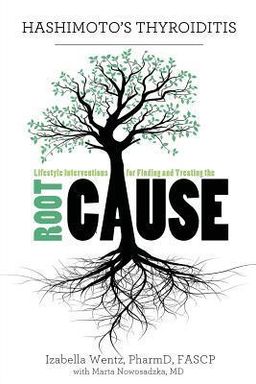
Dr. Izabella Wentz’s Hashimoto’s Protocol revolutionizes how you understand thyroid disease. She rejects the idea that Hashimoto’s is simply a case of bad genetics, arguing instead that autoimmunity arises when three factors align—genetic susceptibility, environmental triggers, and intestinal permeability. This triad gives you agency: while genes set the stage, triggers and gut health determine whether the autoimmune attack turns on. Wentz’s plan thus replaces passivity with a structured, investigative model that lets you heal by addressing root causes systematically.
Genes are not destiny
Citing Dr. Alessio Fasano’s research, Wentz emphasizes that autoimmunity only occurs when a trigger meets a susceptible host and a leaky gut. Since intestinal permeability and triggers are modifiable, you have meaningful control over your health. Lifestyle, environment, and nutrition can flip genetic switches on or off—a principle echoed by contemporaries like Dr. Mark Hyman and Dr. Alan Christianson in functional medicine. The book’s guiding declaration, “Genes are not your destiny,” infuses hope into every protocol.
The DIG‑AT‑IT investigative framework
To bring order to an often confusing process, Wentz introduces the mnemonic DIG‑AT‑IT—Depletions/Digestion, Iodine/Inflammation/Infection/Immune imbalance, Gut/Gluten, Adrenals/Alkaline phosphatase, Triggers, Intolerances, and Toxins. Each letter reminds you of categories to explore for hidden contributors. Instead of endless Google searches or random supplement buying, DIG‑AT‑IT provides a roadmap that balances logic with flexibility. The structure ensures you don’t miss overlooked drivers—whether nutritional gaps, endocrine disruptions, infections, or environmental toxins.
Sequencing: Fundamentals before Advanced work
Many patients, Wentz notes, fail to recover because they dive directly into detox or infection protocols without stabilizing their system. Her stepwise model begins with Fundamental Protocols—Liver Support, Adrenal Recovery, and Gut Balance—to patch vulnerabilities before deep “digging” for triggers. Once the liver, adrenals, and gut are resilient, you can safely pursue Advanced Protocols for infections, toxins, or emotional stressors. Clinical experience shows that premature detox often worsens symptoms; fundamentals prepare the body for true healing.
What remission looks like
Remission is not an abstract goal—it’s measurable. Wentz maps milestones: symptom relief, lowered antibody levels (below 100 IU/mL then 35 IU/mL), tissue regeneration on ultrasound, and normalized hormone function. Some patients even taper or discontinue medication under supervision. While traditional endocrinology insists Hashimoto’s is lifelong, Wentz’s surveys of thousands of readers demonstrate that functional remission is achievable when root causes are addressed.
Empowered patients and community
Wentz calls her readers “Root Cause Rebels”—people who reject the status quo and actively participate in healing. They measure, adjust, and learn from each other. Examples like Teresa, who requested a simple 90‑day roadmap, illustrate how patient empowerment shaped the book’s step‑by‑step design. Through surveys of over two thousand participants, Wentz refined protocols to reflect real‑world success patterns. The book thus embodies a fusion of clinical experience, community data, and scientific research.
Central message
Hashimoto’s is not irreversible. By controlling triggers, supporting your biology, and systematically reducing antigen load, you can rewrite the trajectory of your genes and move toward true remission.
The Root Cause Approach reframes Hashimoto’s as solvable, giving you not only protocols but a philosophy: your body is not broken; it’s responding to overload. Understanding this transforms recovery from a mystery into a journey of methodical repair—starting with fundamentals and ending in empowerment.