
Idea 1
Freedom, Faith, and the Legacy of Harriet Tubman
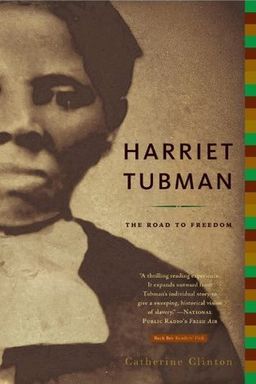
What does it mean to fight for freedom—not just for yourself, but for an entire people? In Harriet Tubman, historian Catherine Clinton challenges readers to grapple with this question through the extraordinary life of a woman born into bondage who refused to accept the limits set upon her. Clinton argues that Harriet Tubman was not merely the mythical “Moses” of popular legend but a complex, courageous strategist who transformed herself into one of America’s greatest freedom fighters. Her life embodies the struggle for liberation, racial justice, and the moral conviction that one person’s faith and persistence can change history.
Across twelve gripping chapters, Clinton examines Tubman’s journey from enslaved “Araminta Ross” in Maryland to heroic emancipator, Civil War soldier, and humanitarian. Drawing on family lore, fugitive testimonies, and modern scholarship, she reconstructs Tubman’s world—the brutality of slavery, the courage of escape, and the years she spent leading others to liberty. Along the way, the author dispels sentimental mythology to reveal a woman of fierce intellect and unyielding determination.
The Real Road to Freedom
Harriet Tubman’s story begins on Maryland’s Eastern Shore, an environment Clinton describes as both lush and lethal. Tubman’s early years, scarred by forced family separations and violence, forged her resilience. A traumatic head injury at twelve left her with vivid dreams and fainting spells, but also with what she called divine visions—mystical guidance that would shape her destiny. Clinton situates these experiences in the context of African spiritual traditions and Christian revivalism, showing how faith became Tubman’s compass long before abolitionist movements gave her work a name.
Acts of Rebellion and Resistance
After her escape in 1849, Tubman’s story transcends the personal. She repeatedly returned south to rescue others, navigating the intricate networks of the Underground Railroad while defying laws like the Fugitive Slave Act of 1850. Clinton calls Tubman’s clandestine rescues early examples of guerrilla warfare and political activism. Her life in constant peril—evading capture, bribing guards, leading families through swamps under cover of night—demonstrates not just bravery but strategic genius. The book captures how Tubman’s leadership challenged contemporary notions of race, gender, and power in striking ways.
More Than a Myth
Clinton laments that Tubman was long “disremembered” by historians who preferred male-centered narratives of freedom. She explores how decades of neglect and romanticized folklore reduced Tubman to a near-mythical saint rather than a real, imperfect, and savvy political actor. The author’s mission is to reintroduce Tubman as a living, thinking woman whose defiance made her an early feminist as well as an abolitionist. Tubman’s alliances with figures like Frederick Douglass, William Seward, and John Brown reveal her influence on both black and white reform movements of her day.
Faith, War, and Endurance
During the Civil War, Tubman evolved from conductor to soldier, spy, and nurse—roles rarely afforded to women, much less black women. She planned and led raids that liberated hundreds and later fought for veterans’ pensions for decades. Clinton contrasts Tubman’s tireless service with a nation’s painful hypocrisy: the same government that depended on her courage denied her wages and equality. Yet Tubman’s faith endured. Her postwar years, marked by poverty but also by generosity, culminated in her dream project—the Harriet Tubman Home for the Aged, dedicated in 1908.
Why It Matters Now
Clinton’s biography is not just a recovery of Tubman’s story; it’s a mirror for how freedom is remembered and forgotten. The author urges readers to see Tubman as more than an icon—to see in her life a model of resilience, collective action, and faith-driven justice. At a time when historical memory and racial equality remain contested, Tubman’s story continues to challenge what it means to be free and what responsibilities freedom demands of us today.