
Idea 1
Reimagining Power and Purpose in American Statecraft
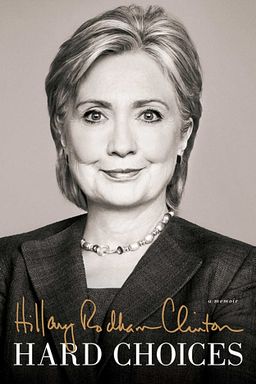
What does it mean to practice diplomacy in an interconnected, competitive, and digital age? Hillary Clinton’s Hard Choices (from which these parts draw) reframes 21st-century statecraft around the concept of smart power—the calibrated use of diplomacy, defense, development, and economics, matched with private innovation, public opinion, and alliances. She argues that success in foreign policy depends on how well you integrate all these parts into a cohesive, values-driven strategy. Power, for her, is less about dominance than the skillful orchestration of influence across networks, institutions, and cultures.
Smart power as the new lens
Clinton introduces smart power to move beyond old debates between hard (military) and soft (diplomatic or cultural) power. It means asking, in every situation: what mix of tools will advance American interests while staying true to its values? That mix might include sanctions and social media, special forces and humanitarian aid, or trade policy and cultural exchange. (Joseph Nye’s original theories of soft power echo here, but Clinton insists on execution—making ideas operational.)
You see smart power in action from Afghanistan to Iran: in balancing military surges with civilian reconstruction, combining sanctions with secret back channels, and embedding economic diplomacy as a front-line tool rather than a mere afterthought. Clinton’s narrative shows that diplomacy now requires managing complexity—where foreign and domestic policy, economics and ethics, private actors and public institutions all collide.
The personal dimension of service
After the fierce 2008 campaign, Clinton turns rivalry into cooperation, accepting Barack Obama’s invitation to become Secretary of State. That decision—a test of character and principle—frames the book’s deeper argument: leadership is not just about ambition, but service. You witness her insistence on direct access, her careful negotiations over autonomy, and her willingness to shoulder responsibility for national choices during crises. The moral undercurrent (“when your President asks you to serve, you say yes”) runs throughout and mirrors her family’s ethic of duty.
Connecting diplomacy to economics and innovation
Clinton turns economic tools—trade, energy policy, and investment promotion—into core elements of foreign policy. She calls this economic statecraft, defining prosperity as a source of security and legitimacy. It includes pushing trade deals like the Trans-Pacific Partnership, supporting American companies abroad, and creating initiatives like SelectUSA. The idea is clear: you can’t sustain influence if your economy falters or your people see globalization as threat rather than opportunity.
Leadership in a transformed world
From Asia’s rise to the Arab Spring, the book chronicles how the old order gave way to new power distributions. Clinton’s travel log—112 countries—illustrates not wanderlust but a systematic expansion of American presence into regions long neglected. She argues that leadership means showing up: visiting Myanmar to signal democratic openness, managing crises in Libya and Syria, mediating between Israel and Gaza, or brokering cease-fires through Egypt.
Technology, transparency, and human rights
Another axis of modern power runs through the internet. Clinton’s push for digital diplomacy—supporting open access, secure communication for activists, and online freedom—redefines human rights for the digital age. You see her responses to WikiLeaks, Snowden, and the rise of online propaganda as part of a broader fight over the norms of information power. She expands the human-rights framework to include women’s and LGBT rights as matters of security as well as morality.
A moral operational code
Ultimately, the book presents a theory of leadership rooted in pragmatic idealism. Values guide choices, but evidence and adaptability determine methods. Each chapter—from Afghanistan to Burma, Russia to Haiti—illustrates how progress, however incremental, requires realism informed by conviction. Clinton calls for leaders who can balance force and empathy, secrecy and transparency, speed and patience.
Core message
Power in the 21st century is about connection—integrating diplomacy with development, economics with technology, and values with interests. Smart power is not a slogan; it’s a practice. If you want to lead globally, you must learn to synthesize, not choose, between strength and persuasion.
That synthesis—the craft of translating moral compass into workable policy—is the thread connecting Clinton’s crises, partnerships, and reforms. It’s where personal endurance meets institutional design, where vision becomes action. And it’s why understanding “how America leads” today requires thinking less like a soldier or a diplomat alone, and more like an engineer of interdependence.