
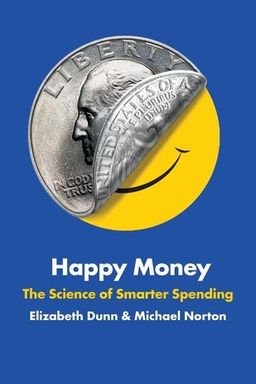
Happy Money cover

Happy Money

by Elizabeth Dunn & Michael Norton

Happy Money unveils the art of spending wisely to enhance happiness. Through five research-backed principles, learn how to prioritize experiences over things, give to others, savor anticipation, and appreciate small pleasures. Transform your financial habits for a more joyful life.

The Science of Spending for Happiness

Have you ever bought something expensive only to find the happiness fades almost immediately—while a simple experience with friends stays with you for years? In Happy Money: The Science of Smarter Spending, Elizabeth Dunn and Michael Norton argue that money can, in fact, buy happiness—but only if you spend it the right way. They contend that most people use their money inefficiently, chasing possessions and status rather than investing in experiences, time, and connection. The book asks: what if our spending could become one of the most powerful tools for emotional well-being?

Drawing on years of psychological research and colorful stories—from Harvard housing lotteries to Virgin Galactic spaceflights—the authors reveal that the secret isn’t having more money. It’s about spending deliberately on things that truly enhance your life. They break down the concept into five principles of “happy money”: buy experiences, make it a treat, buy time, pay now and consume later, and invest in others. Instead of chasing the American dream of bigger houses and better cars, they show how even modest purchases can bring lasting joy if used thoughtfully.

Why Our Intuition About Money Is Wrong

Most people assume happiness scales directly with income—that more money automatically yields more satisfaction. Yet Dunn and Norton dismantle this notion through global evidence. They show that beyond about $75,000 a year (in the United States), extra income has little impact on daily happiness. Wealth often amplifies stress instead: people become time-poor, less patient, and less inclined to savor life’s simple moments. This paradox sets the stage for the authors’ deeper question: if money doesn’t work the way we think, how can we make it serve our well-being?

Their research links the failure of traditional spending to three patterns—adaptation, isolation, and comparison. We quickly adapt to material upgrades, meaning today’s dream purchase becomes tomorrow’s baseline. We isolate ourselves through consumerism, trading social connection for independence. And we compare relentlessly, which erodes contentment even in abundance. These findings suggest that the route to happiness lies not in what we own, but in how we use money to shape experiences, nurture relationships, and add meaning to our time.

Science Becomes Storytelling

The power of Happy Money lies in its blend of psychology and storytelling. From a widow who buys a $200,000 ticket to space to honor her late husband, to Harvard undergrads learning that fancy dorms don’t increase happiness, each example transforms abstract research into vivid lessons. Experiments where strangers spend $5 on others rather than themselves show measurable boosts in joy, while companies like Google and Pepsi learn that prosocial bonuses outperform traditional raises. Across diverse cultures—from Canada to Uganda—the same rule applies: investing in others is universally rewarding.

Underpinning these stories is the authors’ broader argument: happiness isn’t bought through accumulation but through intention. When we spend consciously—anticipating pleasure, fostering gratitude, and connecting meaningfully—money becomes a source of psychological well-being rather than a cause of stress. Dunn and Norton invite you to rethink not just what you buy but how you structure the entire rhythm of consumption. As they put it, “Don’t ask how much money you have; ask how well you spend it.”

Why These Principles Matter

The implications of the book reach far beyond individual choices. Governments, corporations, and communities can use these principles to design policies and workplaces that maximize collective happiness. By shifting emphasis from wealth accumulation to experiential and social investment, societies can reduce inequality and waste while raising overall life satisfaction. For you personally, the authors promise that adopting even one principle—say buying experiences instead of objects—can deliver a lasting morale boost. Applied together, the five principles create a blueprint for transforming every dollar spent into a unit of joy.

Ultimately, Happy Money is both practical and philosophical: a detailed manual for making spending choices that enrich your life rather than empty your wallet emotionally. It’s a call to stop chasing more and start spending better—to buy not possessions, but happiness.


Buy Experiences, Not Things

Dunn and Norton contend that experiences bring far more lasting happiness than material possessions. While it may seem logical that upgrading to a bigger house or a fancier car would improve life satisfaction, research shows otherwise. The authors illustrate this with a German study tracking thousands of people who moved into nicer homes. Though they reported greater satisfaction with their new houses, their overall happiness remained unchanged even years later.

Connection Over Consumption

Experiences foster social bonds, which are central to well-being. The story of Will Dean’s Tough Mudder events—ten-mile obstacle races where camaraderie outweighs competition—proves the joy of collective endurance. Participants cherish their muddy, exhausting experience because it connects them with others and gives them stories to tell. They return year after year, “for the mud, the people, and the memories.” Experiential purchases like this fuel our sense of belonging and identity, while objects sit passively in isolation.

Defining the Self Through Experience

Experiences reveal more about who we are than possessions ever can. In studies, participants asked to map their “sense of self” drew experiential purchases—travel, concerts, milestones—closer to the self than material goods. A trip to Africa or seeing a Broadway show shapes identity, while a designer purse does not. That’s why experiential memories become “life story” highlights and why people resist trading them for anything new, even hypothetically. We defend memories like treasures because they define us.

Memories, Meaning, and Regret

Not all experiences are pleasant. Yet even discomfort can become meaningful in hindsight—a phenomenon the authors call “sweet to remember.” A three-week, mosquito-filled biking trip turned into fond memories when riders recalled friendships rather than hardships. Experiences are resilient to regret because comparisons are hard: you can easily compare televisions but not sunsets. As Mark Twain mused on Virgin Galactic’s brochure, “Twenty years from now you will be more disappointed by the things you didn’t do than by the ones you did.”

So the next time you face a choice between upgrading your kitchen or traveling with friends, choose the trip. Experiences offer connection, identity, and memorable stories—the currencies of happiness.


Make It a Treat

The second principle is grounded in comedian Sarah Silverman’s mantra: “Make it a treat.” Dunn and Norton explore the power of scarcity and novelty in sustaining appreciation. Abundance dulls pleasure—the more often you enjoy something, the less you notice it. A study showed students enjoyed chocolate less when they ate it repeatedly, but those who abstained for a week rediscovered its delight. In other words, absence rekindles joy.

The Enemy of Appreciation

Adaptation is relentless. We acclimate to good things as easily as bad ones. Wealthier people actually savor less—they’re surrounded by pleasures that lose impact through repetition. Even a simple image of money can reduce appreciation: students shown photographs of currency ate chocolate faster and enjoyed it less. True satisfaction arises when we limit abundance and turn ordinary pleasures back into treats.

Scarcity Restores Magic

Companies like KFC and McDonald’s exploit this principle commercially. The Double Down sandwich and McRib’s limited runs create excitement, transforming availability into event. Marketers understand what psychology confirms—limitation triggers savoring. Similarly, making your daily latte occasional renews its joy. When Liz Dunn switched from daily lattes to regular coffee, each “latte day” once again felt special.

Novelty and Relationships

Novelty also rejuvenates relationships. Couples who perform new activities together—whether tied with Velcro during playful challenges or attending concerts—report stronger bonds and revived affection. Even interactions with a familiar partner improve when treated as new; being your “best self,” as if on a first date, can reignite connection. This echoes the research on the “Benjamin Effect”: people feel happier when they interact politely, even with loved ones.

Making something a treat means intentionally limiting it, refreshing it, or adding novelty to reawaken appreciation. You don’t need to give up your pleasures—just give them space to shine again.


Buy Time to Live Better

The third principle, “Buy Time,” challenges the modern illusion of busyness. Dunn and Norton urge you to spend money on freeing time rather than saving pennies. A Roomba may not be glamorous, but it can reclaim hours from chores—turning money into moments for family, creativity, or rest. Yet paradoxically, wealth often decreases perceived free time. When time becomes valuable, it feels scarce.

Time Affluence vs. Financial Affluence

Studies across countries found that wealthier people report more stress and less time affluence. Viewing time as money, people rush through life, multitasking and calculating hourly worth. This mindset kills enjoyment. Even listening to music feels wasteful when you’ve just calculated your hourly rate. The authors argue for flipping Franklin’s old maxim—time isn’t money; time is happiness.

Free Time Through Generosity

Curiously, giving time away can make you feel as though you have more. In Penn experiments, volunteers who spent fifteen minutes helping others felt richer in time than those who finished early. It created feelings of competence and meaning. Home Depot’s employees mirroring this effect through Habitat for Humanity projects discovered that “giving up” weekends restored joy and perspective.

Time Well Spent

Buying time also means allocating it purposefully. The authors highlight three areas where most people could use their money to reshape time: commuting, television, and socializing. Reducing commuting—living closer to work or taking the train—boosts happiness as much as a major raise. Cutting mindless TV frees hours for meaningful social moments, the top predictor of life satisfaction. Sabbaticals at companies like Intel echo this wisdom, giving employees “time affluence” that renews creativity and engagement.

The ultimate lesson: treat your minutes as meaningful currency. Instead of earning to buy cars that keep you stuck in traffic, consider spending on things that buy you freedom.


Pay Now, Consume Later

The fourth principle reverses modern consumer behavior: instead of consuming now and paying later, happiness grows when you pay now and consume later. Credit cards and instant gratification numb the “pain of paying.” While convenient, this detachment fuels debt and unhappiness. Dunn and Norton show that separating payment from consumption—by prepaying and delaying enjoyment—actually increases pleasure.

The Pleasure of Anticipation

Anticipation is its own source of joy. Vacationers in the Netherlands were happiest before their trips, not after. Apps like TripAdvisor cater to this anticipation phase, letting you fantasize about beaches and tapas weeks before departure. Even cosmetic subscriptions like Birchbox thrill subscribers by adding uncertainty—the monthly box could contain anything, transforming waiting into excitement. Anticipation stretches happiness across time.

The Pain of Paying and Mindful Consumption

Behavioral economists describe the “pain of paying”—an emotional sting felt when spending money. Credit cards anesthetize this pain, encouraging overspending. Experiments at Stanford showed that high prices activate brain regions linked to physical pain, while enticing products trigger pleasure centers. When payment and consumption overlap, pain dampens enjoyment. Paying in advance removes the sting and makes later consumption feel “free.” This is why prepaid vacations or all-inclusive resorts seem liberating—margaritas taste better when paid for months ago.

Waiting as a Happiness Multiplier

Delays allow desire to build—a literal drool factor. Waiting thirty minutes for a Hershey’s Kiss makes it sweeter. Even soda tastes better after a pause. Positive expectations fill the gap, softening imperfections when reality arrives. This principle encourages conscious postponement. Rather than binge streaming a show, savor it episode by episode. Rather than rush a treat, prepay and wait—it magnifies enjoyment and prevents regret.

Paying now and consuming later transforms purchases into experiences rich with anticipation and appreciation. It’s not about deprivation—it’s about stretching joy over time.


Invest in Others

The fifth principle is perhaps the most powerful: spending on others brings more happiness than spending on yourself. From billionaires donating fortunes to toddlers sharing crackers, giving activates joy across ages and cultures. Dunn and Norton illustrate this truth through clever experiments: when participants were handed envelopes of money, those instructed to spend on others felt happier than those who spent on themselves—even when the amount was small.

The Global and Universal Effect

In Uganda, where every shilling counts, people who helped sick friends still reported greater happiness than those who spent on themselves. Across 136 countries surveyed by Gallup, charitable givers were happier—an effect as large as doubling household income. The joy of giving is a universal human trait, rooted in connection and purpose.

Three Keys to Effective Giving

The authors identify three ways to maximize the impact of generosity:

  • Make it a choice: Voluntary giving yields happiness; coerced giving does not. People happier when donation feels self-directed rather than obligatory.
  • Make a connection: Linking donors with recipients—like DonorsChoose connecting teachers and donors—builds emotional engagement.
  • Make an impact: Showing tangible results amplifies joy. Donating $10 for a bed net that protects children yields clearer satisfaction than vague donations to large organizations.

Happiness Runs in a Circular Motion

Giving fosters a positive feedback loop—happy people give more, and giving makes them happier. Physiological effects even extend to stress reduction and health improvements. Those who give report lower cortisol levels and greater vitality. In workplaces, prosocial bonuses like Google’s “peer-to-peer rewards” increase job satisfaction and team performance. Even in a recreational dodgeball league, teams given money to spend on teammates won far more matches than those who spent on themselves.

When you invest in others, you enrich your own happiness. Giving isn’t sacrifice—it’s strategy. It turns your wallet into an instrument of connection, compassion, and vitality.


Applying Happy Money to Life and Society

In their epilogue, Dunn and Norton zoom out to show how the principles of happy spending apply not just to individuals but to institutions and societies. They argue that happiness economics must evolve beyond GDP to measure well-being—echoing Bhutan’s idea of “Gross National Happiness.” Governments, companies, and families can all benefit from rethinking how money flows through systems of consumption, time, and generosity.

Small Shifts, Big Returns

You don’t need to overhaul your finances to apply these principles. A simple reallocation of about five dollars a week—from personal indulgence to experiences or charity—can boost well-being. The goal isn’t to spend more, but smarter. For example, trade some housing or commuting costs for experiential outings or donations. Savings themselves can also increase happiness by reducing anxiety and buffering against stress.

From Personal to Societal Happiness

Countries that prioritize equality and social safety nets, like Denmark, report higher average happiness. Policies that encourage experiential living—arts, parks, vacation time—multiply daily joy. Progressive taxation, participatory charity, and transparency in government spending can even transform citizens’ attitudes toward taxes when framed as “investing in others.”

Chasing Happiness Wisely

The authors close with a paradox: the more you chase happiness directly, the harder it is to catch. Instead of grasping for joy, design your spending to cultivate it naturally. Treat happiness as an outcome of meaningful choices—buying experiences, freeing time, giving freely, savoring scarcity. It’s not about performing a heart transplant on your emotions, as they joke, but learning to allocate your emotional budget.

When money is used deliberately, it becomes one of life’s most powerful psychological tools. Applied across homes, companies, and nations, the five principles of Happy Money can turn spending into the pursuit of collective well-being.

Dig Deeper

Get personalized prompts to apply these lessons to your life and deepen your understanding.

Go Deeper

Get the Full Experience

Download Insight Books for AI-powered reflections, quizzes, and more.