
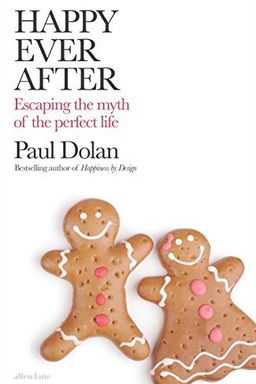
Happy Ever After cover

Happy Ever After

by Paul Dolan

Happy Ever After challenges the myth of the ''perfect life'' by questioning societal norms around success, wealth, and relationships. Paul Dolan encourages readers to pursue personal fulfillment by defining their own path to happiness, free from conventional expectations.

Escaping the Myth of the Perfect Life

What if the very stories you’ve been told about how to live a good life are actually making you miserable? In Happy Ever After, behavioral scientist Paul Dolan argues that modern society is built on a collection of seductive but misleading social narratives—stories that tell you what it means to be successful, fulfilled, and moral. You’re taught to reach for wealth, success, education; to relate by marrying, being faithful, and having children; and to act responsibly by being altruistic, healthy, and self-controlled. But what if relentlessly chasing these ideals traps you in unhappiness instead of delivering the happiness they promise?

Dolan defines these as narrative traps: dominant cultural scripts that dictate what you should want, do, and feel. He explains that while such stories can provide guidance and social cohesion, they often override personal experience, steering you toward conformity instead of authentic joy. The book urges you to replace these inherited stories with an evidence-based, experience-centered approach to happiness—what Dolan calls focusing on pleasure and purpose in everyday life, a theme he also explored in his earlier book Happiness by Design.

The Three Meta-Narratives

The book is structured around three overarching clusters of narratives: Reaching, Related, and Responsible. Each of these meta-narratives captures a different dimension of the modern myth of the good life. The Reaching narratives—being wealthy, successful, and educated—promise happiness through achievement. The Related narratives—getting married, staying monogamous, and having children—define happiness through love and family. And the Responsible narratives—being altruistic, healthy, and volitional (acting with free will)—frame happiness as a moral duty. Dolan examines each one and shows how the pursuit of these social ideals often leads to stress, guilt, and comparison rather than well-being.

Happiness by Design: Not by Narrative

Dolan’s central idea is simple yet radical: stop asking what’s expected of you and start asking what actually makes you feel good. Using global well-being data, time-use studies, and behavioral experiments, he demonstrates that happiness is determined by moments of pleasure and meaning, not by ticking off social milestones. A prestigious job can drain your daily joy; a modest but meaningful one can enhance it. A big house or perfect marriage might signal success, but what matters is what it’s like to live in it each day. Dolan calls this approach “experience-based happiness” and contrasts it with “evaluation-based” happiness—how society teaches you to judge your life according to others’ standards.

The Power (and Danger) of Social Stories

Social narratives, Dolan argues, evolved to coordinate large societies and provide stability. They tell us what a “good” person looks like, what success requires, and which roles we should play. But they also create deep shame and self-criticism for those who diverge. You might judge yourself harshly for earning less, staying single, or not having kids—without ever asking whether these were your goals to begin with. Worse, those same stories encourage you to judge others, preserving hierarchies of class, gender, and morality. Dolan draws on his own story as a working-class academic to illustrate how such narratives constrain authenticity—he recalls being chastised at a festival for swearing “like a working-class hero” instead of acting the way a professor is supposed to behave.

From Reaching to Just Enough

Instead of maximizing wealth or status, Dolan proposes adopting a mindset of “just enough.” Borrowing from economist Herbert Simon’s idea of satisficing (accepting “good enough” over perfection), he argues that “just enough” money, education, and success protect you from misery without enslaving you to endless striving. True fulfillment, he says, comes when you recognize the point of diminishing returns—where more effort adds stress but no extra happiness. This theme runs throughout the book: the sweet spot of sufficiency over the addiction to accumulation.

A Pragmatic Philosophy of Happiness

Dolan grounds his work in negative utilitarianism—the principle of minimizing suffering rather than maximizing pleasure. He emphasizes that happiness should not be seen as an abstract moral ideal but as a practical matter of reducing unnecessary misery for yourself and others. He contrasts consequentialism (judging actions by their effects on well-being) with rigid moral rules rooted in tradition or religion, urging a focus on tangible outcomes rather than intent or purity. By this metric, living a good life means making choices that make you and those around you less miserable, even if they defy convention.

Why This Matters Now

Dolan’s challenge is timely in a world obsessed with comparison and performance. Social media amplifies every myth: richer friends flaunt vacations, happier couples post selfies, more “selfless” people virtue-signal online. The result is what he calls a “collective addiction” to these narratives, reinforced by envy, judgment, and unrealistic ideals. Breaking free from them doesn’t mean rejecting ambition, relationships, or morality—it means reclaiming them on your own terms. Happy Ever After is not a manual for rebellion so much as a guide to discernment: knowing when a story serves you and when it enslaves you. As Dolan concludes, you can only live “happily ever after” when you realize that happiness, not perfection, is the goal.


Reaching for More: Wealth, Success, and Education

We’re told from childhood that more money, higher status, and greater learning will guarantee happiness. Dolan dismantles this notion by showing that once your basic needs are met, the relentless pursuit of more leads to diminishing returns—and often increased misery. He calls this the Reaching trap: the belief that fulfillment lies just one promotion, pay raise, or degree away.

Wealth: The “Just Enough” Rule

Money matters—but only up to a point. Using data from the UK and US, Dolan finds that happiness plateaus around £50,000–£75,000 ($75,000) annual income—the threshold identified by researchers like Daniel Kahneman. Below that, poverty causes genuine misery; above it, extra income buys little joy and sometimes erodes purpose. Wealth can steal time from meaningful activities, distort values, and trap you in social comparisons. Dolan cites the phenomenon of “keeping up with the Joneses”—neighbors of lottery winners in Canada were more likely to go bankrupt trying to match their spending.

Success: When Work Becomes Self-Worth

“Good jobs” often make people miserable. Comparing florists and lawyers, Dolan finds that florists report markedly higher happiness—despite lower pay and prestige—because they work with beauty, autonomy, and human connection. Lawyers, conversely, suffer from long hours and competitive environments, mistaking external status for inner satisfaction. The modern obsession with overwork, he argues, is driven by a success narrative that equates long hours with virtue. The result: burnout, inequality, and even death in extreme cases (Japan’s epidemic of karōshi, or death by overwork, haunts his discussion).

Education: Smarter but Sadder?

Education is another “good thing” that isn’t always good for happiness. Beyond basic schooling, extra degrees correlate weakly—or even negatively—with well-being. In US data, people with doctorates or professional qualifications report lower daily happiness than those with only high-school or bachelor’s degrees. For many, education becomes a badge of status rather than a source of meaning. Working-class students may also suffer alienation when entering elitist institutions, losing their social identity in exchange for credentials. Dolan urges rethinking education not as an end in itself but as a tool for purpose and confidence. A “just enough” approach—basic literacy, critical thought, and practical skills—serves happiness better than infinite academic attainment.

When reframed through happiness rather than social comparison, the Reaching narratives collapse. True success lies in balancing enough wealth to avoid misery, enough achievement to feel purposeful, and enough learning to enrich experience—no more, and no less.


Rethinking Relationships: Marriage, Fidelity, and Children

The Related meta-narrative—get married, stay faithful, have kids—defines what it means to be a “successful adult.” Dolan argues that while these choices can enrich life, treating them as mandatory prescriptions often leads to misery and stigma for those who diverge. His goal isn’t to trash love or family but to unburden them from society’s myths.

Marriage: Still the Holy Grail?

Data shows that marriage produces only a small, short-lived bump in happiness, often disappearing within two years. Worse, married people may feel socially pressured to report being happy even when they aren’t—especially if their spouse is within earshot, as Dolan humorously notes from time-use surveys. The costs also differ by gender: men gain health and emotional stability from marriage, but women often experience higher stress, poorer sleep, and lower satisfaction. Divorce, contrary to cultural panic, can restore well-being once the initial adjustment passes. The real tragedy, Dolan suggests, is staying in relationships out of fear or social judgment.

Monogamy: The Last Taboo

Monogamy, he argues, is less natural than we admit. Around one-third of men and one-quarter of women admit to infidelity, and many cite opportunity or monotony, not malice. Dolan contrasts this with consensual non-monogamy (CNM)—open relationships maintained with honesty—which often show higher trust and reduced jealousy. Yet CNM partners are heavily stigmatized and assumed to be immoral. His takeaway: rather than prescribing one model for all, society should recognize multiple paths to fulfilling connection, prioritizing transparency and consent over moral conformity.

Children: The Happiness Myth

Children are painted as the ultimate source of joy, but research tells a sobering story. Parents report lower moment-to-moment happiness and higher stress, especially when kids are young. The life-satisfaction bump appears only later, when children leave home. Childfree adults, by contrast, often enjoy stronger friendships, better finances, and more time for purposeful activities. Dolan provocatively points out that having fewer children is also the single most effective act of environmental altruism. He argues that parenthood should be reframed as one legitimate path among many, not a moral obligation.

Across all three “Related” narratives, Dolan’s message is compassionate realism: reject one-size-fits-all love stories and instead design relationships around what truly enriches your daily life. That, he insists, is where happiness—not perfection—resides.


Being Good, Not Perfect: Altruism, Health, and Free Will

In the final section, Dolan turns to what he calls the Responsible narratives—society’s scripts for living morally: be selfless, stay healthy, and act in control. While well-intentioned, these ideals become tyrannical when pursued as moral absolutes. He argues for a radical reorientation toward consequences: what reduces suffering for you and others?

Altruism: The Selfish Case for Selflessness

We admire anonymous charity, but Dolan shows that even selfish motives can create good outcomes. The billionaire philanthropist admired for public generosity and the quiet volunteer who gives for pride or networking both reduce suffering—and that’s what matters. “Pure altruism” is a myth, and insisting on it deters people from helping at all. He illustrates this with David Beckham, who faced public backlash after leaked emails revealed he wanted recognition for his charity work. Instead of condemning such self-interest, Dolan argues, we should celebrate any action that helps others, regardless of motive. People who give—even for status—tend to be healthier, happier, and more generous over time.

Health: The Cult of Fitness

Physical health, he warns, has become a new moral religion. The “healthism” movement praises gym-goers and shames the overweight or ill as lazy or irresponsible. Dolan dismantles the notion that obese individuals are a financial burden: they often die earlier, incur fewer pension costs, and their happiness isn’t necessarily lower. Moreover, an overemphasis on longevity leads to destructive end-of-life care, where vast sums are spent prolonging life at the cost of comfort and dignity. He supports the right to assisted dying under strict safeguards, arguing that dying well can sometimes create less suffering than living longer. The goal should be quality of life, not quantity at any cost.

Volition: The Illusion of Control

Perhaps Dolan’s most provocative stance concerns free will. Drawing from genetics, psychology, and neuroscience, he contends that most of what we do is shaped by forces beyond our control—genes, social context, luck. Yet we punish the poor and praise the rich as if everyone operated with equal freedom. Once we accept how little control anyone has, moral judgment softens and compassion grows. We can still hold people accountable for the impact of their actions, he says, but we should drop the illusion that everyone “chose” their station in life. His moral formula: “From each according to his luck, to each according to his happiness.”

Taken together, these Responsible narratives invite a shift from moral purity to moral practicality—focusing less on intent, and more on impact. Doing good, managing health, and acting decently don’t require perfection; they require awareness and empathy.


Toward a New Definition of Happiness

In his conclusion, Dolan synthesizes decades of research into a modern philosophy of happiness grounded in realism and compassion. Happiness, he insists, is not the sum of moral achievements or social milestones but the balance of pleasure and purpose over time. To live happily is to live experientially—to notice when your actions feel good and do good, and to stop when they don’t.

He urges replacing perfectionist morality with “experience-based ethics”: measure life not by how it looks or aligns with social ideals, but by how it feels and functions for you and others. A “happily ever after” life, then, is not a fairy tale ending but an ongoing practice of self-honesty. The antidote to the myth of the perfect life isn’t rebellion—it’s alignment: between what you do, how it feels, and what truly matters.

Dolan’s message—both scientific and humane—is that by breaking free of society’s prescribed life script, you can author your own narrative. It won’t be perfect, but it can be authentically, beautifully yours.

Dig Deeper

Get personalized prompts to apply these lessons to your life and deepen your understanding.

Go Deeper

Get the Full Experience

Download Insight Books for AI-powered reflections, quizzes, and more.