
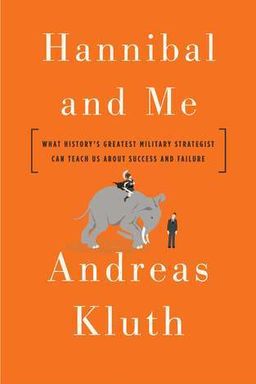
Hannibal and Me cover

Hannibal and Me

by Andreas Kluth

Hannibal and Me by Andreas Kluth draws insightful parallels between the life of the famed military strategist and our modern quests for success. From parental influence to the dangers of hubris, this book provides timeless strategies for personal growth and achieving life''s goals.

Triumph, Disaster, and the Measure of a Life

What if the moments you call “success” are actually traps, and your so-called failures are the turning points that shape your character? This book argues that triumph and disaster are impostors, both capable of distorting judgment and direction. Through the intertwined lives of Hannibal, Fabius, Scipio, Shackleton, Eleanor Roosevelt, Amy Tan, and others, the author explores how identity, ambition, strategy, and equanimity define a life well-lived.

At its heart, the book uses Hannibal’s rise and fall as the master metaphor. His brilliant victories at Trebia, Trasimene, and Cannae dazzled contemporaries, yet within a generation Carthage was destroyed. Rome, the supposed loser, endured. The message: success measured too narrowly—by short-term wins, applause, or tactical brilliance—often conceals long-term ruin.

From Inheritance to Choice

No one begins from zero. You inherit familial values, fears, and ambitions long before you can form your own. Hannibal’s oath to hate Rome—taken before his father Hamilcar’s altar—is not just a promise; it’s a programmed destiny. Eleanor Roosevelt’s lack of maternal warmth, Barack Obama’s search for a father, and Amy Tan’s rebellion against her mother each reveal how parental influence scripts early ideals of success. The book identifies three responses: emulation (continuing a parent’s path), search (filling a void), and rebellion (defining identity through opposition). You can recognize your own life pattern among these archetypes.

But inheritance is not destiny. Over time, your role shifts from being written by others to authoring yourself. This evolution demands what Carl Jung called individuation—becoming an integrated, authentic self rather than merely a reflection of early conditioning.

The Double-Edged Power of a Goal

Purpose concentrates energy. Hannibal’s relentless goal—to destroy Rome—organizes his life into extraordinary clarity and courage. Yet that same clarity blinds him to politics, diplomacy, and peace. The book contrasts him with wanderers like Harry Truman and Ludwig Erhard, whose slower, exploratory journeys yield more sustainable influence. Your challenge is to balance the intensity of a quest with the adaptability of a wanderer. Strong goals create momentum, but without reflection they consume everything around them.

Tactics, Strategy, and the Long View

A recurring question runs through every story: Are you waging battles or building victories that endure? Hannibal mastered tactics but not strategy. Scipio—his Roman counterpart—defined political and geographic goals (seizing Iberia and attacking Africa) and turned them into lasting peace. This contrast surfaces in professions and relationships too: acting reactively versus thinking backward from a clear end. Strategic clarity, as Clausewitz and Tiger Woods both illustrate, means starting with the “green”—the final purpose—then designing each move backward to align with it.

Responding to Triumph and Disaster

The book’s middle arc follows how leaders respond when momentum collapses. Fabius teaches deliberate restraint—survival through patience and timing. Shackleton demonstrates human tenderness in catastrophe. Scipio reclaims initiative by imaginative reinvention. Together, they form a universal response pattern: accept, stabilize, and reimagine. First comes Fabian endurance (absorbing blows calmly), then Scipionic renewal (turning crisis into creation).

Disaster, paradoxically, forces genuine reorientation. Triumph, by contrast, seduces you into believing the story is over. Kipling’s warning—to treat triumph and disaster the same—frames the book’s moral heart: what defines you is not the label attached to events but how you respond to them.

Beyond the Prison of Success

Late in the book, success itself becomes a kind of captivity. Einstein, Tennessee Williams, and Amy Tan each show how acclaim breeds fear of failure and stifles experimentation. Hannibal, once daring, becomes cautious and politically isolated. The cure, the author suggests, is deliberate humility and constraint: return to the craft, invite dissent, and protect the creative scaffolding that made you free before you were celebrated.

Midlife and Rebirth

Eventually every driven person faces an existential turn. The strategies of youth—conquest, validation, idealism—cease to work. Shackleton’s late career shows the cost of clinging to old heroics; Eleanor Roosevelt’s transformation after betrayal shows the liberation possible through individuation. Midlife becomes a second education: you shift from ambition to contribution, from proving worth to enacting purpose.

The Final Equilibrium

In its conclusion, the book returns to the Bhagavad Gita’s lesson of duty without attachment. You cannot control outcomes, only your integrity of action. True victory, it argues, lies in equanimity—the calm discipline of doing your work fully and releasing the result. Scipio’s composed withdrawal, Shackleton’s patient leadership, and Krishna’s counsel to Arjuna unite in one ethic: history changes, peace rarely lasts, but the character you build in how you fight and how you wait endures.

You are asked, ultimately, to hold success lightly, face loss steadily, and move forward with deliberate clarity about what peace you truly seek. The book is less a biography of Hannibal than a mirror for your own battles—to define purpose, to keep freedom after triumph, and to meet both victory and failure with the same steady soul.


The Inheritance of Identity

Your first map of what success means is usually written by your parents. The author sketches three ways children respond to that inheritance: through emulation (continuing the parental vision), search (trying to replace what was missing), or rebellion (building identity in opposition). Each pattern shapes your idea of purpose and failure before you are old enough to choose consciously.

How Parental Scripts Operate

Hannibal’s oath in the temple of Baal—“sworn hatred of Rome”—condenses both duty and destiny inherited from his father, Hamilcar. Eleanor Roosevelt’s emotional deprivation produced an opposite drive: a search for moral voice through connection and service. Amy Tan’s revolt against her mother’s high expectations became the fuel of creative independence. Each story dramatizes the lifelong tension between fulfilling and outgrowing the parental script.

Recognizing and Rewriting Your Script

You may combine all three responses: emulate one parent, search for the missing one, and rebel in your career or relationships. The challenge is to ask which parts of that inheritance still serve you. If emulation protects comfort but limits individuality, or if rebellion remains reactive long after it serves purpose, you become captive to childhood narratives. Reflecting on those narratives reclaims authorship of your life—transforming inherited ambition into chosen meaning.

Parental expectations give structure, but individuation gives freedom. That transformation—from duty to authenticity—marks the first act of becoming your own strategist in life’s campaign.


Goals, Wandering, and the Shape of a Life

Should you dedicate yourself to a single burning goal, or let purpose emerge along the way? Hannibal’s life illustrates the magnetic power and tragic cost of a singular aim. From childhood oath to Alpine triumph, every decision aligns with his quest to defeat Rome. But total focus can narrow vision; after inevitable setbacks, nothing remains. The book pairs Hannibal with Meriwether Lewis, whose early success mapping the American West left him directionless and despondent, and with Truman and Erhard, who matured slowly and impacted history later through accumulated wisdom.

The Quest Archetype

The quest offers exhilarating clarity. It simplifies choice and rallies followers. Yet it demands sacrifice: relationships, rest, and sometimes sanity. Hannibal, Lewis, and even early Picasso pay this price. Their examples warn that ambition must include an image of life beyond conquest—what the book calls “knowing your peace.”

The Wanderer’s Method

The wanderer, by contrast, values adaptive growth over linear destiny. Truman’s meandering career—from farmer to shop owner to reluctant politician—trained patience, humility, and empathy. Ludwig Erhard’s intellectual wandering during perilous times prepared him for decisive postwar leadership. Their trajectories suggest that diverse experiences build strategic depth; wandering can mature into mastery when you’re ready to commit.

Choosing Your Path

If you are a quester, include reflection and external counsel so your intensity serves durable meaning, not self-immolation. If you are a wanderer, recognize when exploration becomes avoidance and commit before opportunity passes. Both paths demand awareness: pursue clarity without rigidity, and flexibility without aimlessness.


Strategy, Tactics, and Momentum

Winning once means little if you don’t understand what the victory serves. This key idea unites Hannibal’s tactical genius, Scipio’s strategic mastery, and the universal art of turning momentum to advantage. The author dissects how to align immediate moves with long-term goals—whether in war, politics, or personal ambition.

Hannibal’s Tactical Mastery

Hannibal’s battles at Trebia, Trasimene, and Cannae illustrate four timeless tactical laws: fix attention where you choose, make weakness irrelevant, strike at blind spots, and let the enemy’s momentum destroy itself. Like aikido, his strategy uses the opponent’s force against them. Yet for all this brilliance, Hannibal lacked political follow-through; his dazzling battles never produced lasting peace. The lesson: tactics must always serve strategy.

Strategic Thinking: From Sosylus to Clausewitz

Sosylus, Hannibal’s tutor, and later Clausewitz both remind us that every use of force must answer a political question: “What end does this achieve?” Tiger Woods’s “green-to-tee” mindset captures the same logic—start from the objective, then design backward. In personal terms, define your peace, then measure each move by how directly it leads there.

Using Momentum Intelligently

Scipio and Cleopatra demonstrate opposite uses of momentum. Scipio channels time and morale strategically, moving the war’s theater from Italy to Iberia and Africa. Cleopatra uses spectacle and emotion to redirect Caesar’s and Antony’s focus to her advantage—short-term power that lacks lasting foundation. Momentum amplifies skill only when aligned to clear purpose; otherwise it becomes distraction disguised as movement.


Facing Defeat and Reinvention

Disaster is the universal teacher. Rome’s near-annihilation after Cannae, Shackleton’s shipwreck in the Antarctic, Eleanor Roosevelt’s public heartbreak—all reveal the spectrum of survival strategies. The book presents two archetypes: the Fabian response (acceptance and endurance) and the Scipionic response (reinvention through bold relocation of effort). Each offers essential lessons for crisis management and personal transformation.

The Fabian Way: Patient Preservation

Fabius Maximus resists panic after Rome’s defeats, counseling delay rather than reckless counterattack. By absorbing pressure, preserving morale, and letting time weaken his enemy, he saves his nation. Shackleton mirrors this through humane discipline—maintaining routine, humor, and trust during months trapped in ice. The central insight: sometimes waiting intelligently is the most active decision you can make.

The Scipionic Leap: Reframing the Game

When stasis becomes untenable, the Scipionic move is to relocate the battlefield altogether. Scipio’s audacious assault on New Carthage and later Africa transforms the war’s geometry and morale. In modern terms, reinvention means creating new conditions rather than negotiating failure within old ones. After stability comes imaginative strike; after patience, re-creation.

Adversity thus becomes a cycle: endure, stabilize, and redefine. Survival buys time; reinvention wins renewal. The art is knowing which phase you are in.


Success as a Trap

After triumph comes an invisible danger: sameness, fear, and distraction. The book calls this the prison of success—a state where creative or strategic freedom erodes under the weight of acclaim. Hannibal, Einstein, Tennessee Williams, and Amy Tan all faced this paradox: fame narrows the mind that once dared the improbable.

How the Prison Forms

Success increases the fear of loss. You cling to formulas that once worked, avoid risk, and become cautious. Invitations, honors, and external validation consume time meant for deep work. The very conditions that made you invent suddenly disappear. Williams called success "a kind of death" because it removed the pressure that kept him bold. Hannibal, once a gambler, became a bureaucratic general mired in politics. Einstein’s later rigidity on quantum ideas shows how even intellectual revolutions can harden into dogma.

Escaping the Trap

Freedom after fame requires deliberate humility. Keep tethered to craft routines—the practice hours, notebooks, and small experiments that remind you of uncertainty. Limit distraction by trimming honors and appearances that inflate ego without deepening substance. Above all, invite honest dissent. Only critics who tell inconvenient truths preserve your capacity to grow.

Triumph becomes imprisonment only if you stop learning. By reintroducing regulated risk and preserving the beginner’s humility, you keep success as platform, not as cage.


Midlife and Maturity

Around midlife, the fuel that drove early ambition often burns out. The book frames this transition through Jung’s idea of individuation: integrating neglected parts of yourself so that life’s second half is ruled by authenticity, not performance. Midlife crises may hide the opportunity for reinvention.

When Youthful Scripts Expire

Shackleton’s refusal to shed the heroic explorer persona led him to exhaustion and an early death. Eleanor Roosevelt’s transformation after marital betrayal exemplifies the opposite: she converts pain into public purpose. These cases show that decline begins when you cling to outdated identities, not when age advances. Letting personas die allows renewal to begin.

Practicing Individuation

Individuation calls you to reclaim the suppressed—art if you lived for practicality, empathy if you excelled in competition. Jung built toy villages; Roosevelt built institutions. Steve Jobs found creative rebirth at Pixar after losing Apple. Each discovery required stepping outside the script that once defined them. If you listen to dissatisfaction without fear, it leads to a larger, more integrated self.

The mark of mature success is contribution over conquest. When achievement becomes service and curiosity replaces repetition, you have crossed from the first half of life to the second—where freedom finally exceeds ambition.


Duty and Equanimity

The book ends with the stoic wisdom of the Bhagavad Gita: act fully, release attachment to outcome, and preserve inner balance through turmoil. Duty and equanimity are presented as antidotes to anxiety, ego, and defeat. Life’s meaning lies not in victory but in disciplined participation.

Act Without Dependence on Result

Scipio, after Zama, accepts that political enmity will follow; Shackleton focuses on his crew’s survival rather than glory. Each lives Krishna’s counsel: engage completely, but do not identify with the outcome. This detachment cultivates steadiness amidst chaos.

Cultivating Active Calm

Equanimity resembles wu wei—nondoing that acts through alignment rather than force. In practice, it means maintaining rituals, focusing attention, and measuring worth by integrity, not applause. You can achieve more precision and resilience when your self-worth no longer fluctuates with results.

The book closes where it began—with Kipling’s line about treating triumph and disaster the same. By grounding your work in duty, practicing calm absorption rather than frenzy, and releasing outcomes, you find freedom even in constraint. This calm, chosen perseverance is the final form of victory.

Dig Deeper

Get personalized prompts to apply these lessons to your life and deepen your understanding.

Go Deeper

Get the Full Experience

Download Insight Books for AI-powered reflections, quizzes, and more.