
Idea 1
The Many Faces of Hallucination
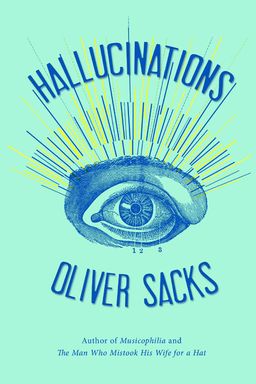
Why does your brain sometimes create perceptions that aren’t there? In Hallucinations, neurologist Oliver Sacks reveals that hallucinations are not just symptoms of insanity—they are expressions of the brain’s creative power. You hallucinate when your sensory systems produce experiences that have the detail and force of perception but no external stimulus. As Sacks insists, hallucinations are “real” experiences in consciousness, but their sources lie within the nervous system itself.
What makes a hallucination?
Sacks draws a clear distinction between imagination, illusion, and hallucination. Imagination is voluntary and internal—you picture your friend’s face at will. Illusions distort external stimuli—like seeing shapes in shadows. Hallucinations, though, are projected outward, involuntary, and often indistinguishable in vividness from reality. Brain imaging studies by Dominic ffytche and others show that hallucinations activate the same sensory cortices used in real perception: the fusiform area for faces, V4 for color, or the auditory cortex for music. This confirms William James’s assertion that hallucinations are “as good and true a sensation as if there were a real object there.”
A taxonomy of human experience
Sacks organizes the world of hallucination into families, spanning the sensory spectrum. Visual hallucinations—commonest in the blind or visually deprived—include Charles Bonnet syndrome, release hallucinations from cortical injury, and the geometries of migraine or psychedelics. Auditory phenomena include hearing voices, phantom music, or distortions in the hard of hearing. Smells, touches, and body experiences—from phantom limbs to out-of-body sensations—show that any sensory map can turn active without input. Hallucination is not confined to madness; it is a natural by-product of neural activity.
Why context matters
To understand a hallucination, you must look at its context—medical, sensory, emotional, and cultural. The vivid faces of Charles Bonnet syndrome arise from visual deprivation, not delusion. Musical hallucinations in the deaf or elderly occur when the auditory cortex is hyperactive after loss of input. Sleep paralysis, religious visions, and ecstatic seizures stem from distinct physiological disruptions. Yet culture shapes interpretation: a religious patient may perceive a visitation from God; a neuroscientist may recognize a seizure aura. Both experiences are authentic in emotional terms, even when their mechanisms differ.
Hallucination as perception unbound
Hallucinations are positive phenomena—additions to the mind’s sensory content, not simple losses. Their study reveals how perception normally works: the brain constantly predicts sensory input and fills gaps with expectation. When deprived or disturbed, it hallucinates. This explains why prisoners in isolation see luminous streams (“the prisoner’s cinema”), or why the blind see faces and scenes. These internal projections teach you that perception is never passive—it is active creation constrained (or freed) by input.
Sacks’s larger argument
For Sacks, hallucinations form a bridge between neurology, art, and meaning. They show that consciousness can simulate the world with astonishing fidelity. Instead of fearing hallucinations, you can view them as windows into the architecture of mind—how the cortex encodes pattern, color, face, and voice. Whether they appear in blindness, fever, drug states, or grief, they affirm a core truth: your mind is not a mirror but a maker of worlds.
A guiding insight
Understanding hallucinations as brain-based but meaningful experiences frees you from stigma. They are not proof of madness but reminders that perception and imagination are points along the same continuum—an insight that blends the science of the brain with the empathy of the humanist.