
Idea 1
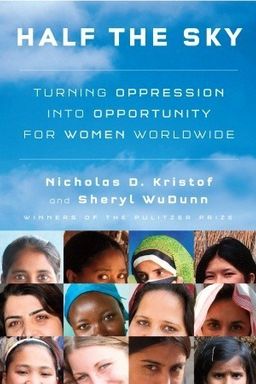
Half the Sky: Turning Oppression into Opportunity
What happens when you stop seeing women as victims and start treating them as the world’s most underutilized resource? In Half the Sky, Nicholas Kristof and Sheryl WuDunn argue that the moral and economic challenge of the 21st century is gender inequality—and the solution lies in unlocking women’s potential. They contend that empowering women through education, health, and economic opportunity yields the highest returns for families, communities, and nations alike.
The book exposes invisible frontlines—from brothels in Cambodia and villages in Pakistan to maternity wards in Ethiopia—and pairs them with practical evidence of what works. Its power lies in mixing heart-wrenching stories with empirical clarity: you meet named women whose individual struggles become case studies in systemic change. Each chapter shifts your perspective from despair to pragmatic hope, showing how small, targeted actions can transform lives.
The scale of the problem
Kristof and WuDunn call gender inequality the “moral equivalent of slavery.” Millions of girls are killed, trafficked, or denied education due to deep-rooted social norms. Maternal deaths and sexual violence are not marginal tragedies but central indicators of global injustice. When women die every minute during childbirth or are traded in brothels by the millions, this is not culture—it’s a solvable crisis of neglect and priorities.
But the authors refuse to stop at outrage. They show that empowerment is not just a moral act but an economic multiplier. When girls learn, marry later, and earn income, whole societies rise. This “girl effect” underpins much of the book’s argument—that investing in women yields exponential benefits.
From oppression to agency
Across continents, the book follows women converting pain into activism. You see Mukhtar Mai in Pakistan turn public rape into a campaign for education; Sunitha Krishnan in India rescue hundreds of trafficking survivors through Prajwala; and Catherine Hamlin in Ethiopia repair fistulas for thousands of abandoned women. These are not isolated saints—they’re architects of sustainable reform. Local ownership and courage form the connective tissue of every successful intervention.
These personal arcs make structural truths visible: freedom requires education, income, medical care, and voice. The authors show that when women gain rights, the benefits ripple outward—lower fertility rates, better child health, and greater stability even in conflict settings.
The anatomy of effective change
Kristof and WuDunn organize their cases around the practical levers that work: schooling girls, improving maternal health, offering microfinance, and supporting local social entrepreneurs. They emphasize “what works at scale.” For example, cash stipends (“Girls Be Ambitious”) keep Cambodian girls in school; Tostan’s respectful education programs end female genital cutting in West Africa by enabling collective community pledges rather than outside condemnation; and microloans through Kashf in Pakistan turn housebound women into employers and decision-makers.
These experiences lead to a broader truth: small investments, if structured smartly, have cascading systemic impact. The cost of deworming or iodization is minuscule compared to the gains in national productivity. Likewise, supporting a single schoolgirl often reshapes the choices of a whole family and the future of her own children.
Bridging divides and mobilizing action
A recurring theme is coalition. The authors reveal unlikely alliances—between secular feminists and evangelical pastors, between local imams and foreign foundations, between village women and teenage donors abroad. They argue that progress depends on bridging the “God gulf” that divides faith-based and secular actors, channeling shared compassion into pragmatic collaboration. Missionary clinics deliver vital AIDS care in Congo; Afghan educator Sakena Yacoobi uses Islamic values to champion girls’ schooling; and American activists like Jane Roberts build donor campaigns from kitchen tables.
The book’s closing call is direct: do something. Sponsor a girl, fund a surgery, or advocate for gender funding initiatives. Practical activism—anchored in evidence, partnership, and empathy—is the force that can close the gap between principle and practice.
Key idea
The central message is that the fight against women’s oppression is the unfinished human rights struggle of our age—and its resolution is not only morally right but economically transformative. When you invest in women, you ignite the most efficient engine of development and social change available to humanity.
By the book’s end, you understand that empowerment is both the goal and the method. Each story—from a trafficked teen to a village teacher—illustrates a shared principle: that dignity is contagious. And when half the sky rises, the whole world lifts.