
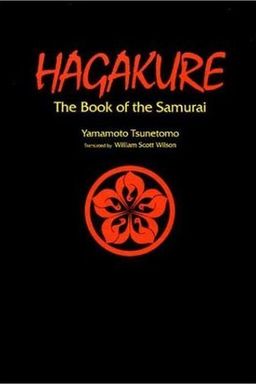
Hagakure cover

Hagakure

by Yamamoto Tsunetomo & Alexander Bennett

Hagakure, a timeless treatise from 1716, unveils the samurai''s path of honor, loyalty, and mortality acceptance. Its insights guide modern readers to live with integrity and courage, emphasizing virtues that transcend time. Discover how the samurai''s wisdom can enrich your life with depth and purpose.

The Way of Living as if Already Dead

How can you serve without fear or hesitation? In Hagakure, Yamamoto Jōchō argues that the true path of the warrior—the Way—is found in dying—not in literal death alone but in psychological discipline. He means that to live rightly, you must imagine yourself already dead. This posture dissolves fear, ego, and calculation so you can act with unbroken loyalty and courage. It shapes every ritual, counsel, and decision that follows in the book.

You learn that Jōchō’s famous phrase is not suicidal fanaticism but training for decisive freedom. To understand it, you must move through a series of connected ideas: loyalty and service, disciplined conduct, readiness, speech, compassion, and the tension between arts and arms. Each teaches you how to turn psychological readiness into moral clarity.

Death as discipline, not destruction

Jōchō begins with the paradox—when life and death confront you, choose death without hesitation. But this is not a call for reckless suicide. The daily rehearsal of death, imagining various ends, strips fear from action. When crisis arrives you are calm and immediate. As he writes, “begin each day pondering death as its climax” (11-133). You do not die each morning; you practice detachment so that thought does not interfere when duty calls. The goal is freedom, not extinction.

Examples from the text clarify this: Jin’uemon keeps his composure until his final breath; a warrior who saves his comrade in a fight and kills attackers is praised because he acted from pure intent, not calculation. Even those who turn prudently from violence, like the radish seller who stops a duel, embody the Way because they preserve their lord’s honor with composure. Living-as-dead means acting without hesitation, not rushing blindly toward martyrdom.

Loyalty as the axis of all duty

Once fear is dissolved, loyalty becomes the first law. You are not free to act for yourself; all action serves your lord and the domain. The book details ranks and modes of loyalty: low retainers express it through visible obedience, while high counsellors express it through tactful advice. Nakano Shōgen’s quiet mediation between feuding families (5-98) shows how private counsel protects honor more effectively than public correction. Lord Naoshige’s aphorism—“Nothing is felt so profoundly as giri”—anchors this ethic: loyalty is emotional, moral, and procedural.

You learn that loyalty includes disagreeing wisely. A retainer may correct his lord, but only in private, framed by respect. If done rashly, it shames both sides. Jōchō’s model of remonstrance—route advice through the right intermediaries, time it carefully, and speak with praise first—is a manual for survival within hierarchy. In this world, speech is as strategic as swordsmanship.

Daily discipline as the foundation of courage

The book translates inner readiness into external rituals. You wake early, polish your weapons, maintain grooming, and rehearse courteous behavior. Even suppressing a yawn becomes moral practice—a proof that you are always attentive. Etiquette, handwriting, and dress are social signals. They show that your mind is steady. Jōchō lists behaviors—the 100 articles of conduct—to make life itself a training ground for unmoved composure.

In daily administration—sealing documents, handling petitions, inventorying a lord’s belongings—you show the same poise. Precision and modesty in these acts mirror precision and resolve in battle. The small disciplines prepare for larger ones: if your sandal straps never fail, your will won’t either. Such rituals teach that courage depends on daily steadiness.

Speech and timing as instruments of power

Hagakure teaches that one timely word can save a life or avert disaster. The mouth, like the sword, must be trained. When accused or humiliated, you must speak to preserve your lord’s image first, not your own. The art of phrasing—concise, deferential, and perfectly timed—turns shame into service. Retainers rehearse words as carefully as maneuvers, because careless speech can ruin a family’s honor faster than failure in combat.

Preparation and immediacy

The text combines philosophy with logistics. “Now is the time” means readiness both mental and operational. Sakyō Kumashiro’s emergency plans for foreign ships exemplify domain-level discipline: contingency lists, signals, rations, and chain-of-command rehearsals. You prepare both in spirit and procedure, always expecting summons or attack. A true retainer acts in an instant without confusion.【Note】: Hagakure’s concept of preparedness anticipates modern readiness doctrines in leadership theory—train habits so reflex replaces panic.

Compassion and bonds as moral equilibrium

As fierce as its devotion is, Hagakure also extols compassion. A lord must love his retainers “as children” so they love him “as a father.” Compassion sustains loyalty; punishment becomes humane when it protects wider harmony. Shudō, the disciplined male bond, exemplifies this: devotion must never overpower public duty. Private affection and filial piety—like the monk sneaking fish to his mother—prove that tenderness and discipline coexist. Without compassion, courage degenerates into fanaticism.

Arts vs. arms: balance over abandonment

Refinement matters, but only in the right measure. Jōchō warns that excessive poetry or Zen can make retainers detached from duty—“an overly perceptive retainer is harmful.” Yet, when properly timed, art refines temper and judgment. Lord Mitsushige’s mastery of poetry after his political maturity shows that aesthetics can crown, not undermine, service. In essence: cultivate beauty, but let it serve strength.

Origins and interpretation

Understanding Hagakure’s genesis clarifies its intent. Jōchō dictated to Tashiro Tsuramoto in secrecy after the Nabeshima clan forbade junshi (following one’s lord in death). He transmuted personal grief into instruction: serve by living the death-ready mind. Centuries later, the work was misused by militarists who read its call to die literally. Modern readers, warned by its original secrecy, should read it as a manual for psychological mastery—habitual readiness to serve, not suicidal zeal.

Across its anecdotes, Hagakure constructs a unified discipline: rehearse death to master courage, refine manners to sustain focus, advise wisely to preserve order, and live so honor never needs rescuing. To live “as if already dead” is not to renounce life but to perfect it—the art of fearless, loyal, compassionate action.


Loyalty and Hierarchy in Service

Jōchō organizes samurai life around a singular axis: loyalty. Every story and maxim revolves around how you express fidelity based on your station. Loyalty is not uniform—it takes one form for a low-ranking guard and another for a high counsellor. You are taught to calibrate devotion according to position and proximity to power.

Two forms of loyalty

The lower retainer performs what Jōchō calls symbolic service—visible acts of obedience, martial zeal, and readiness to die. This dramatic loyalty reinforces the clan’s prestige. The higher retainer, by contrast, performs loyalty of counsel—using insight, tact, and timing to protect the lord from error. You learn that pure devotion without wisdom causes spectacle; wise counsel without humility endangers one’s place.

Hereditary trust and social memory

Fudai, hereditary retainers, carry a domain’s moral ledger. Their lineage grants trust to cover a lord’s faults discreetly. Outsiders lack this inherited credit, so ambitious promotions of newcomers can disrupt cohesion. The lesson is timeless: loyalty sustains institutions not only through obedience but through continuity and relational capital. (Note: modern leadership parallels this—trust builds from history more than rhetoric.)

Counsel as craft

Counsel requires choreography. Before remonstration, build rapport, choose intermediaries, and rehearse message framing. Nakano Kazuma’s seven petitions for a pardon show persistence combined with tact. Even denial demands grace; timing must match the lord’s mood. Jōchō’s method teaches persuasive ethics—correct from compassion, not self-display.

Examples that endure

When Ichinojō almost commits seppuku over his son’s detachment, his lord’s reading of sentiment prevents tragedy—a reminder that power must read emotion as much as rule. Sagara Kyūma’s loyal excess leads to downfall: passion without prudence ruins careers. The attendant who objected publicly to a betrothal loses rank because loyalty misused is insubordination. You learn that service demands self-effacement in speech and calculated sincerity in counsel.

In Jōchō’s system, hierarchy does not constrain loyalty—it defines how it should look. The superior protects through wisdom; the subordinate demonstrates through obedience. Both honor the same core ideal: preserving the lord’s house without betraying personal conscience. Loyalty is thus the study of precision—how and when to act for another’s good.


Calculated Action and Courage

Hagakure alternates between condemning calculation and promoting tact. Jōchō admits the contradiction: sometimes hesitation is cowardice, other times restraint saves your clan. You must learn when frenzy liberates courage and when prudence guards honor.

When frenzy is virtue

In urgent situations, “give yourself over to insanity and sacrifice yourself to the task.” The phrase represents liberation from fear, not literal madness. The warrior who dives into battle for a comrade and kills enemies acts rightly because calculation would equal cowardice. Frenzied courage restores order by cutting through paralysis. You cultivate this by daily rehearsal of decisive death—so your body moves before thought hesitates.

When calculation belongs to wisdom

In governance, diplomacy, and counsel, slow thought replaces frenzy. You time words, manage information, and balance internal harmony. The radish seller’s peaceful intervention prevents needless deaths—a model of prudence serving loyalty. Calculation becomes cowardly only when it protects the self; it becomes courage when it serves the collective. That subtle distinction separates foolhardy glory from true service.

Training flexibility

You rehearse both modes through study and conversation. Prepare scenarios so when crisis arrives, you choose instinctively which mode fits—rashness or restraint. Jōchō insists on flexible courage: adapt your temperament to context without betraying ethics. This dynamic training converts paradox into practice, a balance every leader must master.

Your practical takeaway: never confuse deliberation with fear or ardor with virtue. Courage in Hagakure means the capacity to act instantly or withdraw gracefully, depending on which preserves honor best.


Daily Discipline and External Conduct

For Jōchō, character is built from routine. Cleanliness, posture, and precision express inner resolve. The way you dress, sit, write, and speak reflects whether fear rules you or whether you have mastered attention. Discipline here is not decorative—it’s existential preparation.

Training through ordinary detail

Every gesture counts. Suppress yawns, tie your obi correctly, handle tools gracefully. These acts seem trivial but create an aura of steadiness that others trust. Jōchō’s hundred conduct rules formalize this into methodical training. Appear poised so you become poised. Your visible neatness signals an invisible fortress of focus.

Administrative and ritual readiness

Administrative etiquette mirrors battlefield serenity. When you inventory a lord’s possessions or issue seals, act with precision and decorum. Accept small losses calmly, showing that honor exceeds profit. A polished surface and measured tone protect you from suspicion. In sum, visible conduct is a public certificate of inner discipline.

Mentorship through example

Older retainers mold youth by example and secrecy. Correct faults privately; praise publicly. Start training early—child errands at five, grave visits at seven—so habit replaces theory. Patience yields mastery after fifteen years of consistent correction. The text thus merges pedagogy with ethics: you teach honor through repetition, not rhetoric.

Daily neatness is not vanity. It’s ritualized readiness for death. To die well, you must live orderly. Habits become the physical form of inner freedom.


Compassion, Bonds, and Human Balance

Behind Hagakure’s austerity lies tenderness. Compassion (jin) and human bonds balance its rigid codes. They transform obedience into genuine service by rooting duty in empathy. The book insists that courage and kindness reinforce, not contradict, each other.

Compassion as domain glue

Jōchō quotes Ieyasu’s lesson: if you love retainers as children, they return filial loyalty. Compassion anchors authority. Nabeshima Naoshige applies this principle in discipline—punishment becomes an act of mercy when it prevents disorder. Authority tempered by empathy makes devotion durable.

Shudō and disciplined affection

Male bonding (shudō) appears as disciplined love, not indulgence. “Love your elder partner, but not love him at the same time.” The paradox means: maintain affection without undermining loyalty. Emotional intensity must serve honor, never displace it. Hagakure converts passion into steadiness, instructing you to feel deeply but act correctly.

Filial and everyday compassion

Stories like monk Gensei sneaking food to his mother show compassion as everyday courage. Such acts parallel battlefield loyalty—each sacrifices comfort for another’s welfare. Jōchō’s compassion is therefore pragmatic: a tool to build human trust across all ranks.

The balance ultimately defines the Way: zeal without empathy breeds tyranny; compassion without resolve breeds weakness. Harmony between them sustains both personal dignity and domain stability.


Preparedness and Timing

Readiness—mental and logistical—is Jōchō’s practical creed. “Now is the time” repeats throughout Hagakure as both psychological mantra and operational command. The warrior’s art is instantaneous execution based on prior rehearsal.

Plan before action

Sakyō Kumashiro’s plan for English ships illustrates thorough anticipation: signals, supply chains, and fallback orders scripted before crisis. Hagakure’s version of strategy is granular contingency work—not improvisation but pre-drilled reflex. You learn that speed arises from preparation more than bravado.

Tempo and speech

Readiness also governs conversation. Before audiences or disputes, rehearse lines, imagine questions, and keep composure. The one who hesitates, even verbally, forfeits control. Thus, timing rules both sword and mouth. Each must strike at the right instant to preserve honor and achieve resolution.

The moral meaning of immediacy

Immediate action in Hagakure is not impulsive—it is morally pure because it excludes ego calculation. Delay opens space for fear; instant response affirms devotion. The trained man’s “reflex” is the book’s ideal: act as loyalty requires, without inward debate.

In modern terms, Hagakure preaches operational mindfulness. You live rehearsed—not tense. When your lord calls or danger strikes, readiness transforms into composure, and composure into courageous action.


Art, Culture, and Warrior Integrity

Jōchō navigates the tension between artistic refinement and practical service. Culture enriches perception but can corrupt discipline. A balanced retainer cultivates taste without losing urgency.

Art as supplement, not substitute

Overindulgence in Zen contemplation or poetry risks detachment from service. Yamasaki Kurando’s warning—“an overly perceptive retainer is harmful”—targets aesthetic escapism. Hagakure’s art philosophy is utilitarian: pursue culture when it reinforces composure and judgment, not when it distracts from obligation.

Proper timing and station

Art belongs either to retirement or secure governance. Lord Mitsushige’s later poetic mastery exemplifies timing—refinement becomes safe when duty is fulfilled. The text thus honors art as seasoning, not sustenance. Refine feeling to enrich loyalty, but never let it eclipse vigilance.

For readers today, this offers a psychological warning: intellectual or aesthetic comfort often masquerades as mastery. Hagakure’s Way demands that beauty remain subordinate to usefulness. Balance your sword and brush so neither dulls the other.

Dig Deeper

Get personalized prompts to apply these lessons to your life and deepen your understanding.

Go Deeper

Get the Full Experience

Download Insight Books for AI-powered reflections, quizzes, and more.