
Idea 1
Engineering Growth into the Product
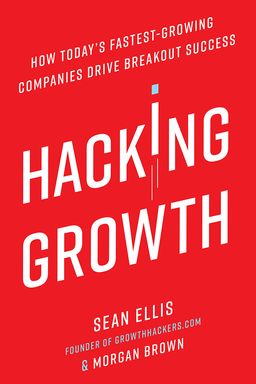
Growth isn’t magic—it’s method. In Hacking Growth, Sean Ellis and Morgan Brown argue that breakout success comes from systematizing how you discover, experiment with, and scale the factors that drive customer acquisition and retention. Rather than relying on a single campaign or viral hit, you build a cross-disciplinary engine that learns rapidly, compounds small wins, and transforms your product into a predictable growth machine.
Traditional marketing treats growth as a function of spend. Growth hacking reframes it as a process grounded in engineering, analytics, and product iteration. You don't just reach people—you change the product to grow itself. Facebook embedded growth features directly into its code; Dropbox redesigned referral loops until each user reliably invited others; Airbnb reverse-engineered Craigslist distribution. Their success didn’t come from clever ads but from a systematic discipline of continuous experimentation.
The Core Engine of Growth
The growth process rotates around three interconnected practices: forming cross-functional teams, mining data for insights, and running high-tempo experiments. Engineers and product managers analyze user behavior. Marketers craft hypotheses. Designers and analysts implement and measure. The loop—hypothesize → test → learn → repeat—keeps momentum. Small, compound wins, rather than huge single campaigns, lead to exponential outcomes. (Dropbox’s referral rate improved over dozens of iterations, each one compounding the effect.)
To make this work, you define a North Star metric—the one measure that captures real product value. Airbnb tracks nights booked; WhatsApp counts messages sent; LinkedIn monitors successful connections. That metric aligns all experiments on what matters most: the user experience of value delivery.
From Growth Culture to Growth Teams
The book stresses that growth is organizational, not departmental. You need teams empowered to act across disciplines. Facebook’s Growth Circle and BitTorrent’s mobile group show it clearly—engineers, data scientists, and marketers working together on measurable outcomes. To enable such groups, senior sponsorship is crucial; leaders must protect experimental cadence and permit calculated failure. Mark Zuckerberg literally wrote 'Growth' on his office whiteboard to signal that priority.
Within these teams, roles align around experimentation: a Growth Lead runs the cadence; data analysts ensure statistical significance; engineers build and deploy tests; designers create interface variations; marketers test acquisition channels and messaging. As results compound, subteams emerge to focus on acquisition, activation, retention, or monetization. Growth evolves with scale but remains close to product control for speed.
Building the Growth Mindset
At the heart of it, growth hacking is humble. Rather than presuming what works, you admit uncertainty and let data lead. It replaces slogans with metrics, opinions with experiments. You combine quantitative analytics—cohorts, funnels, retention curves—with qualitative learning from interviews and surveys. Dropbox’s simple “must-have” question revealed emotional truth no dashboard could. When 40% of users are 'very disappointed' by the idea of losing your product, you’ve found product-market fit worth scaling.
Once you prove users love your product, you earn the right to accelerate acquisition through channels and loops. But the reverse—buying users for an unloved product—is the death trap BranchOut fell into. The entire method centers on a single insight that Ellis phrases beautifully: “Love creates growth, not the other way around.”
Why This Matters
Growth hacking bridges product and marketing with science. It demands curiosity and structure. You start small, instrument every step, test quickly, learn continuously, and compound insights across the company. Done well, it turns randomness into strategy and marketing into measurable progress. (In many ways, it echoes Eric Ries’s Lean Startup ethos—but applies it directly to scaling, not just creating, business models.)
Key Idea
Growth hacking is not about tactics—it’s about building a learning engine inside your company that continuously discovers what drives user love and amplifies it into scalable growth.
If you integrate the mindset, metrics, teams, and testing cycle outlined in the book, you transform growth from an unpredictable fluke into a disciplined craft—a process that can be repeated and refined for lasting success.