
Idea 1
Habits as the Story of Everyday Discipleship
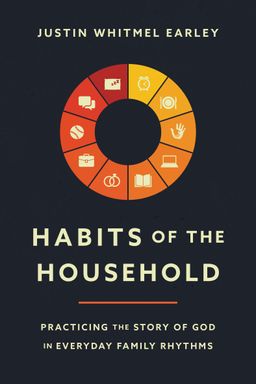
When you think about your family’s daily life — the breakfasts, the bedtime battles, the commutes, the constant cleaning — do you ever wonder what story all those moments are telling? In Habits of the Household: Practicing the Story of God in Everyday Family Rhythms, Justin Whitmel Earley invites parents to see those ordinary rhythms not as random chaos, but as sacred liturgies forming the souls of everyone under their roof. Earley’s argument is simple but profound: you are being formed by your routines, whether you realize it or not — so why not form your family around the story of God?
Earley, a lawyer turned author and father of four boys, weaves together personal stories, brain science, biblical theology, and practical parenting wisdom to make one powerful claim: everyone has a “rule of life,” even if they’ve never written it down. The habits of your home — how you wake, eat, talk, rest, and discipline — shape your family’s loves more than any sermon or lecture ever could. “We become our habits,” Earley says, “and our kids become us.”
The Hidden Power of the Ordinary
The book opens on an all-too-familiar parenting scene: a chaotic bedtime gone wrong, a tired father yelling at his kids. For Earley, that meltdown revealed something terrifying — that his frustration and hurry had become normal. Every home, he realized, has a “normal,” and that normal is quietly shaping the souls of everyone in it. The key, then, is learning to see the everyday — morning commutes, mealtime conversations, bedtime routines — not as interruptions to spiritual life but as the very ground where spiritual formation happens.
This conviction drives the book’s heart: habits are the way we practice love. The rituals parents repeat with their children — from bedtime blessings to table prayers — tell a story about what’s ultimate. “Habits are liturgies,” Earley explains, echoing philosopher James K. A. Smith’s claim in You Are What You Love that all life is worship. Even brushing teeth or checking a smartphone in the morning tells a story about who or what we trust. When habits are approached intentionally, they become what Earley calls “gospel liturgies” — structures that train both adults and children to receive and give the love of God.
Parenting as Formation — for Adults and Kids
Unlike many parenting books that focus on controlling behavior, Earley insists that parenting is a story of mutual formation. God uses our children to sanctify us just as surely as He uses us to shape them. To raise a child, he argues, is to enter the “school of love.” A home becomes a training ground where both kids and parents learn patience, grace, forgiveness, and joy in the ordinary motions of life. This is why the subtitle — “Practicing the Story of God in Everyday Family Rhythms” — isn’t just poetic. It’s theological: habits are where grace meets grit.
Earley’s structure mirrors a typical day so that parents can reimagine their rhythms in order: Waking focuses on beginning the day in the light of God’s love; Mealtimes teach conversation and hospitality; Discipline reframes punishment as discipleship; Screentime reminds families that attention shapes desire; Family Devotions provide simple, grace-filled ways to talk about God; Marriage, Work, and Play show how covenant love and creative joy model divine realities; and Bedtime gathers everything under blessing and rest. Finally, the Epilogue — “Parenting Between the Now and the Not Yet” — roots all these practices in hope: the God who began this work will finish it.
Why Habits Matter More Than Hype
Throughout, Earley draws deeply on both theology and neuroscience. He cites research showing that habits operate from the brain’s basal ganglia — they are embodied routines ingrained below conscious thought. That means transformation isn’t just about believing new ideas but practicing new behaviors until they become reflex. “You can’t think yourself out of a pattern you didn’t think yourself into,” he writes. This is why Scripture’s call to renew the mind (Romans 12:2) cannot be separated from the body’s daily disciplines of prayer, rest, and service.
Habit, in this sense, becomes the lever that can move the world. If we want our kids to pray, they need to see us pray. If we want them to love Scripture, they must see it opened on our table. If we want them to know forgiveness, they must witness us saying, “I’m sorry.” Formation happens at the speed of repetition, not inspiration. (This idea resonates with James Clear’s insight from Atomic Habits: “Every action you take is a vote for the kind of person you wish to become.”)
A Theology of the Family as a “School of Love”
More than a self-help project, Earley frames the household as the primary site of God’s mission in the world. The family is a school of love, echoing St. Augustine and St. Benedict, whose monastic “rules of life” balanced prayer, work, and community as trellises for spiritual growth. Similarly, a family’s habits are trellises for love — daily structures through which the vine of grace grows. Without intentionality, our homes naturally conform to the surrounding culture: endless screens, scattered meals, shallow connection. With a “rule of love,” however, our families can become small countercultural communities that show the world what God’s kingdom looks like right now, in miniature.
For parents, this means that holiness doesn’t happen apart from the laundry, the budget, or the bedtime chaos — it happens precisely through them. Earley prays nightly, “God, please parent me so I can parent them.” That simple prayer sums up his conviction: we are being parented by God even as we parent our children. The goal is not perfection, but participation in His grace. Our homes become the places where God is teaching us all how to love.
“Our habits won’t change God’s love for us,” Earley concludes, “but God’s love for us can and should change our habits.”
By reframing household life as worship, Habits of the Household offers a map for overwhelmed parents who feel spiritually starved by daily routine. The invitation is not to add more to your plate but to see that your plate itself — the dishes and conversations and commutes — is already holy ground. God is present in the patterns that fill your home. The question is simply: what story are those patterns telling?