
Idea 1
Why Your Gut Is Smarter Than You Think
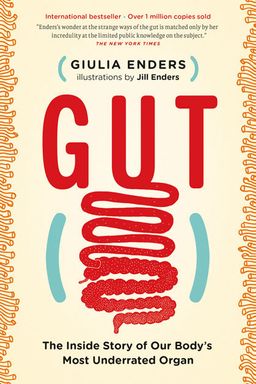
When was the last time you truly thought about your gut — beyond worrying about bloating or stomach aches? In Gut, Giulia Enders argues that this seemingly humble organ is far more than a digestive machine. It’s a living ecosystem, a self-governing brain, and a master communicator that shapes your health, moods, and even your sense of self. Enders contends that understanding how your gut works — from swallowing to pooping and everything between — is one of the most transformative health lessons you’ll ever learn.
Enders invites you to look beneath the surface, literally and metaphorically. She begins with the “gateway to the gut,” describing the mouth and digestive beginnings as an intricate blend of chemistry, emotion, and immune defense. She then dives deep into the inner landscape, showing how the gut’s brain — its enteric nervous system — operates almost independently of our conscious mind. That autonomy, she argues, makes it both mysterious and vital: it keeps us alive, nourished, and often communicates with our real brain through subtle cues of anxiety, calm, or intuition. Her famous “gut feeling,” once dismissed as metaphor, becomes physiological fact.
The Gut as the Hidden Core of Health
Enders takes you through the gut’s evolutionary logic — not just how digestion works, but why it reveals the design of life itself. She compares the gut to the other vital tubes formed in fetal development: one for the heart, one for the brain, and one for the intestinal system. While the heart and brain are worshiped as heroes of human biology, the gut, she says, is underestimated, even shamed. Yet it produces most of our immune defenses, manufactures hormones, interacts dynamically with our bacteria, and keeps us alive through meticulous cooperation. What appears to be mere plumbing is an elegant biological orchestra performing on autopilot.
Why the Gut Changes How We See Ourselves
Enders modernizes the conversation around gut science with humor and precision, calling the gut “our body’s most underrated organ.” She uses simple yet exact storytelling — like the mechanics of vomiting, constipation, and reflux — to reveal that our physiological reactions aren’t just quirks; they’re deeply intelligent survival strategies. When you throw up, for example, your brain and intestines launch a coordinated emergency response. When you feel nauseated before exams, your gut-brain link reroutes energy from digestion to problem-solving. Through these examples, Enders challenges the mind-body hierarchy that favors the brain: our gut may be the brain’s equal, just working in silence.
The Grand Microbial Tapestry
Another revelation of Gut is its portrayal of the intestinal microbiome — trillions of bacteria living inside us that act as an invisible civilization. Enders replaces fear of germs with admiration for symbiosis. She shows that babies born via cesarean section or fed with formula, as she herself was, start life with a different bacterial population — one that can influence immunity or weight decades later. As you grow, these microbes evolve alongside you, forming an internal ecosystem unique to your body. Eat differently, live differently, take antibiotics, or travel, and your microbial nation shifts in response. This “world within” is as sophisticated and relational as any society outside of us.
A Revolution in Self-Awareness
Enders’s most compelling argument is that gut research reshapes our concept of who we are. Instead of seeing ourselves as minds living in disposable bodies, she proposes that we are a unity of organ intelligence. The gut’s neurons rival the brain’s in complexity. Its signals shape mood, intuition, and resilience — not metaphorically, but biologically. This has led to emerging fields like psychobiotics: studying how probiotic bacteria can improve mood and reduce depression. That’s the kind of discovery Enders calls “the science of gut feelings.”
Throughout this book, the author’s lively voice keeps complex biology readable and funny. She jokes that the gut is the “most bashful genius in our body,” because it works tirelessly while we focus on other dramas. But she also insists that neglecting it has consequences — like a culture obsessed with external cleanliness while waging microscopic wars inside. Eventually, Gut becomes both a biology lesson and a manifesto: to trust your gut, feed it wisely, and treat it not as plumbing but as the seat of your inner life.
What You’ll Learn
In the chapters ahead, Enders opens up the gut like a map — guiding you through its structure and function, its nerves and microbes, its illnesses and cures. You’ll discover how pooping and vomiting are engineered, why bacteria form intricate empires inside us, how stress reshapes digestion, and how probiotics can affect mood. You’ll encounter striking connections: the appendix as a bacterial safehouse, the gut-brain axis as a new frontier in treating depression, and ancient fermentation as the wisdom of our bacterial ancestors. Together, these ideas transform how you see food, health, and yourself — from surface appearances to the hidden genius beneath.