
Idea 1
Testimony as Survival and Moral Reckoning
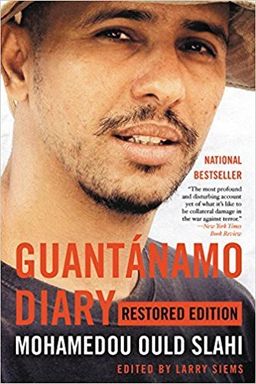
How do you bear witness from the depths of erasure? In Guantánamo Diary, Mohamedou Ould Slahi transforms captivity into testimony. Written from within one of the world’s most secretive prisons, the book interlaces memory, interrogation logs, and emotional reflection to create a living record of state power and human resilience. His words are not just recollection—they are resistance against a machinery built to deny him personhood.
Slahi’s central claim is simple yet radical: that a human voice can outlast systems designed to silence it. Through his own experience—the renditions, the interrogations, the violence, and eventual reclamation of voice—he forces you to confront moral questions about law, truth, and the thin line between security and abuse.
A story in motion
From his arrest in Mauritania to his transfers through Jordan, Afghanistan, and finally Guantánamo Bay, Slahi’s journey maps an archipelago of invisible power. Each transfer is both a logistical move and a legal erasure—a way to obscure responsibility. The year 2001 marks the beginning: Mauritanian officials deliver him to Jordanian intelligence under U.S. direction, setting in motion years of displacement and degradation. You witness how each “handoff”—to Bagram Air Base, then to Guantánamo—strips away protections, replacing law with procedure, humanity with classification.
The machinery of interrogation
Once confined, Slahi becomes subject to an escalating system of control. Early FBI efforts under Agent Robert rely on rapport, questions, and persuasion. But by 2003, when military intelligence and the Joint Task Force assume command, a “Special Interrogation Plan” sanctioned by high-ranking officials—Donald Rumsfeld, General Geoffrey Miller, and Richard Zuley—transforms Guantánamo into an experimental site of coercion. Sleep deprivation, cold cells, sexual humiliation, and manufactured evidence mark this phase. The diary emphasizes that such cruelty is not chaos; it is organized, documented, and approved.
Under constant surveillance, Slahi produces the “confession machine” he describes—a legal theater in which evidence, forged letters, and psychological manipulation merge to force compliance. He names interrogators and techniques with forensic precision, insisting that facts matter more than rhetoric. This attention to naming becomes political: in a regime built on euphemism, exact words reclaim moral clarity.
Human relationships that endure
Amid extreme control, Slahi discovers humanity in fleeting gestures: a guard who loosens his cuffs, an interpreter who speaks gently of home, or a legal team that carries his handwritten pages beyond the cage. These moments are not sentimental—they are survival strategies. Through prayer, humor, and intellectual curiosity, he rebuilds an inner world. The small mercies—tea, a chessboard, a Qur’an—become moral resistance against a bureaucracy of pain.
Writing as legal and moral weapon
In 2005, still detained, Slahi begins to write. He uses the limited protection of attorney-client privilege to send pages to his lawyers Nancy Hollander and Theresa Duncan, who treat his manuscript as both evidence and art. The act of writing turns inward endurance into outward indictment. Every detail—the dates, names, sensory fragments—challenges the official silence of the state.
When, a decade later, the redacted version is published, entire pages appear blacked out. Yet even in fragmentation, the text achieves what power tried to prevent: witness. After his 2016 release, Slahi works with editor Larry Siems to restore the missing parts. They call the second edition “repaired,” signaling that restoration is also moral repair—a way to reconstruct dignity.
From secrecy to appeal
Through judicial review—culminating in Judge James Robertson’s 2010 habeas ruling and the 2016 Periodic Review Board clearance—Slahi’s voice forces the legal system to confront its contradictions. His words and case files converge into a single truth: even in total institutions, documentation and persistence matter. The diary teaches that justice is slow but possible when sustained by testimony.
Key takeaway
The book is more than personal memoir—it is a moral reckoning with how democracies rationalize cruelty. By charting one man’s endurance inside a global system of secrecy, Slahi redefines what it means to resist: to insist on telling the truth, even when no one is supposed to hear it.