
Idea 1
The New Age of Growth Hacker Marketing
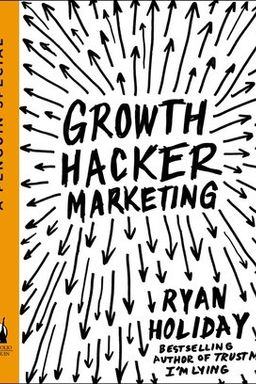
What if everything you thought you knew about marketing was outdated? In Growth Hacker Marketing, Ryan Holiday challenges the century-old playbook of advertising, branding, and PR—and argues that the future belongs to data-driven innovators who merge marketing with product development itself. Instead of relying on intuitive slogans and million-dollar ad campaigns, Holiday contends that true growth now comes from systematic experimentation and clever integration. He introduces a revolutionary mindset—one that prioritizes agility, analytics, and viral scalability over glamour and guesswork.
Holiday opens with a personal realization: as the marketing director of American Apparel, he lived the classic advertising life—approving designs, preparing press releases, and wrestling with branding jargon. That was, until he encountered an article proclaiming that the era of the VP of Marketing was ending and that a new archetype—the growth hacker—was taking over. This revelation led him to study companies such as Dropbox, Airbnb, Facebook, and Instagram, which had achieved unprecedented success without traditional marketing teams or budgets. These start-ups had found a way to engineer growth directly into their products, making them spread organically across the internet.
Breaking the Old Marketing Model
The traditional model of marketing resembled Hollywood’s blockbuster mentality: plan a big campaign, make a grand debut, and hope it becomes a hit. But as Holiday points out, most movies flop—and the same fate awaited many products launched with massive hype and unclear data. Growth hackers turned this model upside down. They didn’t depend on luck or spectacle. They used the tools of the internet—A/B testing, analytics, and viral mechanics—to measure, adjust, and iterate until growth became inevitable.
One of the earliest examples is Hotmail. Instead of investing in flashy ads, its founders took a simple idea suggested by investor Tim Draper: add the line “P.S. I love you. Get your free e-mail at Hotmail” to every outgoing message. That minor tweak turned every user into an unpaid promoter. Within 30 months, the service had 30 million users and sold to Microsoft for $400 million. This simple, trackable idea reshaped how marketing could operate in the digital age.
What Makes a Growth Hacker
Holiday defines a growth hacker as someone who replaces creativity and intuition with experimentation and data. They focus relentlessly on what’s testable, trackable, and scalable. Their tools are not billboards or TV ads—they’re coding scripts, referral systems, and viral incentives. Marketing isn’t about broadcasting anymore; it’s about engineering feedback loops that turn each user into a promoter. It’s practical alchemy: convert engagement into exponential growth.
Scientifically-minded marketers like Noah Kagan (of Mint and AppSumo) exemplify this shift. Kagan summarizes the new approach: “Marketing has always been about who your customers are and where they are.” Growth hackers use data to find out precisely who and where—and then design strategies that reach them efficiently. The art of marketing, in other words, gives way to the science of growth.
Why This Mindset Matters
Holiday’s argument is not merely about efficiency—it’s about survival. In a world of limited budgets and global competition, startups cannot afford vanity campaigns. Traditional marketers optimize for awareness; growth hackers optimize for traction. By merging marketing and product development, they create self-sustaining systems that evolve automatically as users engage.
This mindset democratizes marketing. You don’t need millions of dollars—just insight, creativity, and the willingness to test assumptions. When Evernote refused to spend money on ads and instead poured everything into improving its product, its users became evangelists. When Gmail launched invite-only access, each user became an ambassador. These are not mere tricks; they are strategic integrations that fuse product value with organic growth.
(Note: Holiday’s approach mirrors Eric Ries’s philosophy in The Lean Startup—build, measure, learn—but applies it directly to marketing. Both emphasize iterative cycles and replacing guesses with experiments.)
The Growth Hacker’s Journey
Throughout the book, Holiday outlines four steps that define the growth hacker’s journey:
- Find product-market fit—make sure people need what you offer.
- Locate your growth hack—an initial boost that attracts early adopters.
- Engineer virality—so growth compounds organically.
- Close the loop with retention and optimization—keep users and perfect the experience.
Together, these stages form a cycle: launch, learn, adjust, and scale. Growth hacking is not a one-time campaign—it’s a mindset of perpetual experimentation. The more you repeat the cycle, the faster and smarter your marketing becomes.
Why It’s Revolutionary
Holiday ends with a challenge: stop thinking of marketing as a department, a budget line, or a creative pursuit. Think of it as engineering growth. Anything that drives user engagement, retention, and customer acquisition is marketing. Whether it's a line of code, a referral program, or a design tweak—it counts if it drives users. This redefinition allows you to view every part of your business through the lens of growth.
For Ryan Holiday, this isn’t just the future of marketing—it’s the future of entrepreneurship. If you can learn to merge creativity with data and storytelling with experimentation, you won’t just sell more. You’ll build something that sells itself. That's the ultimate promise of growth hacking.