
Idea 1
When Objects Carry Our Dead
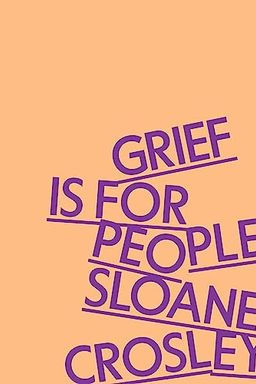
Have you ever lost a thing that felt suspiciously like a person—then later lost the person the thing reminded you of? In Grief Is for People, Sloane Crosley argues that the line between grieving objects and grieving people is far blurrier than we admit. She contends that while grief properly belongs to humans, we often outsource it to objects because things let us hold, arrange, and narrate what resists holding, arranging, and narrating. But to do that safely, you have to face the mess underneath: denial, bargaining, anger, and depression—not as tidy “stages,” but as weather systems that roll in and out.
Crosley frames the memoir around two detonations a month apart in 2019: a daytime burglary of her West Village apartment (forty-one pieces of jewelry gone in five minutes) and the suicide of her best friend and former boss, the beloved book publicist Russell Perreault, who hanged himself in the barn of his Connecticut home. The first loss is a dark gift of delineation—she knows the exact minute the absence began. The second hollows out time itself, collapsing the before and after. One grief trains her eye on objects; the other forces her to reckon with love, agency, and the stories we tell about the dead.
A double loss—and a double bind
The memoir opens with the thief’s boots sinking into a white comforter as he raids a 1920s Dutch spice cabinet—drawers labeled in Dutch, a ceramic “eieren” egg-door with necklace shelves inside—carting off heirlooms: a grandmother’s amber amulet the size of an apricot, a green tourmaline dome ring like a kryptonite soap bubble, a tiger’s-eye square ring Russell once noted on her résumé. The cabinet itself is a relic of their friendship; he spotted it at a flea market and insisted it was “waiting for you.” Hours later, Crosley is the tragic heroine among friends, a fun kind of tragedy. But within a month, Russell is gone. The two events magnetize—“hideous sisters”—refusing to stay in separate entrances. The book asks: what happens when your grief for things becomes the only place you can physically touch the grief for a person?
What Crosley contends
She contends that denial is less a stage than a survival skill that mimics stupidity; that bargaining can masquerade as detective work (feverish searches of pawnshops and eBay, $68 wire transfers to buy back a return address); that anger often finds the nearest available target (a police detective in a too-tight suit, a well-meaning super, a stranger on a Citi Bike); and that depression is not merely private but public—especially in a New York City emptied by a pandemic where even Grand Central’s celestial ceiling faces backward. Most of all, she contends that objects become our grief’s proxy because they are our inverse: delicate meanings in solid form (while people are solid bodies with delicate interiors). They are how you hold what you can’t hold.
How the book works on you
Crosley moves through five sections—Denial, Object Permanence (Bargaining), Anger, Depression, and an Afterward—braiding memoir with criticism and a brisk literary bookshelf (Joan Didion, A. Alvarez, Kay Redfield Jamison, Rilke, Freud, Willa Cather). You feel the narrative tighten into a procedural—security footage of a latex-gloved climber; a Sheepshead Bay return label; a sting in the Diamond District with a man named Dimitri—then loosen into philosophical air: is suicide a loophole or a sentence? Can you ever “get back” what’s lost? Is the question itself misguided?
Why this matters to you
If you’ve ever clutched a thing that felt like a person, or a place that felt like a time, this book names what you’re doing: trying to relocate love from the vanishing to the grippable. Crosley refuses the pieties of consolation. She admits to fantasies that embarrass her—a lost-and-found in heaven where the dead retrieve our missing jewelry; the idea that if she can recover the amulet, Russell might be a little less dead. In doing so, she grants you permission to be illogical in the most human way. The payoff isn’t a tidy acceptance. It’s a sturdier vocabulary and a few hard-won metaphors: a locket breached by a stranger’s fingers; a cliff in Sydney you can’t jump from; two halves of a broken gold chain—one thrown into the Pacific, the other found years later wedged in her copy of Edie—like a private version of Walter De Maria’s The Vertical Earth Kilometer reaching down unanswered.
What you’ll take from this summary
You’ll see how denial tries to tidy shock by narrating it; how bargaining keeps you busy long enough for truth to land; how anger can disguise love and a changing industry can grind a person down; how depression in a city with no people changes the physics of time; and how, in the end, acceptance looks less like closure and more like choosing the living while letting grief curl up and sleep on your chest. Along the way you’ll meet Russell—the prankster mentor who loved objects and Old Hollywood, loathed milk glass, and posted a last caption about “Rudbeckia running rampant”—and watch Crosley do the unruly work of loving him after he’s gone.