
Idea 1
Energy Myths and the Real Road to Sustainability
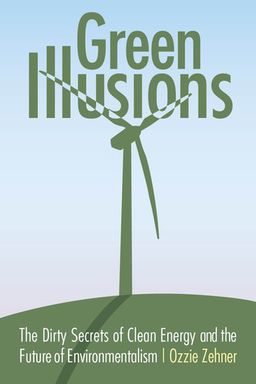
Why do so many of our environmental hopes orbit around new energy technologies? In Green Illusions, Ozzie Zehner argues that Western culture has been seduced by the spectacle of alternative energy—the belief that more and cleaner technology alone will save us. From solar rooftops to wind farms and hydrogen cars, these symbols promise progress while distracting us from simpler, often more effective social, political, and behavioral solutions.
Zehner’s central claim is provocative: the problem isn’t that we lack clean energy sources—it’s that we use too much energy and shape policies that perpetuate high demand. As he demonstrates across case studies, apparent green revolutions often amplify industrial footprints, perpetuate inequality, and maintain dependence on growth-oriented consumption systems. The real path forward lies not in shiny gadgets but in cultural and institutional redesigns that cut demand while improving lives.
The seduction of the energy spectacle
Zehner introduces the “spectacle of alternative energy”: a media and policy obsession with visible, photogenic technologies. Solar panels and turbines become moral icons, signaling virtue and modernity, while concealing emissions, costs, and toxic byproducts. Journalists, politicians, and environmental groups recycle optimistic statistics—often sourced from industry consultants—creating an echo chamber of hope rather than scrutiny. He argues that this spectacle narrows public debate, drawing attention away from measures that actually reduce energy demand or improve wellbeing.
(Note: Zehner’s critique parallels Neil Postman’s media theory and John Kenneth Galbraith’s warnings about “private affluence, public squalor.” Both explain how image and consumption displace structural reform.)
The rebound and boomerang effects
Efficiency and renewable supply both risk rebound effects: when technology lowers costs or guilt, people use more energy overall. This paradox—first articulated by 19th-century economist William Stanley Jevons—means that efficiency alone rarely yields reduced total consumption without broader policy alignment. Zehner calls this a “boomerang effect”: adding cleaner supply without addressing social drivers of growth simply reproduces the same harms in new form. To matter, renewables must accompany systemic demand reduction.
From techno-fixes to social preconditions
Before scaling any alternative technology, Zehner urges societies to meet five social preconditions: efficient infrastructure, equitable institutions, human rights, walkable urban design, and safeguards against consumption rebound. Without them, renewable expansion tends to reinforce inequality and ecological overshoot. His central test question—“Do we have a society capable of being powered by alternative energy?”—forces a shift from gadget-worship to governance, values, and public design.
A pragmatic environmental pivot
Zehner’s prescription reframes environmentalism as cultural and political reform rather than technology procurement. Empower women, decouple utility profits from sales, build dense cities, and encourage downshifting—these steps reduce energy use, enhance equity, and improve happiness more directly than another solar farm. The book ends not in despair but in empowerment: everyday reforms in media, education, housing, and transport can achieve what trillion-dollar gadget schemes cannot.
Core lesson
“To make renewable energy truly renewable, you must need less of it.” Zehner’s ultimate message: sustainability starts not with supply, but with redesigning how societies organize time, wealth, and desire.
That argument reshapes environmental thinking: before adding technologies, we must question assumptions about abundance, growth, and progress themselves.